Pine wilt
Bursaphelenchus xylophilus
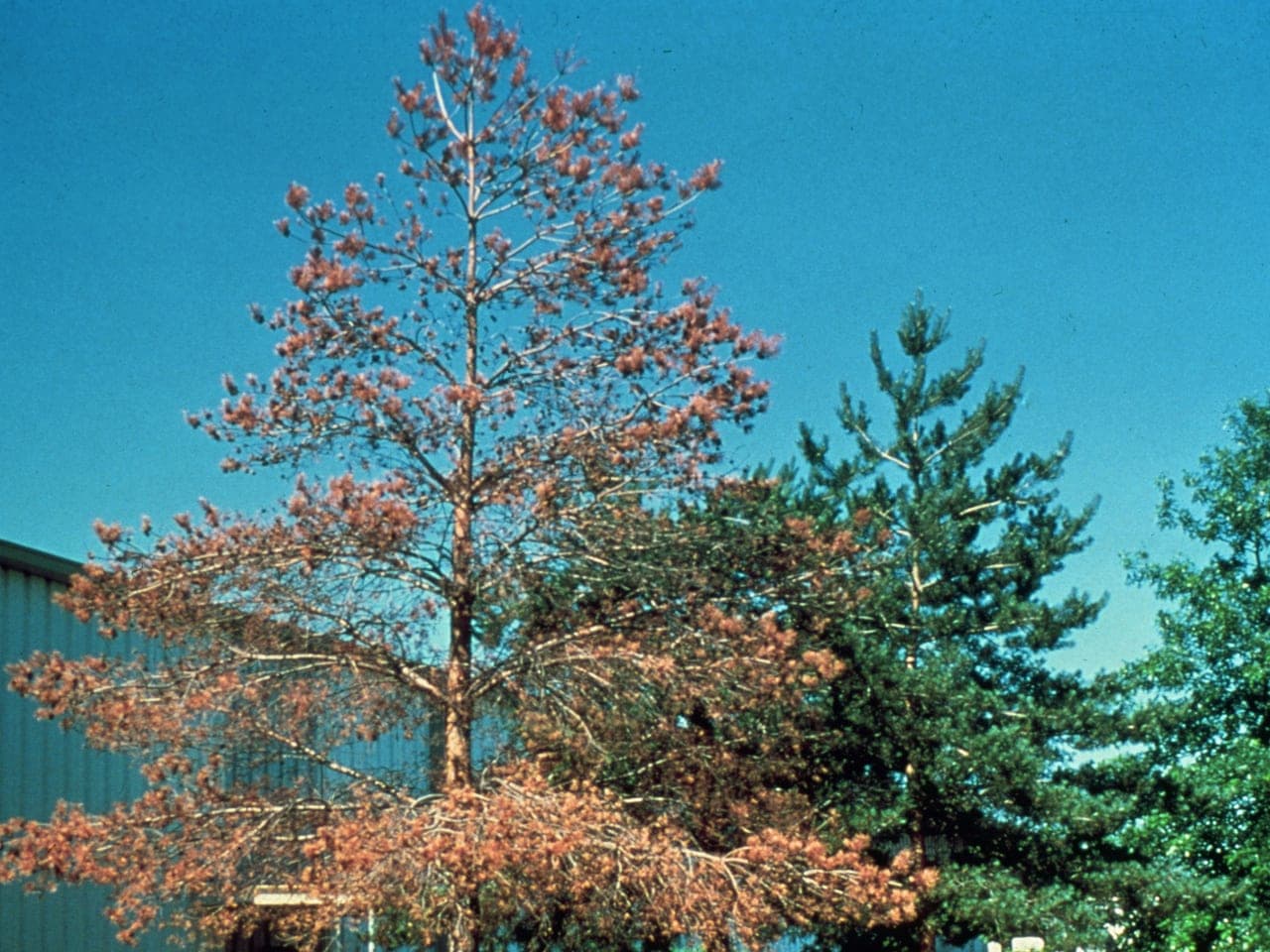
A microscopic nematode carried tree to tree by pine sawyer beetles, which multiplies inside a pine and shuts down its water supply. A mature Scots or Austrian pine can go from green to entirely brown in a matter of weeks, and there is no treatment once it is infected.
Usually fatal. Once established in a susceptible tree, this generally ends in removal. Effort is better spent protecting the trees nearby than saving the one already infected.
What you see
- Needles fading from green to grey-green, then yellow, then brown — often across the whole tree
- Dead brown needles staying firmly attached rather than dropping
- Sometimes a single branch first, then the entire tree within weeks
- No resin flow when a fresh cut is made into the trunk — the wood is dry
- Death typically in late summer or autumn, and startlingly fast
- Blue-stain fungus discolouring the wood, visible when the tree is cut
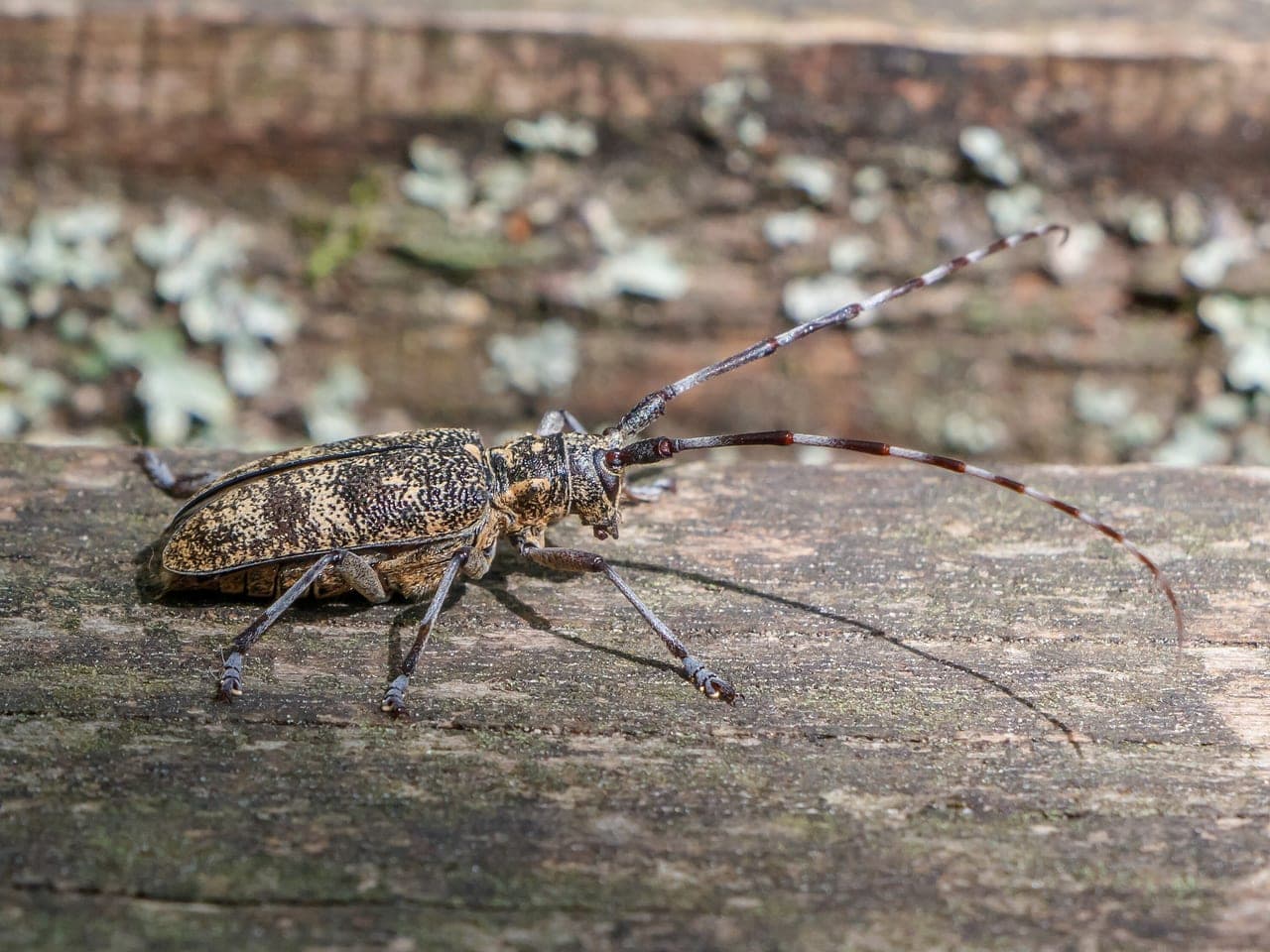
The pine sawyer beetle, which carries the nematode between trees. It breeds in dead pine wood — which is exactly why removal before spring is the control.
How to be sure: Cut into the trunk of a browning pine. A healthy pine bleeds sticky resin within moments; a pine-wilt tree gives you dry wood and nothing else.
Trees it affects in Kansas
Also affects: Scots pine, Ponderosa pine, Mugo pine, Japanese black pine.
When it happens in Kansas
May – July
Pine sawyer beetles emerge from dead pines carrying nematodes and feed on the twigs of healthy pines, introducing them. This is why removing dead pines before spring matters so much.
July – September
Nematodes multiply explosively inside the tree and the water-conducting tissue fails. Symptoms appear and progress with unusual speed.
September – November
Most trees die. The brown needles stay attached, so the dead tree remains conspicuous all winter.
December – March
The critical removal window. Beetles are overwintering as larvae inside the dead wood, and destroying that wood before they emerge is the only meaningful control available.
Prevention
- Remove and destroy dead pines before April 1, every year, without exception — this is the whole control programme
- Chip, burn, or bury the wood; do not stack it as firewood, because the beetles emerge from it regardless of where it is stacked
- Do not plant Scots pine in eastern Kansas, and be cautious with Austrian pine
- Diversify evergreen plantings rather than putting in a row of one pine species
- Keep pines watered, since drought stress makes trees more attractive to the beetle
Treatment options
What you can do yourself
Replacement with a resistant conifer
Eastern red cedar and other junipers are not affected by pine wilt at all, and spruce is not a host either. Where a screen has lost its pines, replanting with something outside the genus ends the problem permanently.
What treatment actually achieves
There is nothing to be done for an infected pine — no injection, no spray, no watering programme reverses it, and the speed of collapse leaves no room to try. Everything useful happens on the other trees: get the dead one out and destroyed before spring, and consider preventive injection only for a pine you genuinely cannot replace. It is worth knowing that spruce and juniper are immune, which makes replanting straightforward.
When the tree may not be recoverable
- Any Scots or Austrian pine with substantial browning that has been confirmed as pine wilt — infected trees do not recover
- Rapid browning of an entire mature pine over weeks, with needles staying attached
- No resin flow from a fresh cut in the trunk
- A tree that has browned above about a third of its canopy from this cause is already finished, whatever the rest looks like
Need professional help in the Wichita area?
Pine wilt usually ends in removal, and a dead tree near a house, drive, or play area is a structural problem rather than a horticultural one. A professional assessment settles both questions at once.
When a situation calls for professional help in the Wichita area, we refer readers to Kohnen's Tree Service, a working Kansas tree-care company whose field experience informs this site. That relationship is disclosed here and on our About page.
Common questions
My pine turned brown in a month. What else could it be?
Speed that dramatic on a mature pine in eastern Kansas points strongly at pine wilt, but Dothistroma needle blight, drought, root damage, and herbicide injury all brown pines too. The resin test is a good first check, and a laboratory test settles it.
Do I really need to remove the dead tree right away?
Before April, yes. Pine sawyer beetles overwinter in the dead wood and emerge in spring carrying nematodes to your remaining pines. A dead pine left standing through spring is the reason the next one dies.
Will my spruce catch it?
No. Pine wilt affects pines. Spruce, fir, and juniper — including eastern red cedar — are not hosts, which makes them sensible replacements where pine wilt has taken out a screen.
Kansas Tree Guide is an independent educational resource. Nothing on this site replaces an on-site assessment by a qualified arborist or tree-care professional. Last reviewed August 2026.