Austrian Pine
Pinus nigra
For fifty years the default Kansas evergreen — until pine wilt arrived. The nematode-borne disease kills mature Austrian and Scots pines in a single season, and it has removed thousands across the state.
- Height
- 40–60 ft
- Spread
- 20–40 ft
- Lifespan
- 50–100 yr
- Growth
- Moderate
Identification
What to look at
Three features settle most identifications: the bark on the trunk, the leaf in your hand, and whatever the tree is dropping.
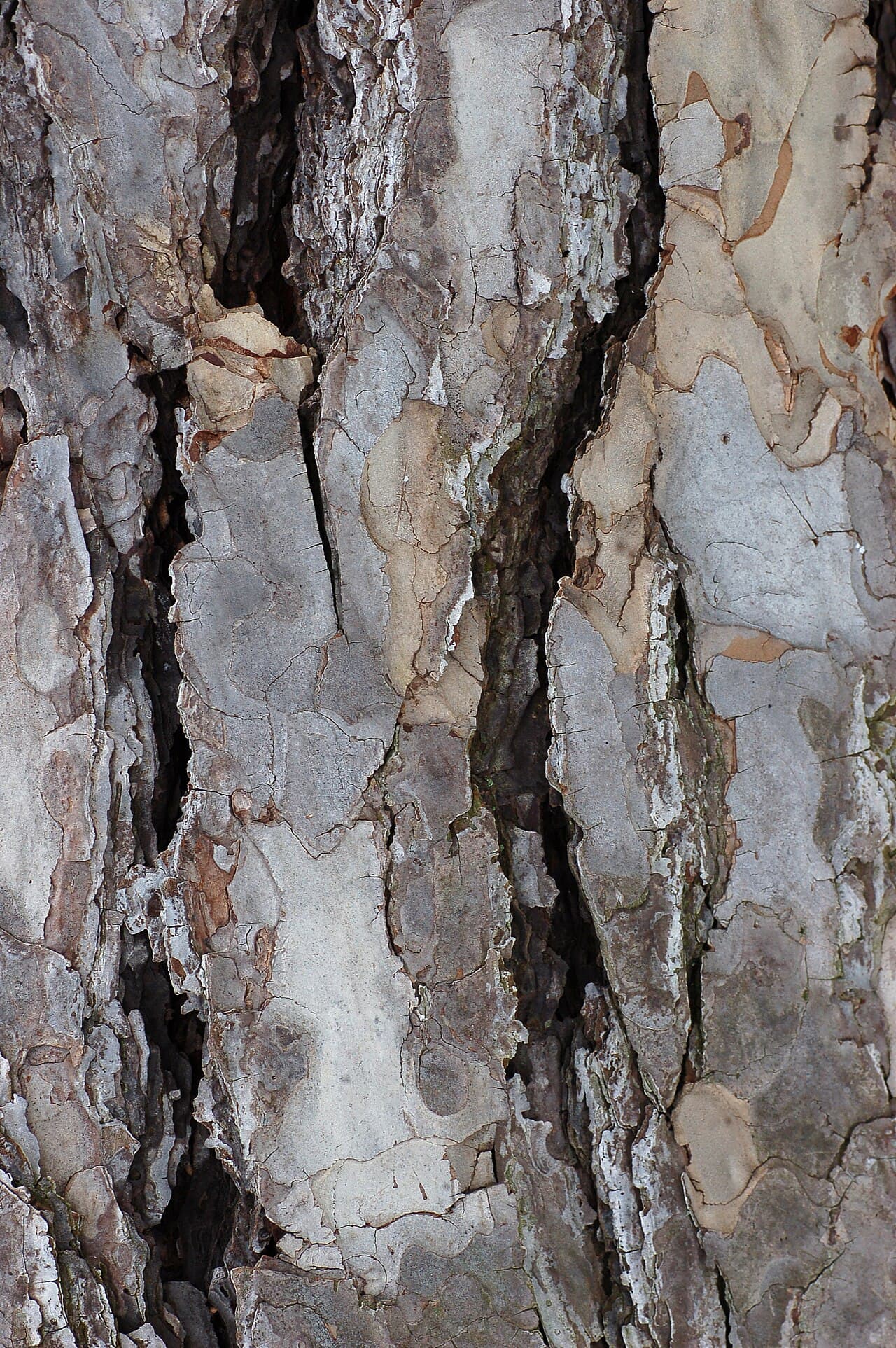
The barkIrregular gray-pink plates separated by dark fissures. 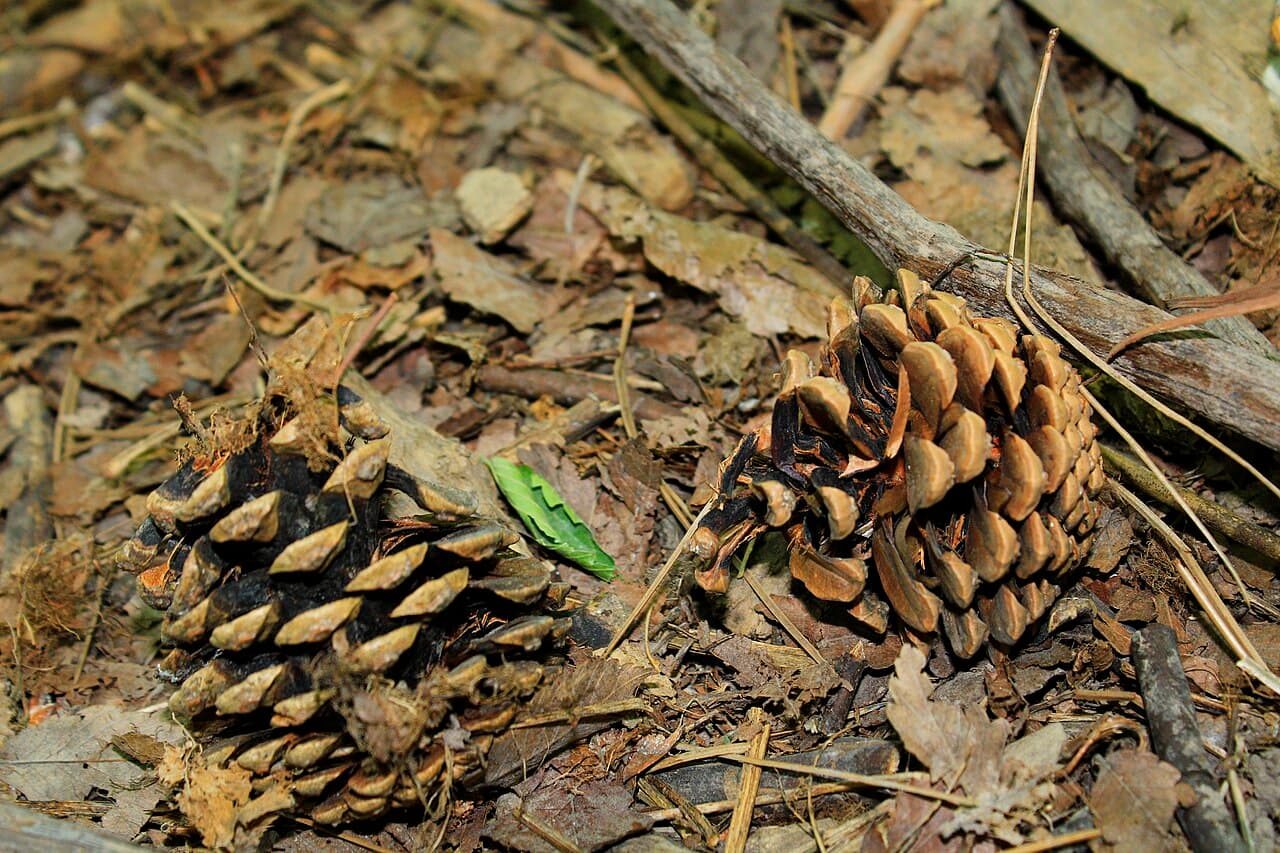
The seedStiff egg-shaped cones, about three inches long.
How to identify it
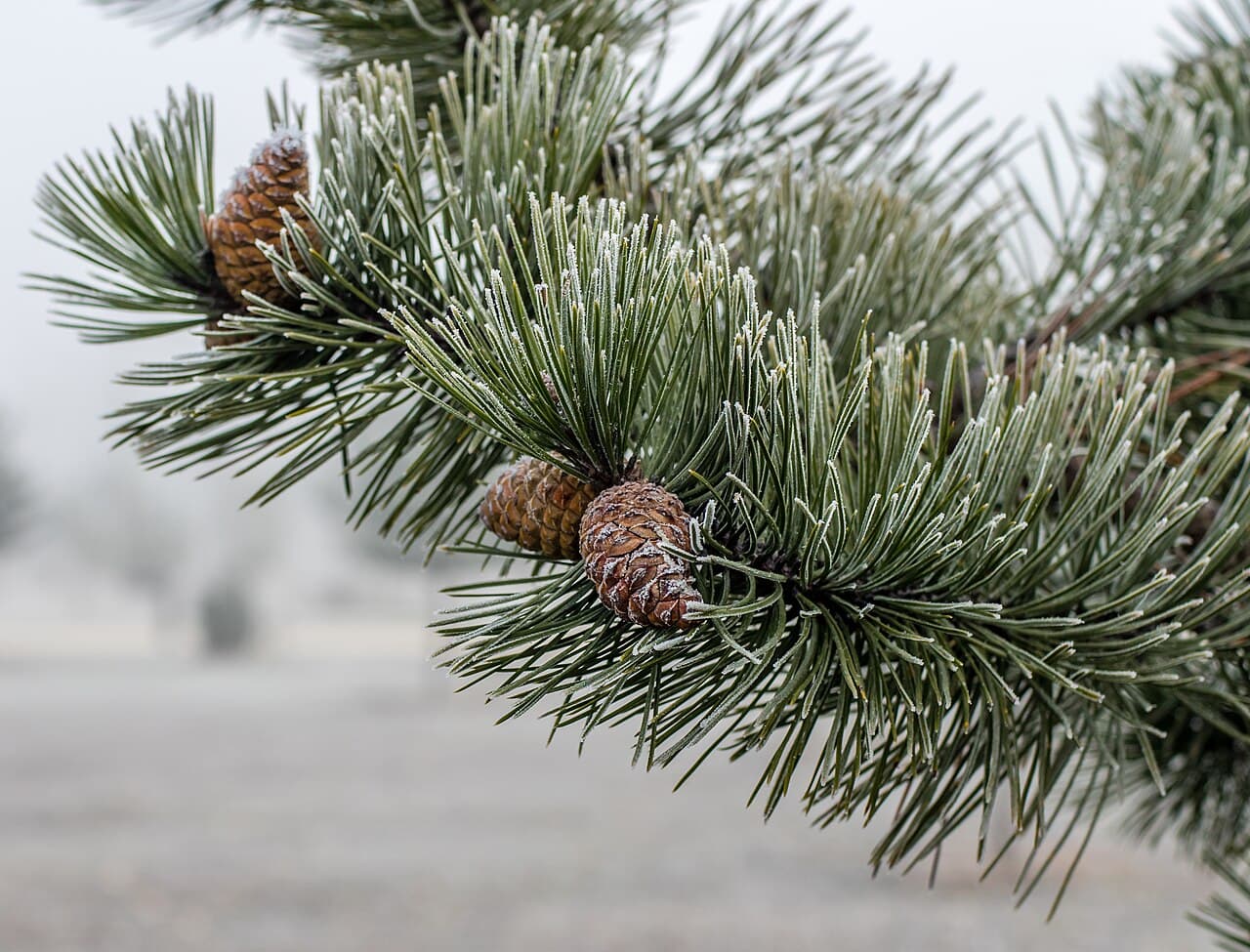
- Long, stiff dark-green needles in pairs
- Dense, dark pyramid becoming flat-topped with age
- Rough gray-brown plated bark
- Egg-shaped cones
Where it grows
- Native range
- Native to southern Europe and Asia Minor, and planted throughout Kansas for windbreaks, screens, and yard specimens for most of the twentieth century. Pine wilt has since removed thousands of them.
- Soil
- Needs well-drained soil and tolerates alkaline, dry, and rocky sites. It will not tolerate saturated ground.
- Sunlight
- Full sun
- Drought & heat
- High drought tolerance, high heat tolerance.
A pine that browns from the top down in late summer and dies by winter is the classic pine-wilt pattern — remove and destroy the wood before beetles fly in spring. For new evergreens, diversify beyond two-needle pines.
Root behavior
Deep and wind-firm; no meaningful threat to structures or paving.
Storm and branch-failure risk
Good. Strong wood and a dense, well-anchored form handle Kansas wind and ice well.
Overall storm resistance: Good. Assessing damage after a storm
Kansas pests and diseases
Pine wilt
SeriousA nematode carried by the pine sawyer beetle, fatal to Austrian and Scots pine and often killing a mature tree within a single season. Needles turn gray-green then brown while staying attached. There is no cure once infected — the priority is removing and destroying the wood before spring.
Diplodia tip blight
ManageableNew candles die back with stunted, browned needles, worst on the lower crown and on stressed trees. Prune out infected tips in dry weather.
Dothistroma needle blight
ManageableBrown bands with yellow halos across the needles, causing lower branches to shed needles and thin from the bottom up.
Full profiles in the pest library
Photographs, seasonal timing, treatment options, and the point past which the tree cannot be saved.
Seeing something not listed here? Work from the symptom instead
Pruning
Best windowLate winter or early spring, before the new candles elongate
Minimal, and mostly limited to removing dead or damaged branches. Like cedar, pine will not resprout from needleless wood — cut back into bare stems and the gap is permanent.
Planting near homes
Fine near a home as a screen or specimen. The real caution is diversification: after decades of pine wilt losses, planting a row of two-needle pines is a bet worth avoiding.
When removal may be necessary
- Pine wilt confirmed — remove and destroy or chip the wood before the following spring so the beetle vector cannot emerge from it
- The tree browns from the top down over a single late summer, which is the classic pine wilt pattern
Removal is a judgment call about risk, not a formula. A tree with one of these conditions over open lawn is a very different situation from the same tree over a driveway — and that judgment needs someone on site.
Kansas Tree Guide is an independent educational resource. Nothing on this site replaces an on-site assessment by a qualified arborist or tree-care professional. Last reviewed August 2026.