
Silver Maple
Acer saccharinum
The fast shade tree planted across older Wichita neighborhoods — and the one tree services visit most after windstorms. Quick cooling shade up front; brittle wood, surface roots, and storm cleanup later.
- Height
- 50–80 ft
- Spread
- 40–70 ft
- Lifespan
- 60–80 yr
- Growth
- Fast
Identification
What to look at
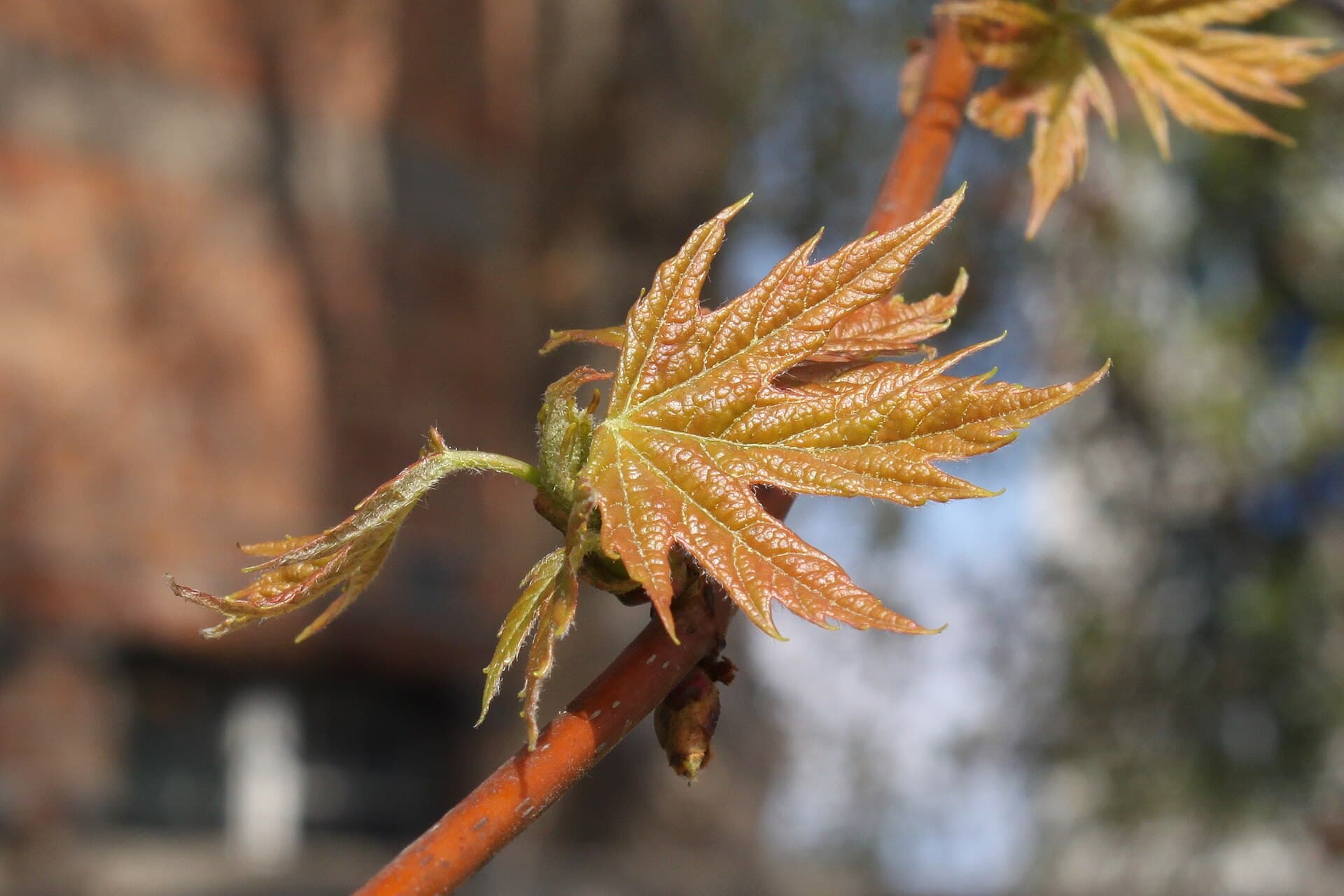
Three features settle most identifications: the bark on the trunk, the leaf in your hand, and whatever the tree is dropping.
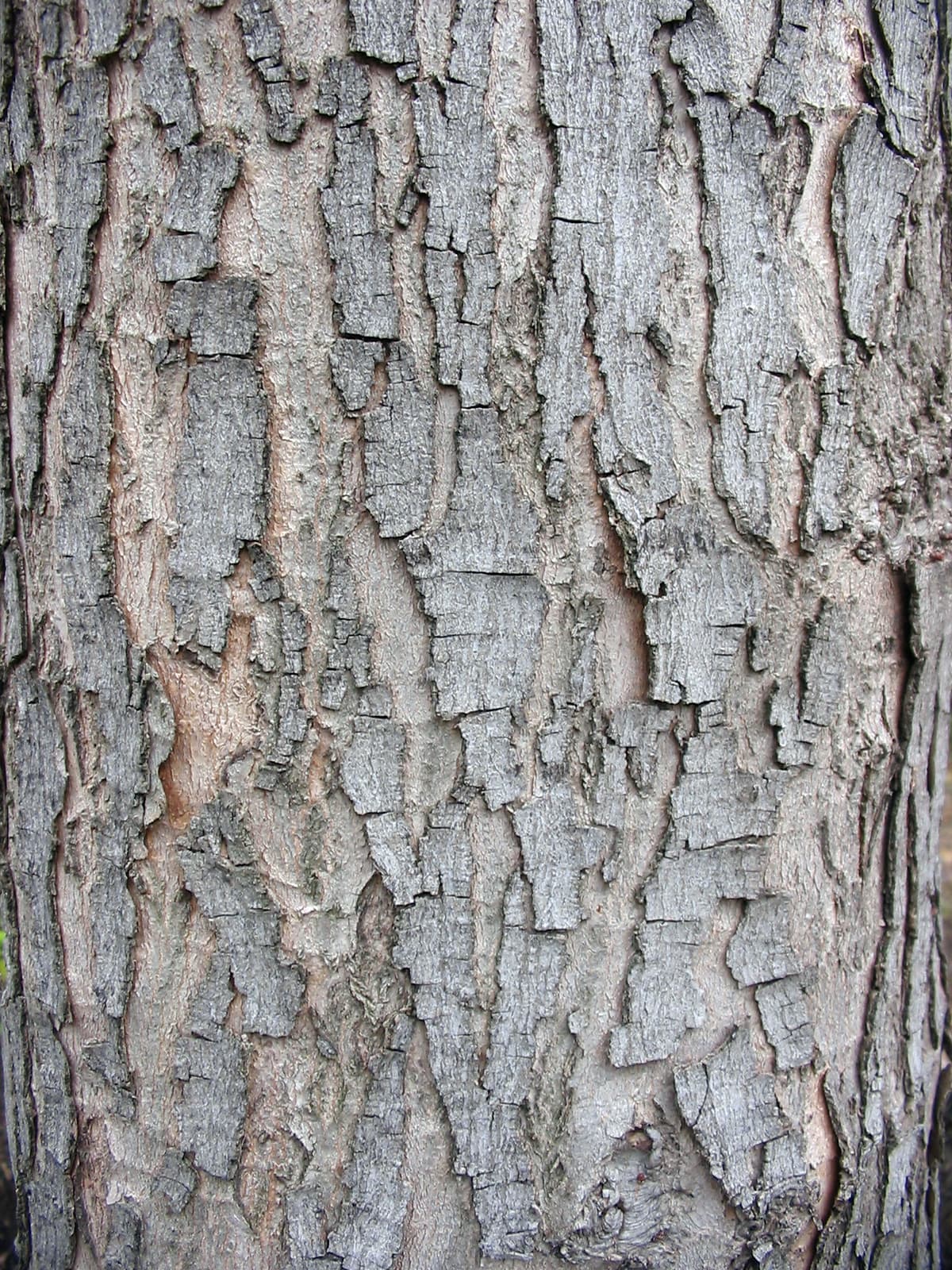
The barkSmooth and silver-gray when young, shredding into loose plates with age. 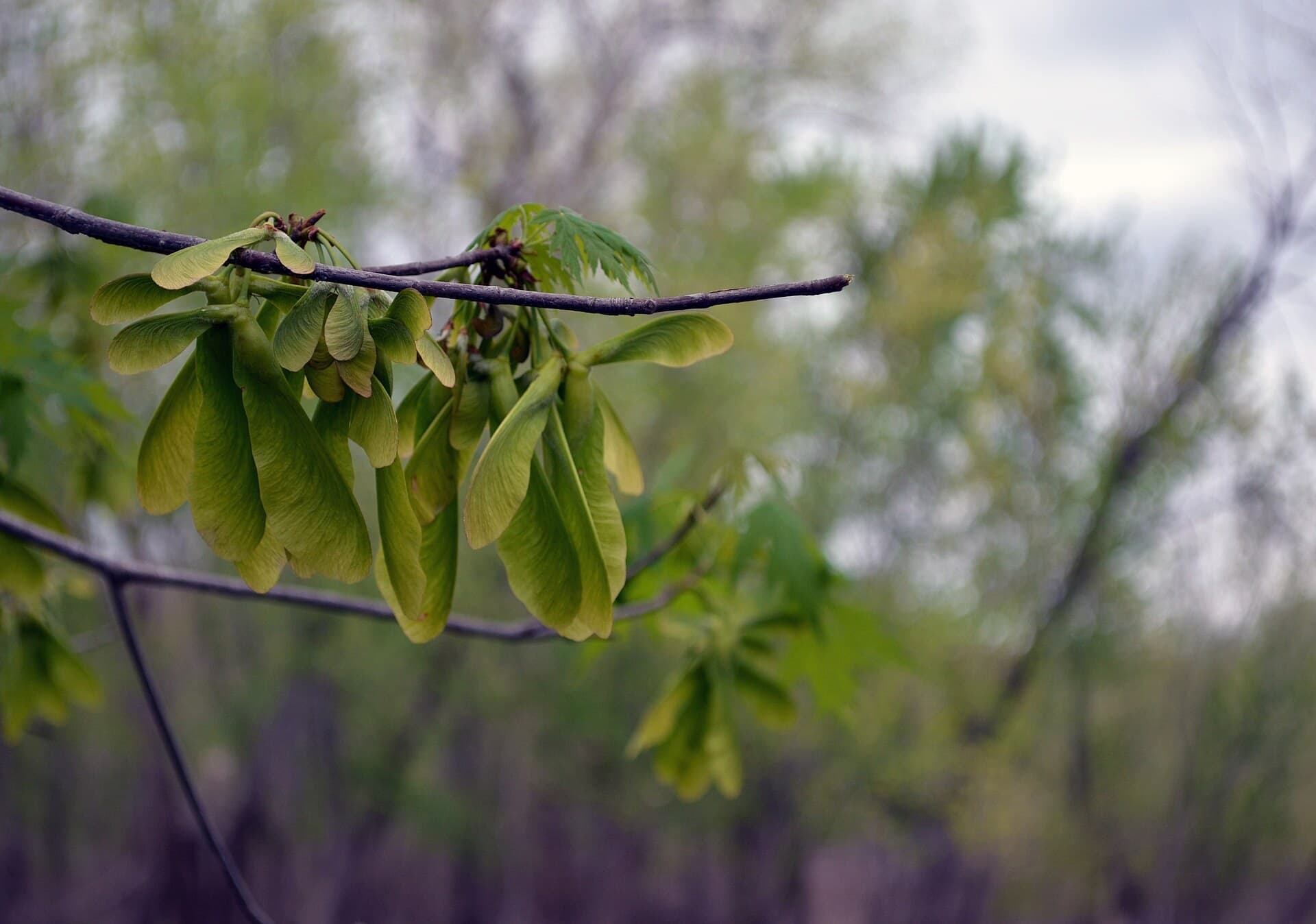
The seedPaired winged seeds set at a wide angle, dropped in late spring rather than autumn.
How to identify it
- Deeply cut five-lobed leaves, silvery-white underneath
- Leaves flash silver when the wind turns them
- Bark gray and smooth young, shaggy strips with age
- Often multiple trunks with tight, weak V-shaped unions
Where it grows
- Native range
- Native to floodplains and river bottoms across eastern North America, including eastern Kansas. Its natural home is wet ground, which explains both the speed and the shallow, water-hunting roots.
- Soil
- Adaptable, but happiest in deep, moist soil. On Kansas' high-pH clay it commonly develops iron chlorosis — pale yellow leaves with a network of green veins still showing.
- Sunlight
- Full sun
- Drought & heat
- Moderate drought tolerance, moderate heat tolerance.
If you already have a mature one, invest in structural pruning before storm season instead of removing a healthy tree. Just don't plant a new one next to the house.
Root behavior
Aggressive, shallow, and opportunistic. Surface roots lift sidewalks, patios, and drives, and fine roots will exploit any crack in an older clay sewer lateral. This is the single most common root-damage complaint in older Kansas neighborhoods.
Storm and branch-failure risk
The tree Kansas crews visit most after a windstorm. Fast growth produces weak wood, and the multiple trunks that form tight V-shaped unions with bark trapped inside them split apart under ice and straight-line wind.
Overall storm resistance: Poor. Assessing damage after a storm
Kansas pests and diseases
Iron chlorosis
ManageableYellow leaves with green veins, worst in the upper crown. Kansas' alkaline soil locks up iron. Soil-applied chelated iron helps for a season; trunk injection lasts longer but is a repeating cost, not a cure.
Cottony maple scale
CosmeticWhite cottony egg masses lined up along the undersides of twigs in early summer, plus sticky honeydew below. Usually knocked back by natural predators without intervention.
Verticillium wilt
SeriousA soil fungus that plugs the water-conducting tissue. Look for sudden wilting on one side or one limb and olive-green streaking under the bark. There is no cure — prune out affected limbs and keep the tree watered.
Full profiles in the pest library
Photographs, seasonal timing, treatment options, and the point past which the tree cannot be saved.
Seeing something not listed here? Work from the symptom instead
Pruning
Best windowLate summer or dormant season — avoid heavy spring cuts, which bleed sap
Reduce end weight on long horizontal limbs and subordinate competing leaders before storm season. Never top a silver maple: topping produces a dense crop of weakly attached sprouts that fail worse than the limbs they replaced.
Planting near homes
Not a tree to plant near a house, drive, or service line. If you have inherited a healthy mature one, structural pruning is almost always a better investment than removal.
When removal may be necessary
- A tight V-shaped union has begun to split, or shows included bark with a crack running down from it
- Large decay pockets have formed at old topping cuts or in a main fork
- Limbs have failed repeatedly over a house, drive, or play area
Removal is a judgment call about risk, not a formula. A tree with one of these conditions over open lawn is a very different situation from the same tree over a driveway — and that judgment needs someone on site.
Kansas Tree Guide is an independent educational resource. Nothing on this site replaces an on-site assessment by a qualified arborist or tree-care professional. Last reviewed August 2026.