Pin Oak
Quercus palustris
A handsome, fast oak that struggles in most of Kansas for one reason: our alkaline soil locks up iron, and pin oaks slowly starve for it. The yellow-leafed pin oak is a Wichita front-yard classic — for the wrong reasons.
- Height
- 60–70 ft
- Spread
- 25–40 ft
- Lifespan
- 80–120 yr
- Growth
- Fast
Identification
What to look at
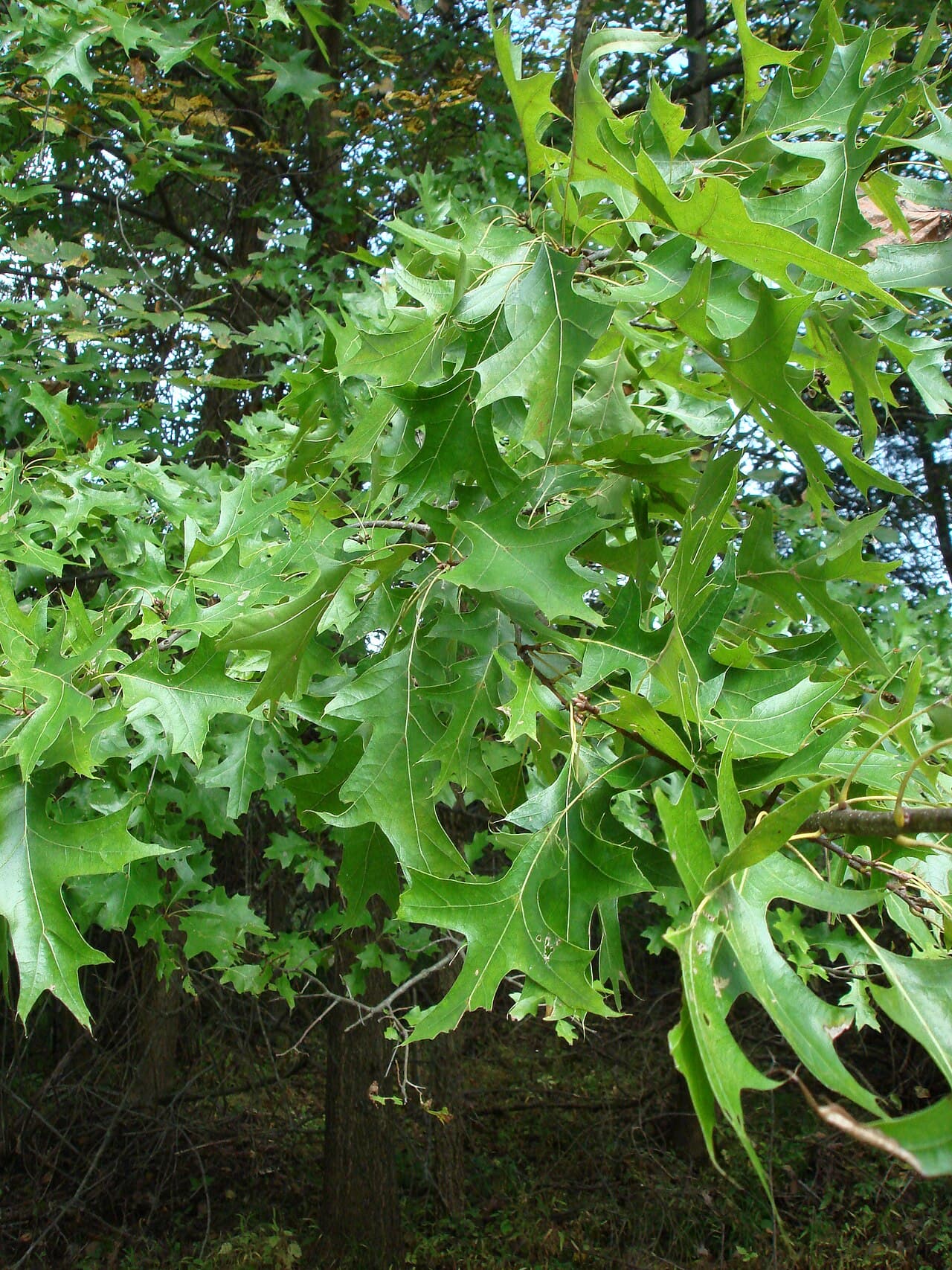
Three features settle most identifications: the bark on the trunk, the leaf in your hand, and whatever the tree is dropping.
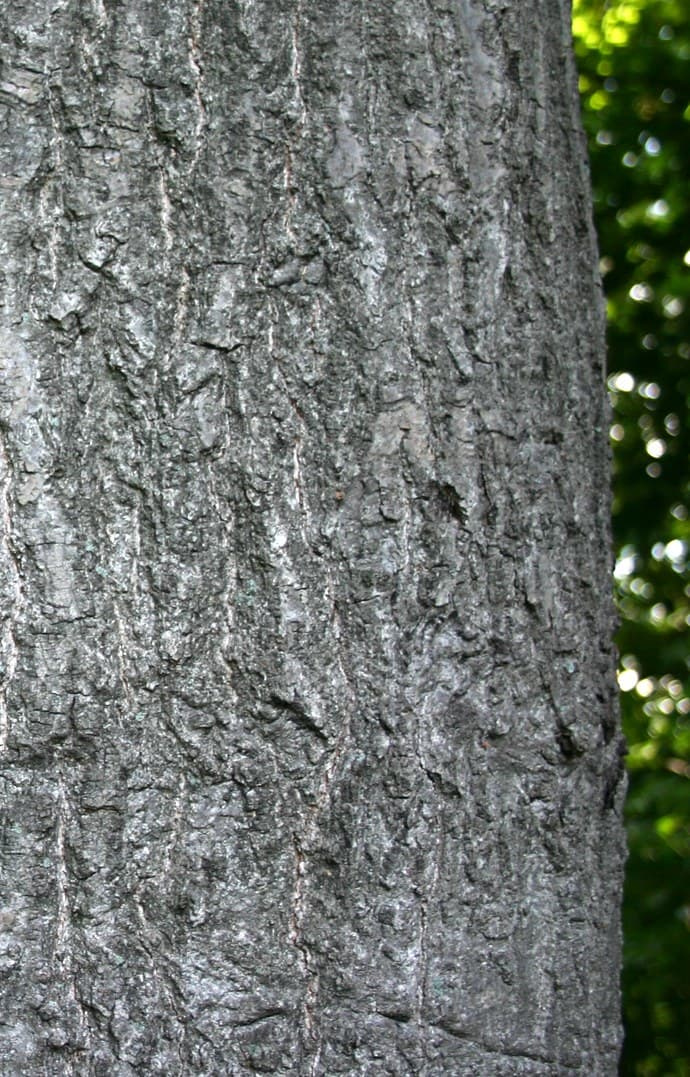
The barkNoticeably tighter and smoother than most oaks, with shallow ridges rather than deep furrows. 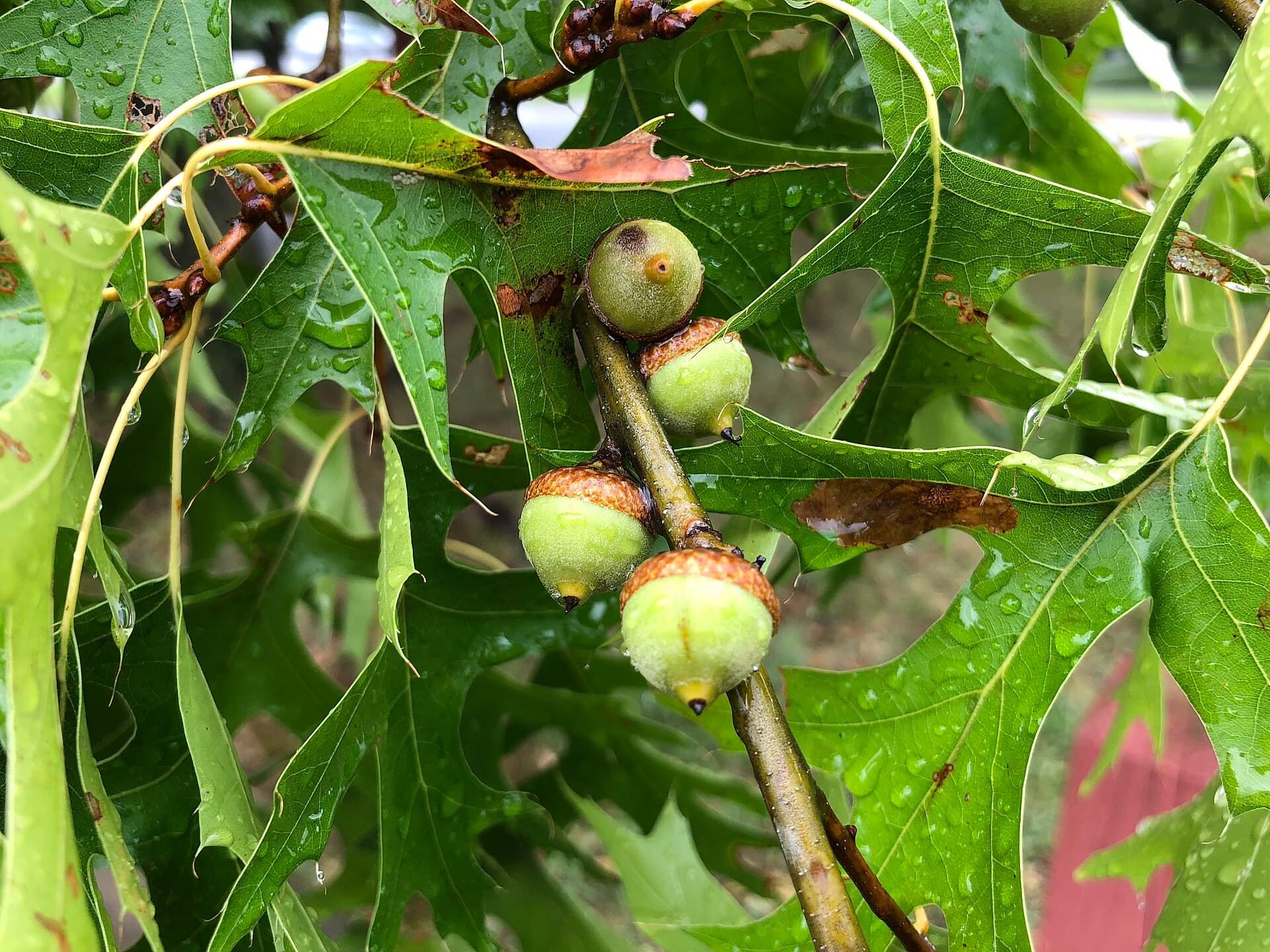
The seedSmall, nearly round acorns in shallow saucer caps, ripening among bristle-tipped leaves.
How to identify it
- Deeply cut, pointed lobes with bristle tips
- Strongly pyramidal shape; lower branches sweep downward
- Dead lower branches ('pins') persist inside the crown
- Small, round acorns with shallow caps
Where it grows
- Native range
- Native to bottomlands of the eastern United States, reaching only the far eastern edge of Kansas naturally. It has been planted statewide, well beyond the soils that suit it.
- Soil
- Needs acidic soil, below roughly pH 7.0. Kansas' alkaline clay locks up iron and the tree slowly starves — test your soil before planting one, not after.
- Sunlight
- Full sun
- Drought & heat
- Moderate drought tolerance, moderate heat tolerance.
Test your soil pH before planting one. Above about 7.5, expect chronic chlorosis — a bur oak, shumard oak, or chinkapin oak will be far happier in Kansas clay.
Root behavior
Shallower and more fibrous than most oaks, which makes it less drought-resilient here but also less of a threat to paving.
Storm and branch-failure risk
Sound wood and a strongly pyramidal form with good branch attachments. A healthy pin oak handles Kansas wind well; a chlorotic, declining one is a different tree entirely and sheds deadwood constantly.
Overall storm resistance: Good. Assessing damage after a storm
Kansas pests and diseases
Iron chlorosis
SeriousThe defining problem for this species in Kansas. Leaves turn yellow between green veins, then brown at the margins, and the crown thins from the top. Treatment manages symptoms; it never fixes the soil.
Oak wilt
SeriousA fungal disease fatal to red-oak-group trees, often within one season. Leaves drop while still half green. It spreads through root grafts between neighboring oaks as well as by beetles.
Bacterial leaf scorch
SeriousBrowning that begins at leaf margins in late summer, separated from healthy green tissue by a narrow yellow band. It recurs and worsens annually; there is no cure.
Full profiles in the pest library
Photographs, seasonal timing, treatment options, and the point past which the tree cannot be saved.
Seeing something not listed here? Work from the symptom instead
Pruning
Best windowDormant season only — December through February. Never April through July.
Remove the persistent dead lower branches — the 'pins' — for clearance as needed. The timing rule is not optional: sap beetles that carry oak wilt fly from April through July, and a fresh cut on a red-oak-group tree in that window is an open door.
Planting near homes
Reasonable near a home in eastern Kansas where soil pH allows it. In central and western Kansas, choose a bur, chinkapin, or shumard oak instead and skip the decades of chlorosis treatment.
When removal may be necessary
- Chronic severe chlorosis with progressive crown dieback that treatment has not reversed
- Oak wilt confirmed by a lab — act quickly and sever root grafts to protect neighboring oaks
- Structural decay in the trunk above a target
Removal is a judgment call about risk, not a formula. A tree with one of these conditions over open lawn is a very different situation from the same tree over a driveway — and that judgment needs someone on site.
Kansas Tree Guide is an independent educational resource. Nothing on this site replaces an on-site assessment by a qualified arborist or tree-care professional. Last reviewed August 2026.