
Eastern Redbud
Cercis canadensis
The best small flowering tree for Kansas yards: magenta blooms straight off the bare branches in early spring, a patio-friendly size, and roots that won't hunt your foundation.
- Height
- 15–25 ft
- Spread
- 25–35 ft
- Lifespan
- 40–70 yr
- Growth
- Moderate
Identification
What to look at
Three features settle most identifications: the bark on the trunk, the leaf in your hand, and whatever the tree is dropping.
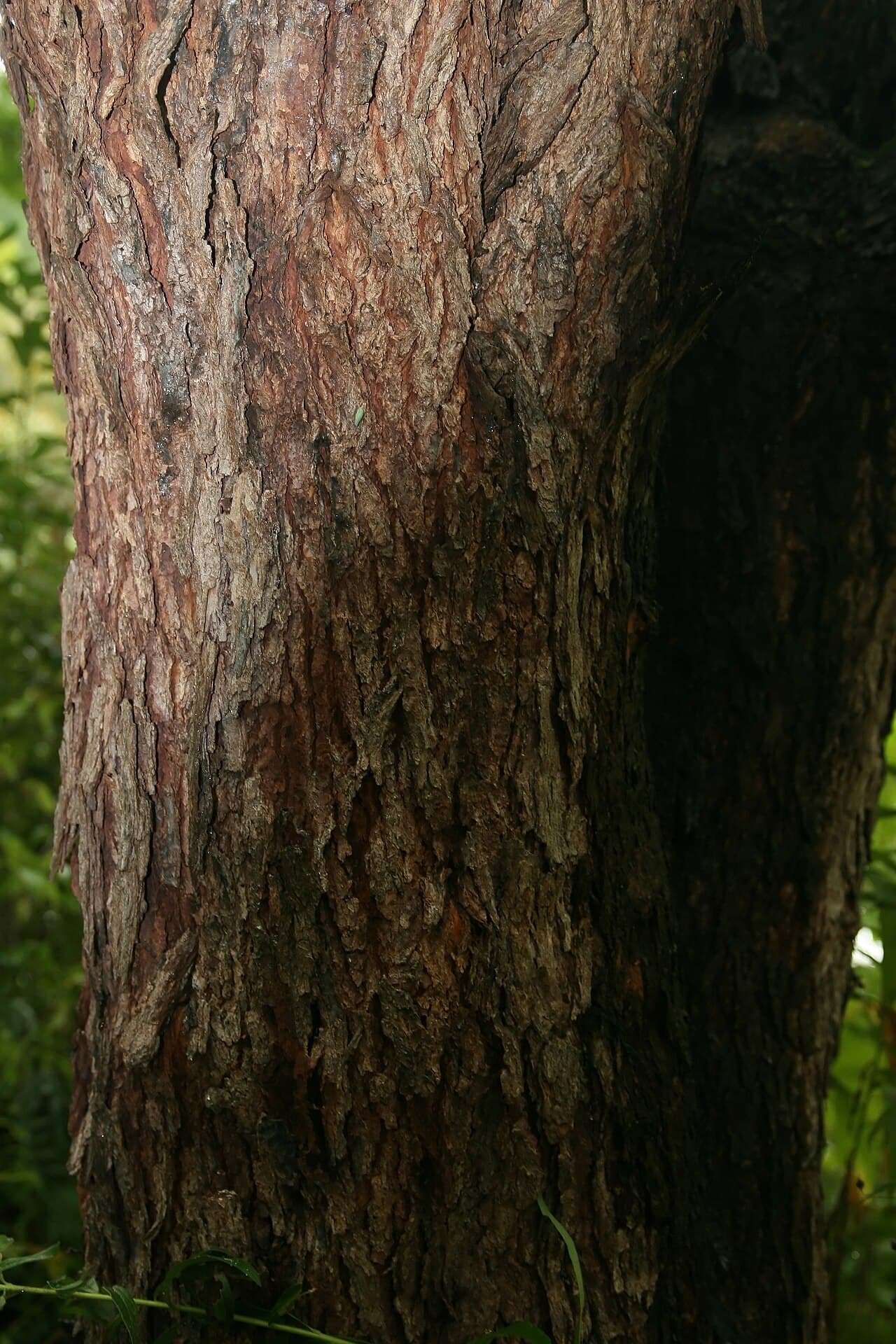
The barkSmooth and dark when young, breaking into thin scaly plates with age. 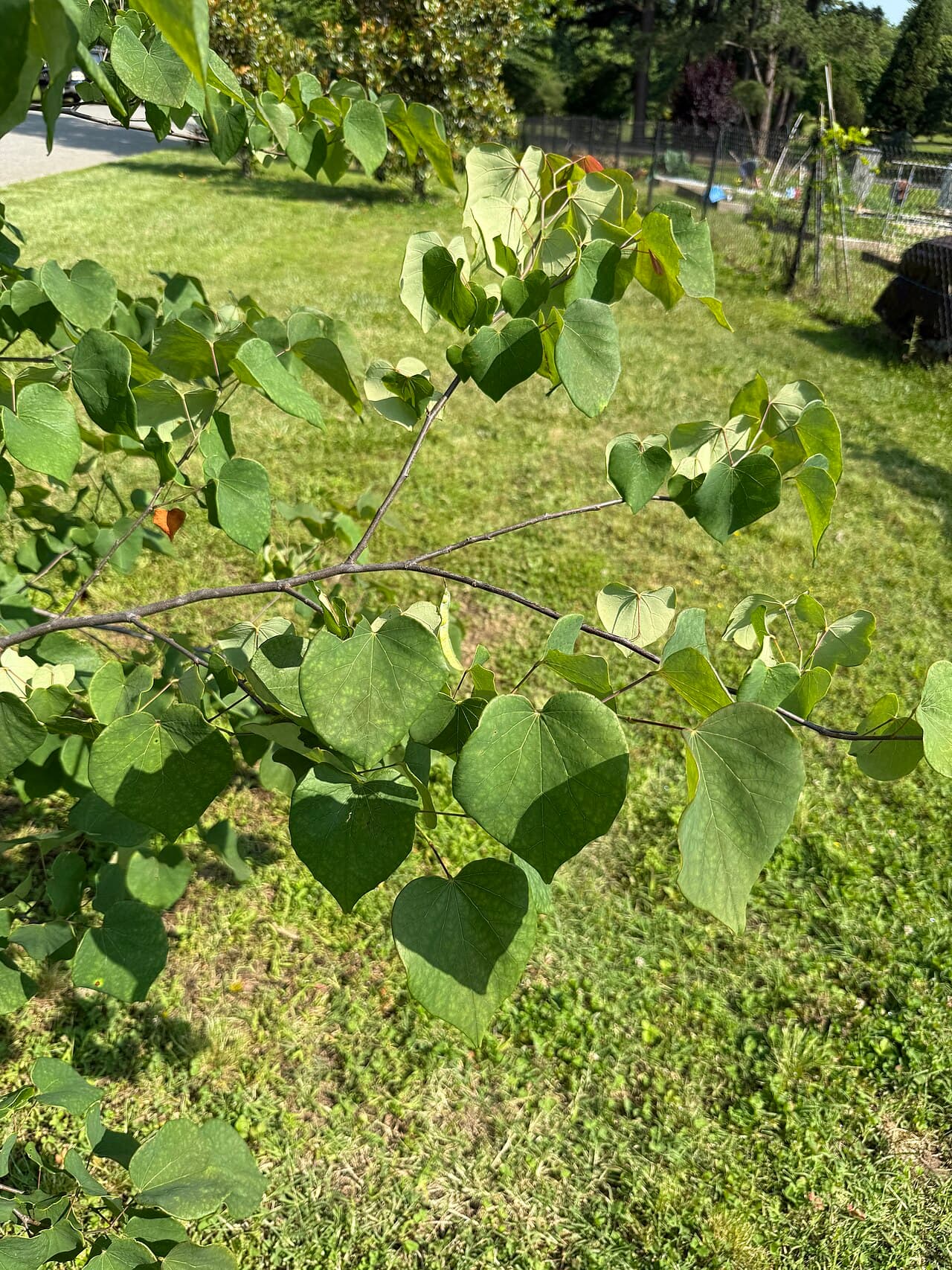
The leafPerfectly heart-shaped with a smooth, unbroken edge.
How to identify it
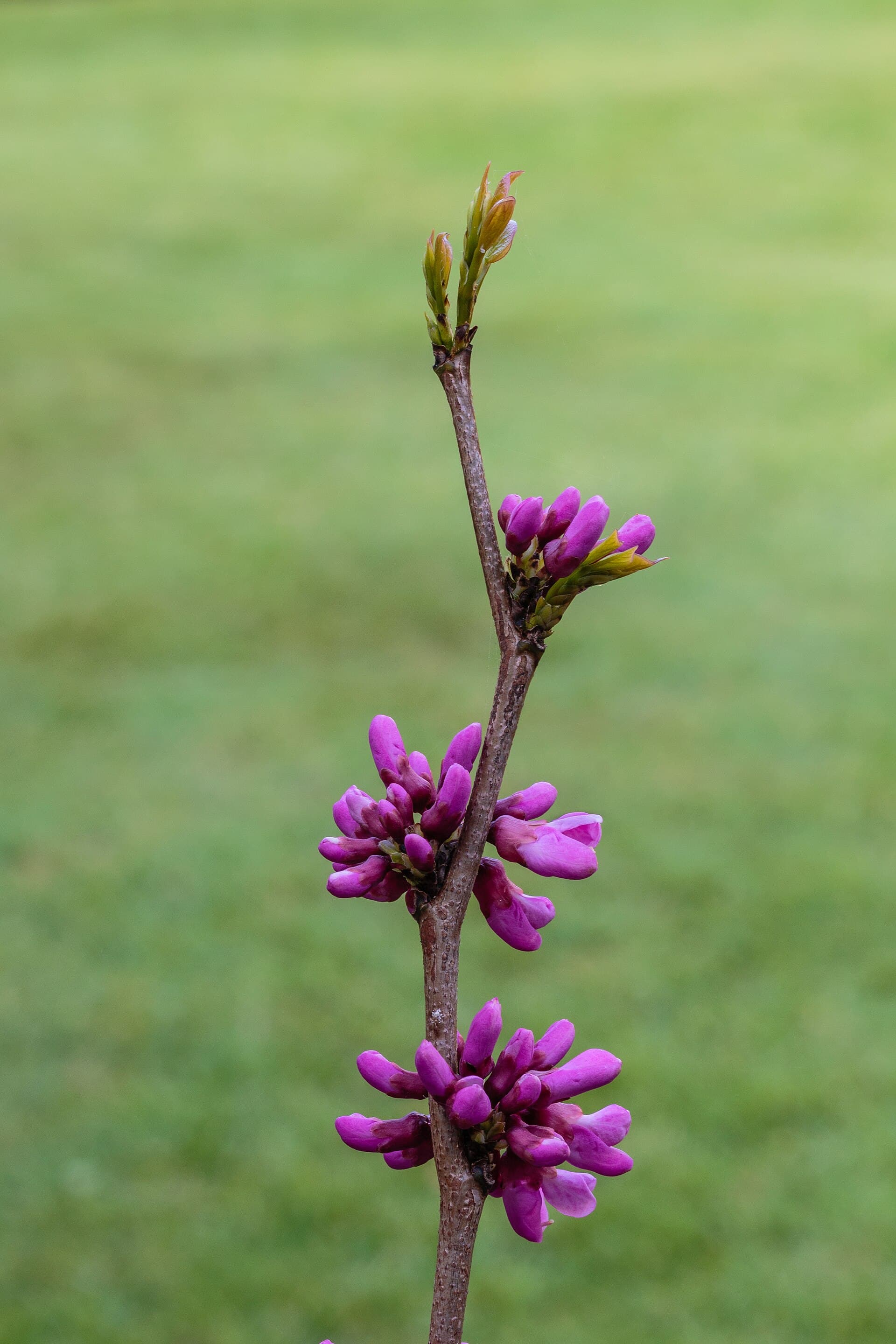
- Magenta-pink pea-like flowers on bare wood, even on the trunk
- Heart-shaped leaves
- Flat brown seed pods hang into winter
- Low, spreading, often multi-trunked habit
Where it grows
- Native range
- Native to eastern North America, including the woodland edges and creek margins of eastern Kansas, where it flowers along fencerows before anything else has leafed out.
- Soil
- Well-drained soil is essential. Redbud is noticeably short-lived on heavy, poorly drained clay — drainage matters more than fertility.
- Sunlight
- Full sun to part shade; appreciates afternoon shade in western Kansas
- Drought & heat
- Moderate drought tolerance, high heat tolerance.
Native to east-Kansas woodlands and happy in town everywhere east of Dodge City with a little water. Ideal under power lines and near patios.
Root behavior
Shallow but small in scale, and safe near patios, walks, and drives. It will not hunt a foundation or a sewer line.
Storm and branch-failure risk
Good for its size. The main weakness is multi-trunk plants splitting at the base where the stems meet, particularly under ice.
Overall storm resistance: Good. Assessing damage after a storm
Kansas pests and diseases
Botryosphaeria canker
SeriousSunken, dark cankers girdle individual branches and kill them one at a time, usually starting on drought-stressed trees. Prune well below each canker in dry weather and water deeply in summer.
Verticillium wilt
SeriousA soil fungus causing sudden wilt and dieback, often on one side of the tree first. There is no cure — prune out affected wood and avoid replanting susceptible species in the same spot.
Full profiles in the pest library
Photographs, seasonal timing, treatment options, and the point past which the tree cannot be saved.
Seeing something not listed here? Work from the symptom instead
Pruning
Best windowImmediately after flowering, in spring
Prune right after bloom. Redbud sets next year's flower buds on old wood during the summer, so a winter pruning trades away the spring display. Remove crossing stems and thin congested multi-trunk clumps.
Planting near homes
One of the best small trees for a Kansas yard. Patio-friendly size, roots that stay put, and small enough to sit comfortably under power lines.
When removal may be necessary
- Canker has girdled the main stems and the crown is dying back progressively
- Decline on chronically wet ground, which redbud does not survive long-term
Removal is a judgment call about risk, not a formula. A tree with one of these conditions over open lawn is a very different situation from the same tree over a driveway — and that judgment needs someone on site.
Kansas Tree Guide is an independent educational resource. Nothing on this site replaces an on-site assessment by a qualified arborist or tree-care professional. Last reviewed August 2026.