Bur Oak
Quercus macrocarpa
The workhorse shade tree of the Kansas prairie edge — deep-rooted, drought-tough, and built for wind. Slow to start, but a bur oak planted well can outlive everything else on the block.
- Height
- 60–80 ft
- Spread
- 60–80 ft
- Lifespan
- 200–300 yr
- Growth
- Slow
Identification
What to look at
Three features settle most identifications: the bark on the trunk, the leaf in your hand, and whatever the tree is dropping.
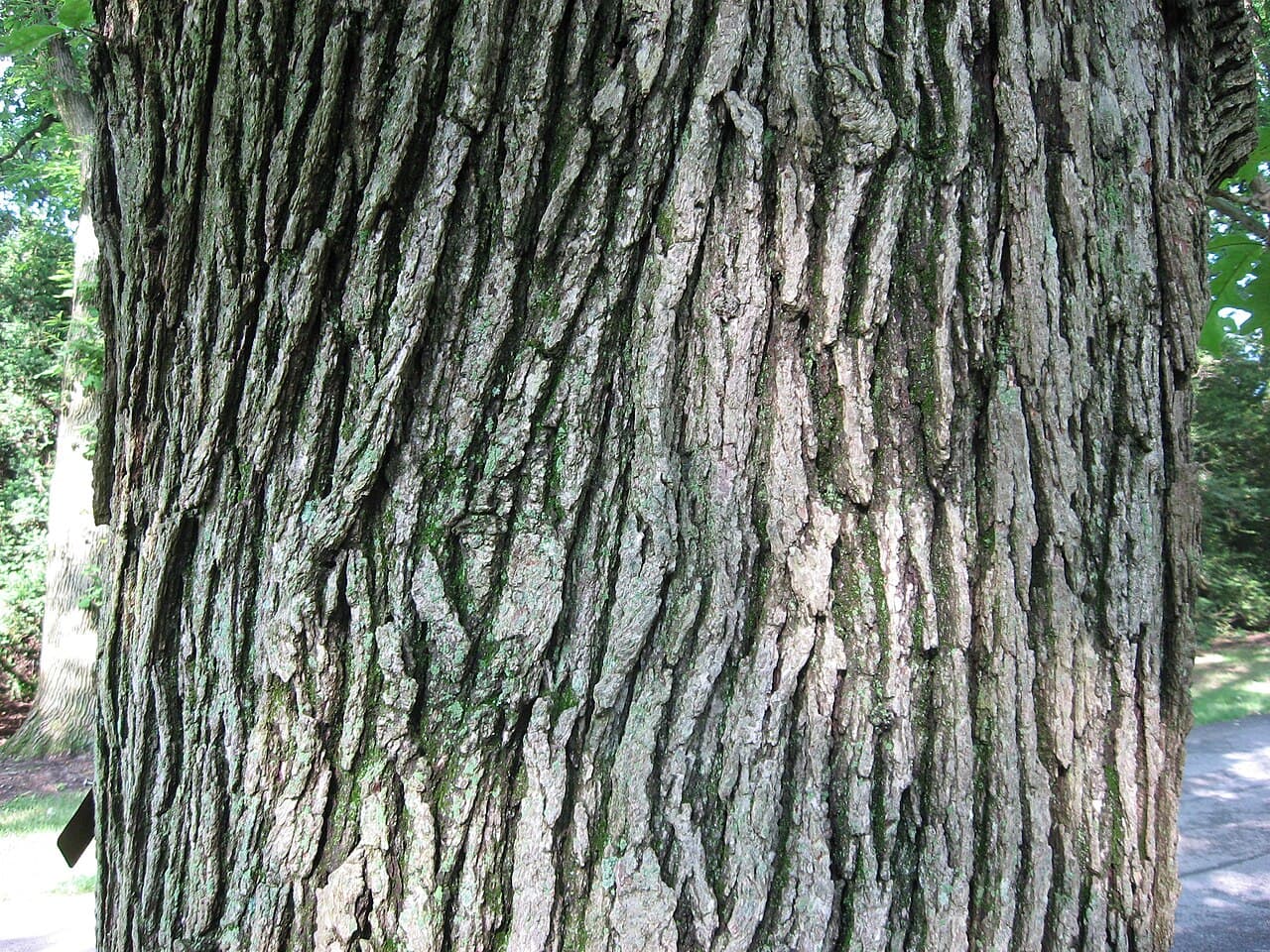
The barkCorky ridges run the full height of the trunk, and even young twigs carry corky wings. 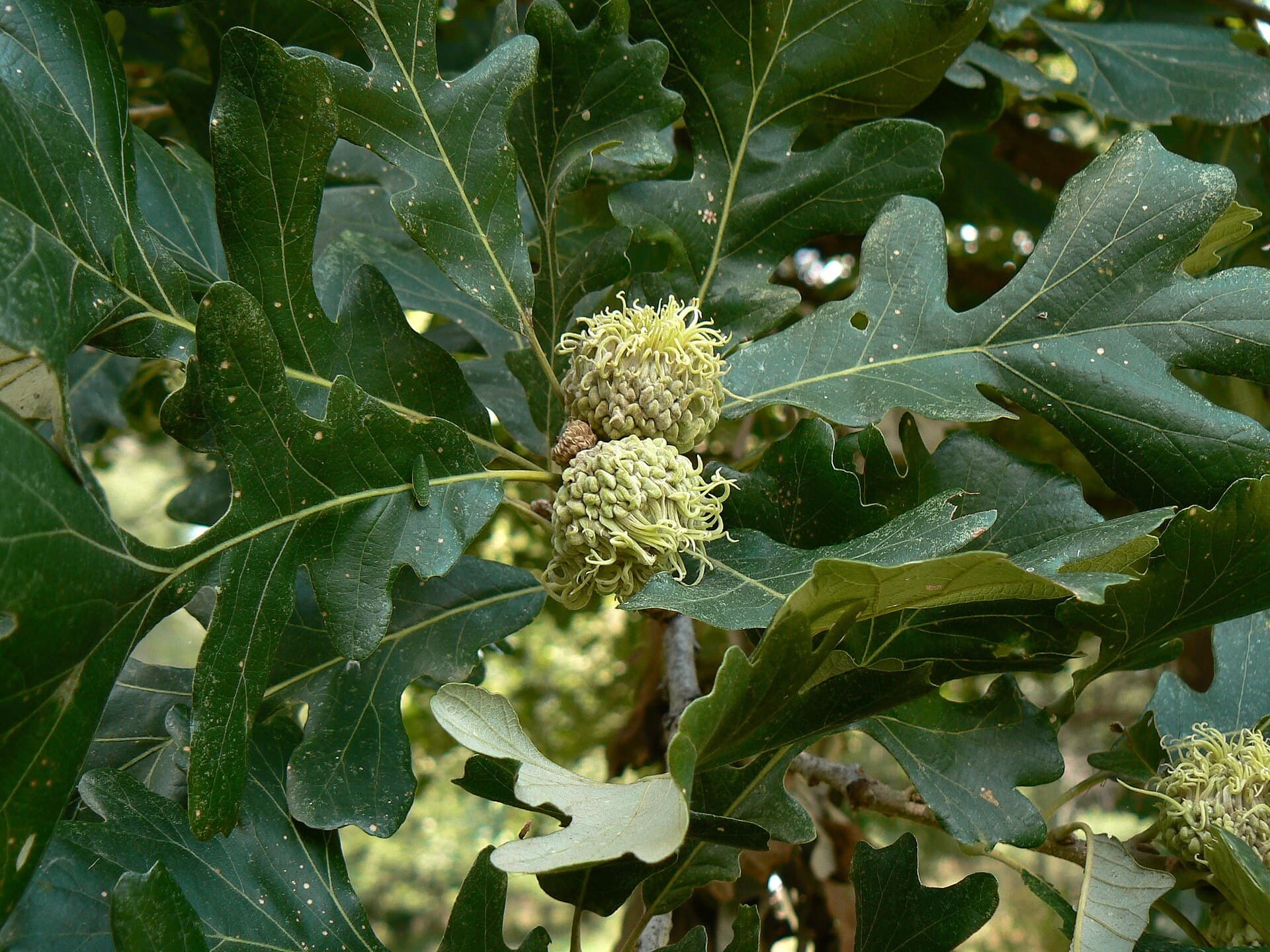
The seedThe fringed, burred cap is unmistakable — no other Kansas oak makes one.
How to identify it
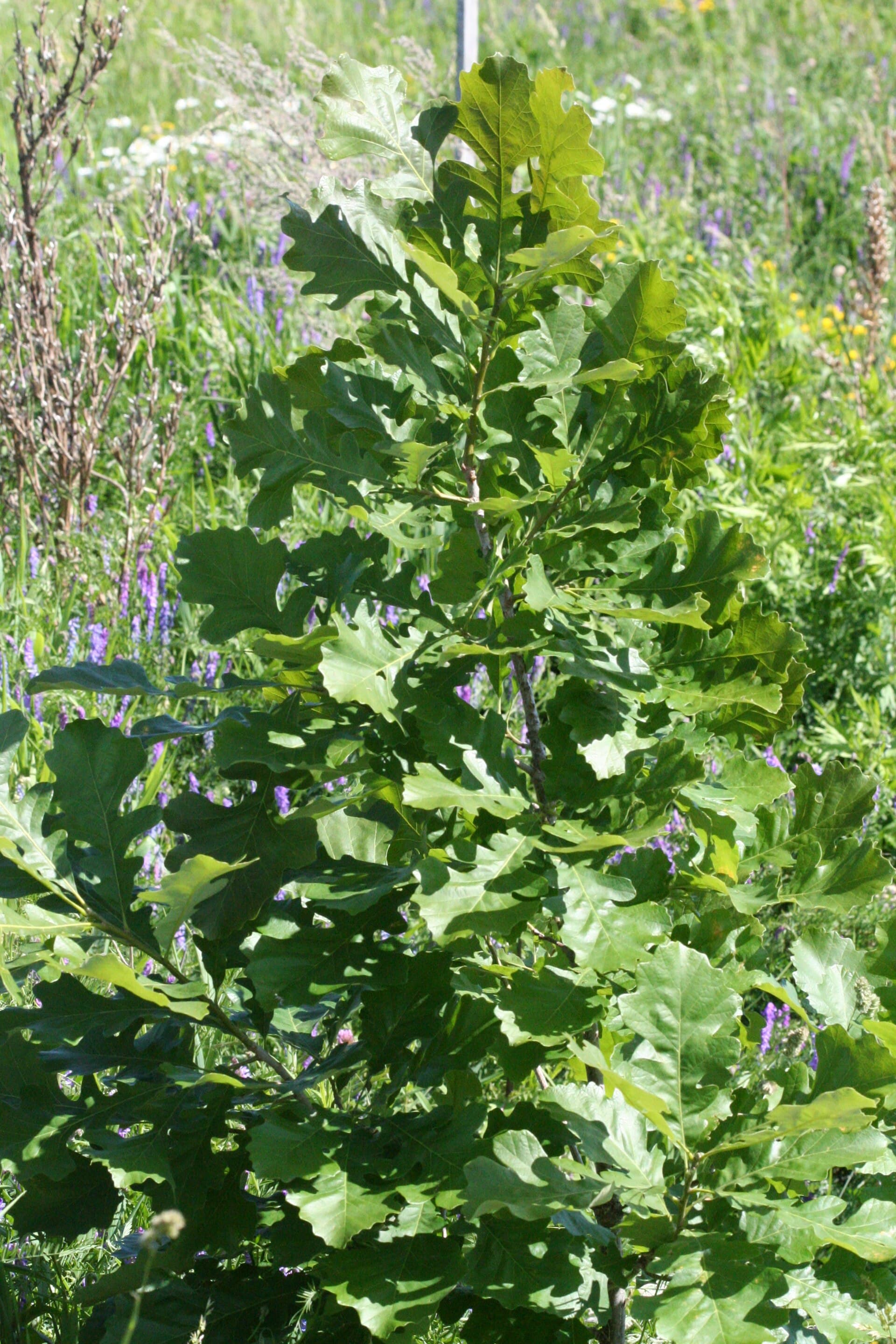
- Large leaves with deep, rounded lobes, widest near the tip
- Corky, deeply furrowed gray bark, even on young branches
- Huge acorns with a fringed, burred cap
- Broad, sturdy crown with heavy horizontal limbs
Where it grows
- Native range
- Native across the eastern Great Plains and Midwest, and throughout eastern and central Kansas. One of the very few large oaks that ranges naturally out onto true prairie, which is exactly why it copes here.
- Soil
- Handles the widest soil range of any oak you can plant in Kansas — heavy clay, thin limestone soils, and alkaline pH above 7.5 that would leave a pin oak chronically chlorotic.
- Sunlight
- Full sun
- Drought & heat
- High drought tolerance, high heat tolerance.
Handles clay, alkaline soil, drought, and straight-line wind better than almost any large shade tree you can plant in Kansas. Give it room and patience.
Root behavior
Sends down a strong taproot as a seedling, then develops a deep, wide lateral system. Rarely lifts sidewalks or invades sewer laterals, which makes it one of the safest large trees to plant within reach of paving.
Storm and branch-failure risk
Among the most storm-reliable large trees in the state. Strong wood and wide, well-attached branch angles carry straight-line wind and ice loading well. Failures are usually limited to over-extended lower limbs on open-grown trees.
Overall storm resistance: Good. Assessing damage after a storm
Kansas pests and diseases
Leaf and twig galls
CosmeticTiny wasps induce woolly, woody, or bullet-shaped galls on leaves and twigs. They look alarming on a favorite tree and are essentially harmless — no spray is warranted or effective.
Two-lined chestnut borer
SeriousAttacks oaks already weakened by drought, grade changes, or construction damage, killing the crown from the top down. The defense is water and root protection, not insecticide.
Slow establishment
ManageableBur oak spends its early years building roots rather than top growth. Deep, infrequent soaking through the first three summers is the difference between a thriving tree and a stalled one.
Full profiles in the pest library
Photographs, seasonal timing, treatment options, and the point past which the tree cannot be saved.
Seeing something not listed here? Work from the symptom instead
Pruning
Best windowDormant season — November through February
The work that matters happens in the first fifteen years: establish one central leader and well-spaced scaffold limbs, then largely leave it alone. Bur oak is in the white oak group and far less vulnerable to oak wilt than the red oaks, but dormant-season cuts are still the right habit statewide.
Planting near homes
One of the better large trees to site near a home, provided you respect the eventual footprint — plan for a crown 60 to 80 feet across and keep the trunk at least 30 feet from the foundation.
When removal may be necessary
- Extensive trunk decay leaving a thin shell above a house, drive, or play area
- A crack running through the trunk or a major fork
- The root plate has lifted and soil has heaved on one side after a storm
Removal is a judgment call about risk, not a formula. A tree with one of these conditions over open lawn is a very different situation from the same tree over a driveway — and that judgment needs someone on site.
Kansas Tree Guide is an independent educational resource. Nothing on this site replaces an on-site assessment by a qualified arborist or tree-care professional. Last reviewed August 2026.