
Fire blight
Erwinia amylovora
A bacterial disease that runs down shoots from the blossoms in warm wet spring weather, leaving branches that look genuinely scorched. In Kansas it is above all a Callery and Bradford pear problem, on a tree that already has other reasons to come out.
Serious. Capable of killing branches, sections, or eventually the whole tree. Often a symptom of an underlying stress that matters more than the organism itself.
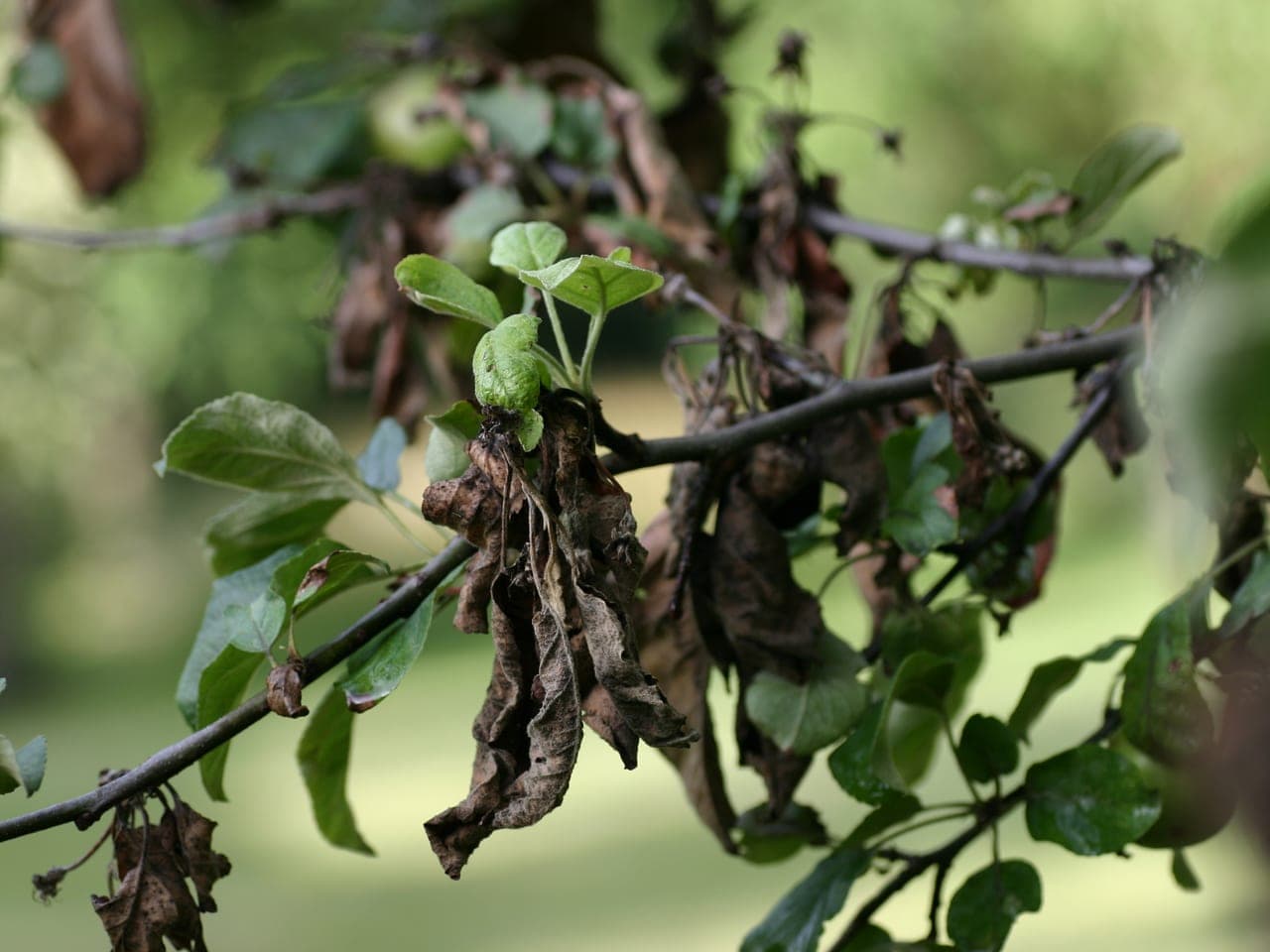
What you see
- Shoot tips wilting and bending over into a sharp hook — the shepherd's crook
- Leaves and blossoms turning brown to black and staying attached rather than dropping
- Whole branch sections that look as though they have been burned
- Sticky amber ooze on affected twigs and branches in warm humid weather
- Sunken, dark, cracked cankers where infection has reached older wood
- Damage progressing downward from the tips toward the trunk
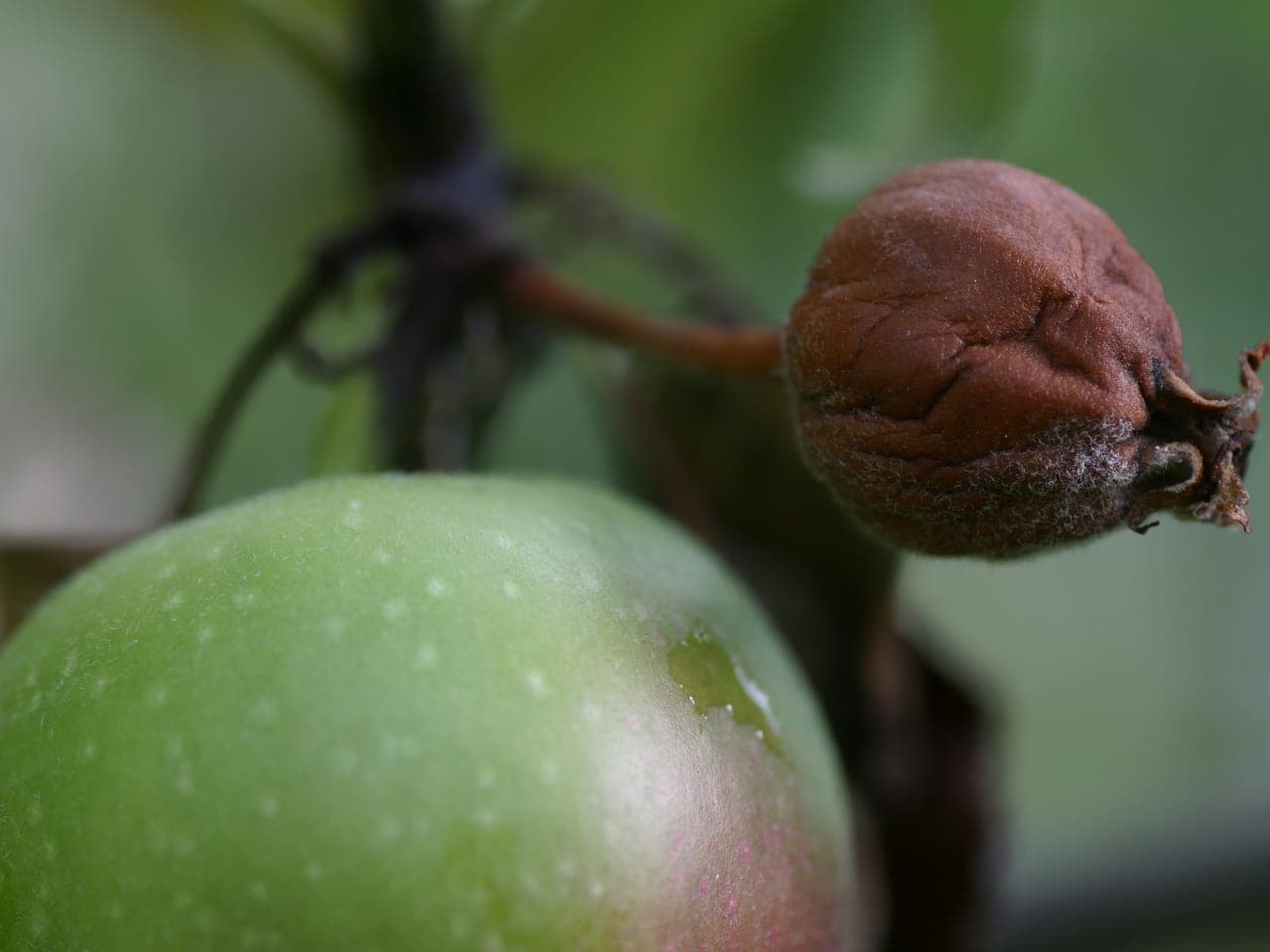
Blossoms are the entry point, which is why damage so often starts at the fruiting spurs and runs back down the shoot.
How to be sure: Blackened leaves that cling. Nearly everything else that kills a shoot lets the dead leaves fall; fire blight keeps them hanging on the crook.
Trees it affects in Kansas
Also affects: Apple and crabapple, Pear, Hawthorn, Mountain ash, Cotoneaster, Pyracantha, Quince.
When it happens in Kansas
Bloom, April – May
The critical infection period. Bacteria enter through open blossoms, and warm humid weather during bloom is what produces a bad year. A cool dry bloom can mean almost no disease at all.
May – June
Shepherd's crooks and blackened shoots appear and spread. Hail and storm damage during this period drives infection deep into a tree very quickly.
Summer
Infection moves down into scaffold branches and forms cankers. Pruning now risks spreading it, so most cutting waits.
Dormant season
The bacteria overwinter at canker margins. This is the safe window to cut infected wood out, in dry weather.
Prevention
- Plant resistant species and cultivars — this matters far more than anything you can spray
- Avoid heavy nitrogen fertilizer, which forces the soft succulent growth fire blight moves through fastest
- Do not prune during bloom or in wet weather
- Disinfect pruning tools between every cut when working on an infected plant
- Remove nearby heavily infected ornamental pears and hawthorns that act as a reservoir
- In Kansas, think hard before planting Callery or Bradford pear at all — it is invasive here and structurally weak in addition to being blight-prone
Treatment options
What you can do yourself
Prune out infected woodDormant season and dry weather, or immediately in dry conditions if the infection is running fast
Cut eight to twelve inches below the lowest visible damage, into clean wood, and disinfect the blade between cuts with alcohol or a bleach solution. Burn or bin the prunings; do not chip them into mulch that goes back under the tree.
Restraint with fertilizer and waterGrowing season
Fire blight travels through soft rapid growth. Backing off nitrogen and heavy irrigation genuinely slows it, which is one of the few cultural controls that works reliably.
What treatment actually achieves
There is no spray that cures an infected branch — the bacteria are inside the tissue and moving. Pruning genuinely works, but only if you cut far enough below the visible edge and sterilize between cuts, and doing it in wet weather or during bloom can spread the disease faster than leaving it alone. On Callery pear specifically, it is worth stepping back from the disease question entirely: this is a tree Kansas would be better off replacing.
When the tree may not be recoverable
- Cankers that have reached the main trunk or the primary scaffold limbs
- More than about half the canopy blighted in a single season
- Repeated severe infection year after year on a susceptible cultivar in a wet-spring location
- A Bradford or Callery pear with both significant blight and the usual narrow, included-bark branch unions — that combination is a removal conversation
Common questions
My ornamental pear looks burned on one side. Is that fire blight?
Very likely, especially after a warm wet spring. Look for the hooked shoot tips and blackened leaves still hanging on. The one-sided pattern is normal — infection starts wherever blossoms were wet during the infection window.
Can I prune it out now?
If conditions are dry, yes — cut eight to twelve inches below the lowest visible damage and disinfect between cuts. If it is wet, wait, because pruning in wet weather is an efficient way to spread it. The dormant season is the safest time.
Should I just replace the tree?
With a Callery or Bradford pear, that is worth serious consideration regardless of the disease. They are structurally weak, short-lived, and invasive in Kansas. Fire blight is usually the third reason on a list that already had two.
Kansas Tree Guide is an independent educational resource. Nothing on this site replaces an on-site assessment by a qualified arborist or tree-care professional. Last reviewed August 2026.