
Bradford (Callery) Pear
Pyrus calleryana
The white-flowering subdivision tree of the 1990s and 2000s — uniform, showy, and structurally doomed. Tight branch angles make mature Bradfords split apart in Kansas wind, and wild callery seedlings are invading fence lines and pastures.
- Height
- 30–40 ft
- Spread
- 20–30 ft
- Lifespan
- 15–25 yr
- Growth
- Fast
Identification
What to look at
Three features settle most identifications: the bark on the trunk, the leaf in your hand, and whatever the tree is dropping.
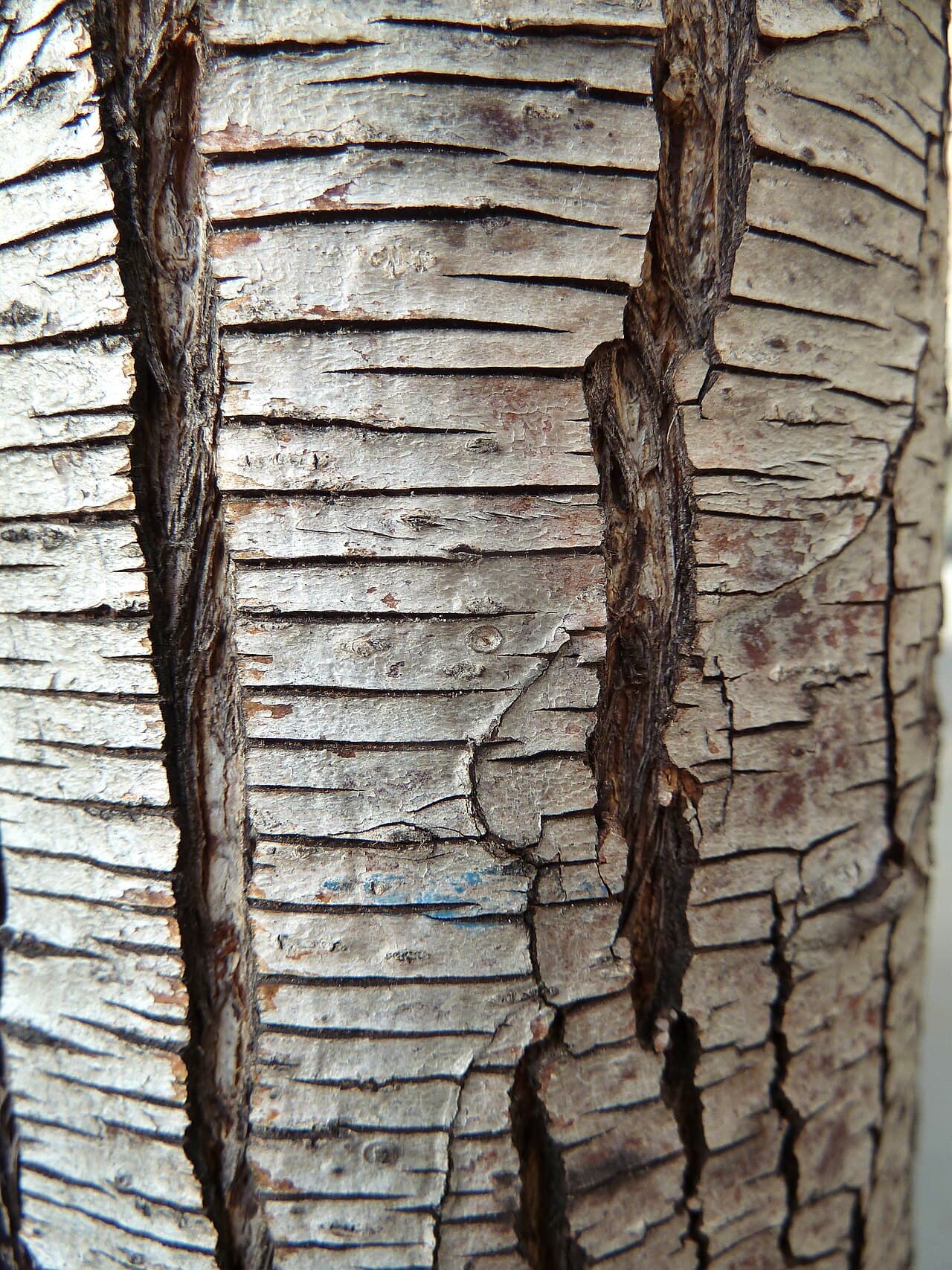
The barkShallow, tight fissures — smooth on young trunks, lightly furrowed with age. 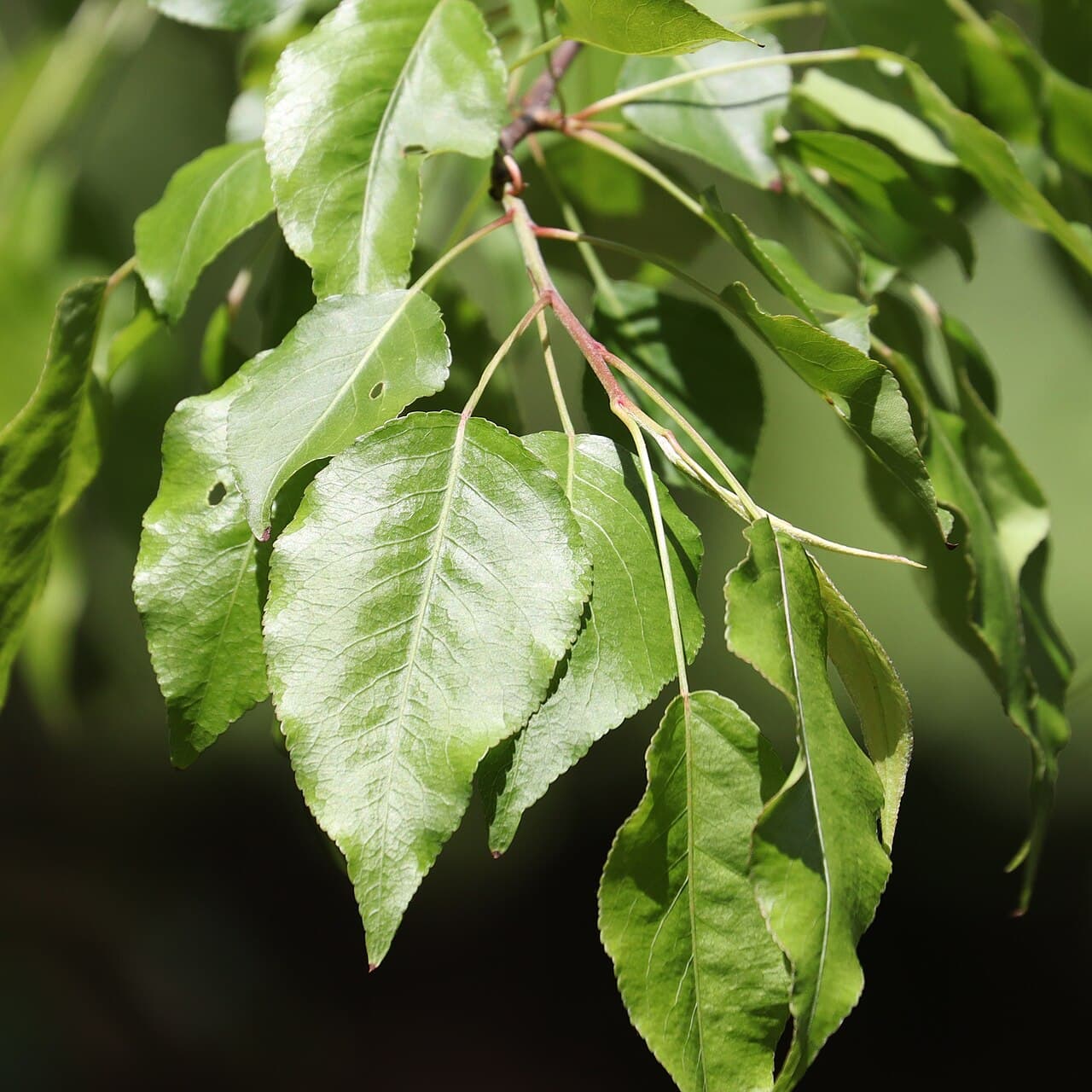
The leafGlossy, leathery, and finely scalloped along the edge.
How to identify it
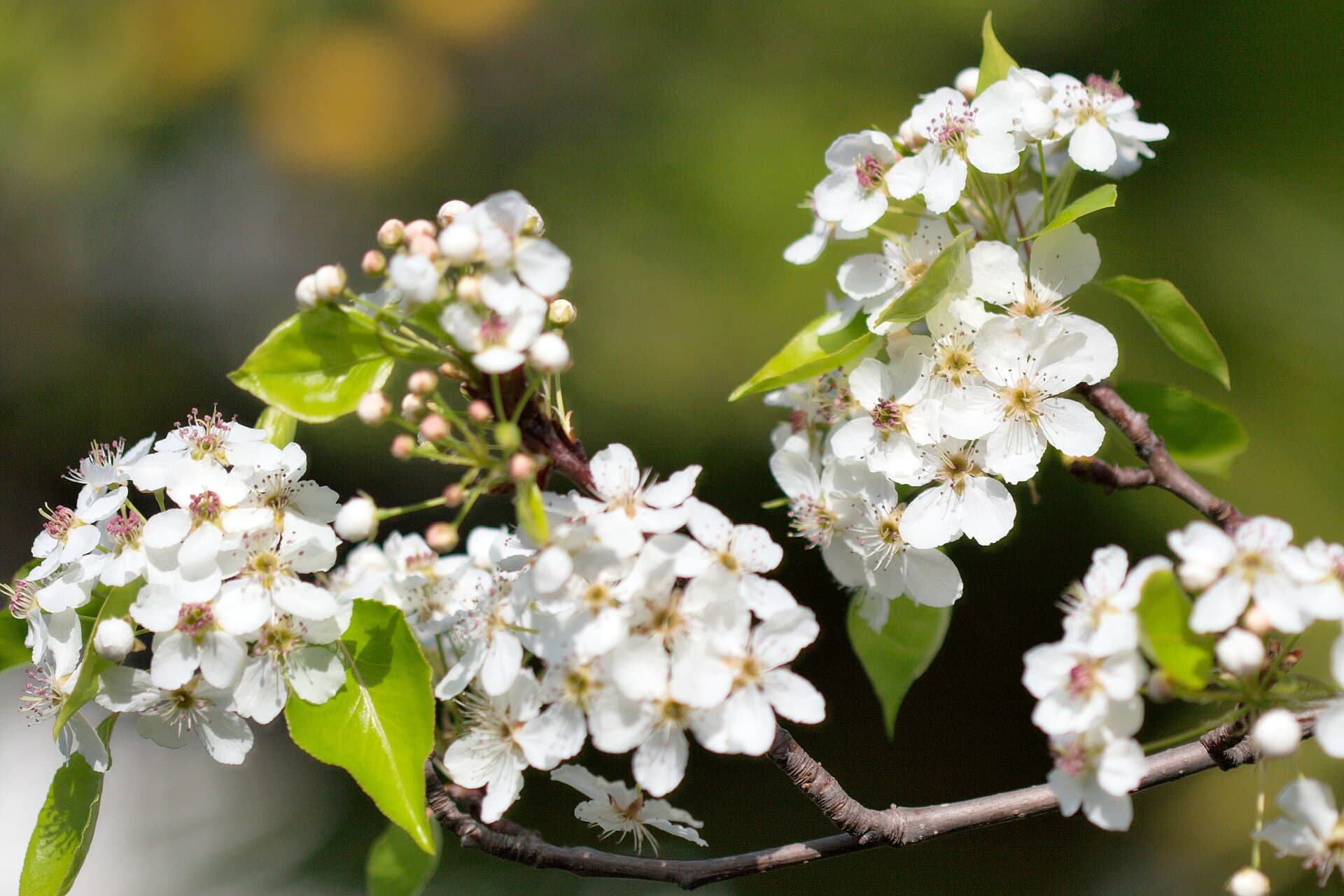
- Covered in white blossoms in early spring, before leaves
- Glossy, teardrop-shaped leaves that turn maroon late in fall
- Dense, symmetrical lollipop crown
- Many branches rising steeply from one point on the trunk
Where it grows
- Native range
- Native to China and Vietnam, introduced as a street ornamental and now escaped across much of the eastern and central United States. Wild callery pear has appeared on invasive watch lists in a growing number of states.
- Soil
- Tolerates nearly anything, including compacted urban clay and high pH — a large part of why it was planted so heavily.
- Sunlight
- Full sun
- Drought & heat
- Moderate drought tolerance, high heat tolerance.
Widely discouraged for new planting across Kansas. If yours is mature and intact, have the branch unions assessed; when it splits, replace it with a redbud or serviceberry rather than another pear.
Root behavior
Moderately shallow and dense, but not notably destructive. This tree's problems are all above ground.
Storm and branch-failure risk
The defining flaw of the species. A dozen or more limbs rise from nearly the same point on the trunk at very tight angles, trapping bark inside each union. Kansas ice and straight-line wind split those trees apart, usually somewhere between fifteen and twenty-five years old.
Overall storm resistance: Poor. Assessing damage after a storm
Kansas pests and diseases
Fire blight
SeriousA bacterial disease that scorches shoot tips black and hooks them over like a shepherd's crook. Prune well below the damage in dry weather and disinfect tools between cuts.
Structural splitting
SeriousNot a pest, but the reason most Bradfords leave Kansas yards. Tight, bark-included branch unions fail catastrophically in wind and ice once the tree reaches size.
Wild callery seedlings
ManageableCross-pollinated offspring revert to a thorny, dense wild form that colonizes fence lines and pastures. Cut volunteers young — the thorns will puncture a tractor tire.
Full profiles in the pest library
Photographs, seasonal timing, treatment options, and the point past which the tree cannot be saved.
Seeing something not listed here? Work from the symptom instead
Pruning
Best windowDormant season, with the structural work done while the tree is young
The only meaningful preventive work happens early: thin the number of limbs arising from one point and space the remaining scaffolds along the trunk. A mature Bradford full of included bark cannot be pruned back to safety — reduce end weight, then plan the replacement.
Planting near homes
Use caution. The tree is small enough that a failure rarely destroys a roof, but splits routinely land on cars, fences, and walkways with no warning.
When removal may be necessary
- A major limb has already split out, leaving a torn union in the trunk
- Cracks are visible where several limbs meet at one point on the trunk
- It is seeding thorny wild callery pear into a nearby fence line or pasture
Removal is a judgment call about risk, not a formula. A tree with one of these conditions over open lawn is a very different situation from the same tree over a driveway — and that judgment needs someone on site.
Kansas Tree Guide is an independent educational resource. Nothing on this site replaces an on-site assessment by a qualified arborist or tree-care professional. Last reviewed August 2026.