
Common Hackberry
Celtis occidentalis
The unsung native that shrugs off everything Kansas throws at it — clay, drought, wind, ice, and city soil. Not glamorous, genuinely dependable.
- Height
- 40–60 ft
- Spread
- 40–60 ft
- Lifespan
- 100–150 yr
- Growth
- Moderate
Identification
What to look at
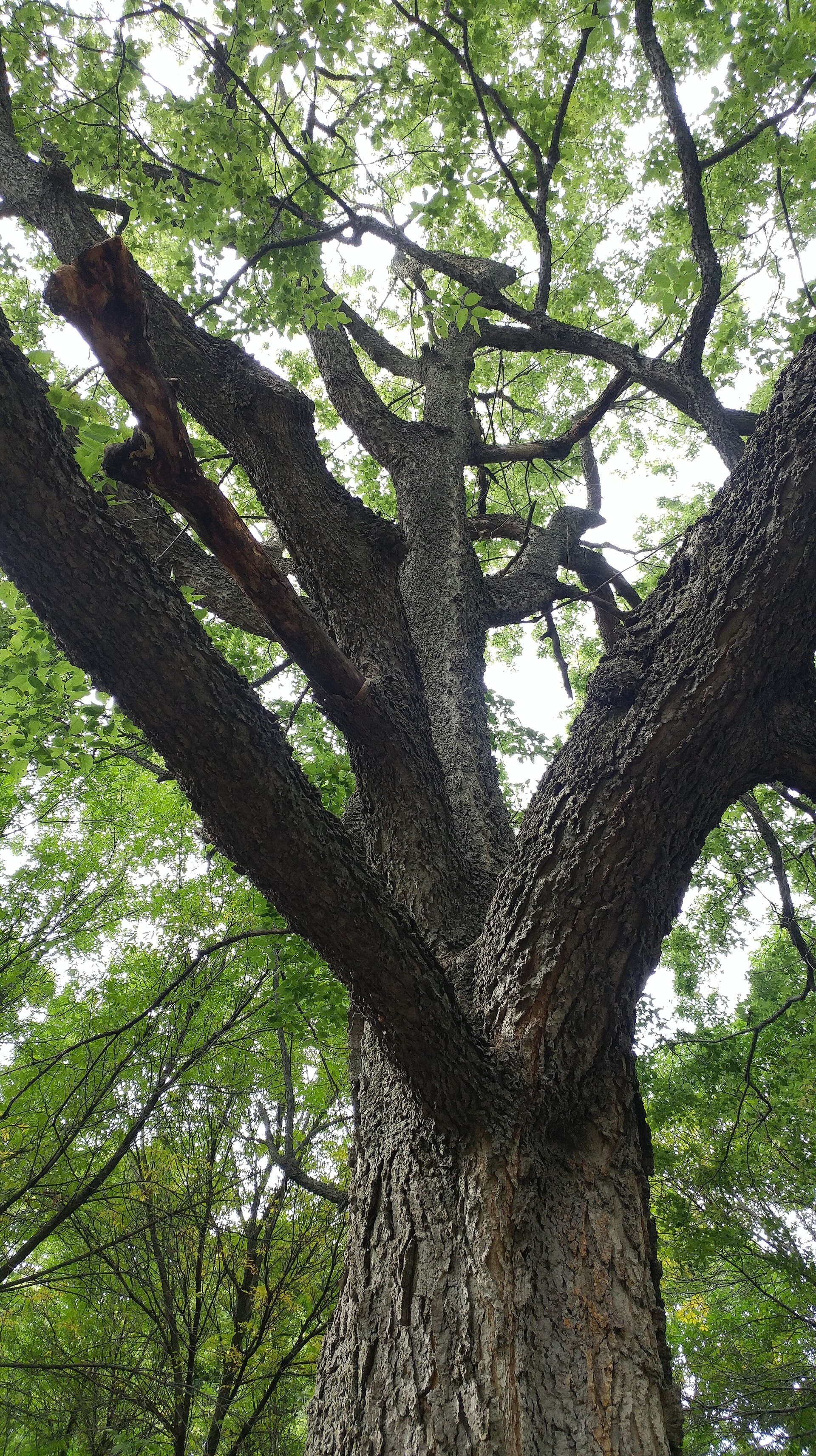
Three features settle most identifications: the bark on the trunk, the leaf in your hand, and whatever the tree is dropping.
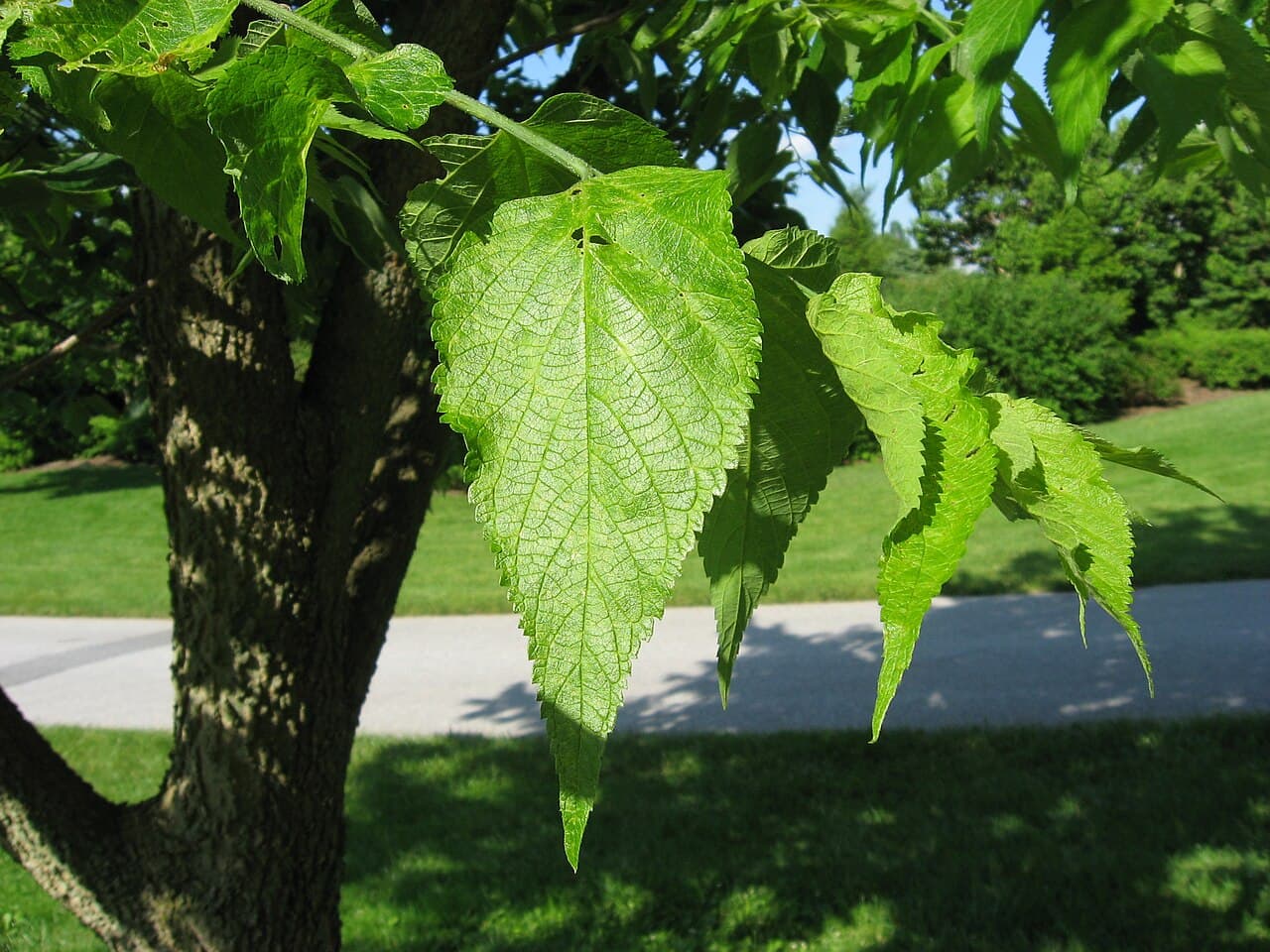
The leafToothed, tapering, and noticeably lopsided where the blade meets the stalk. 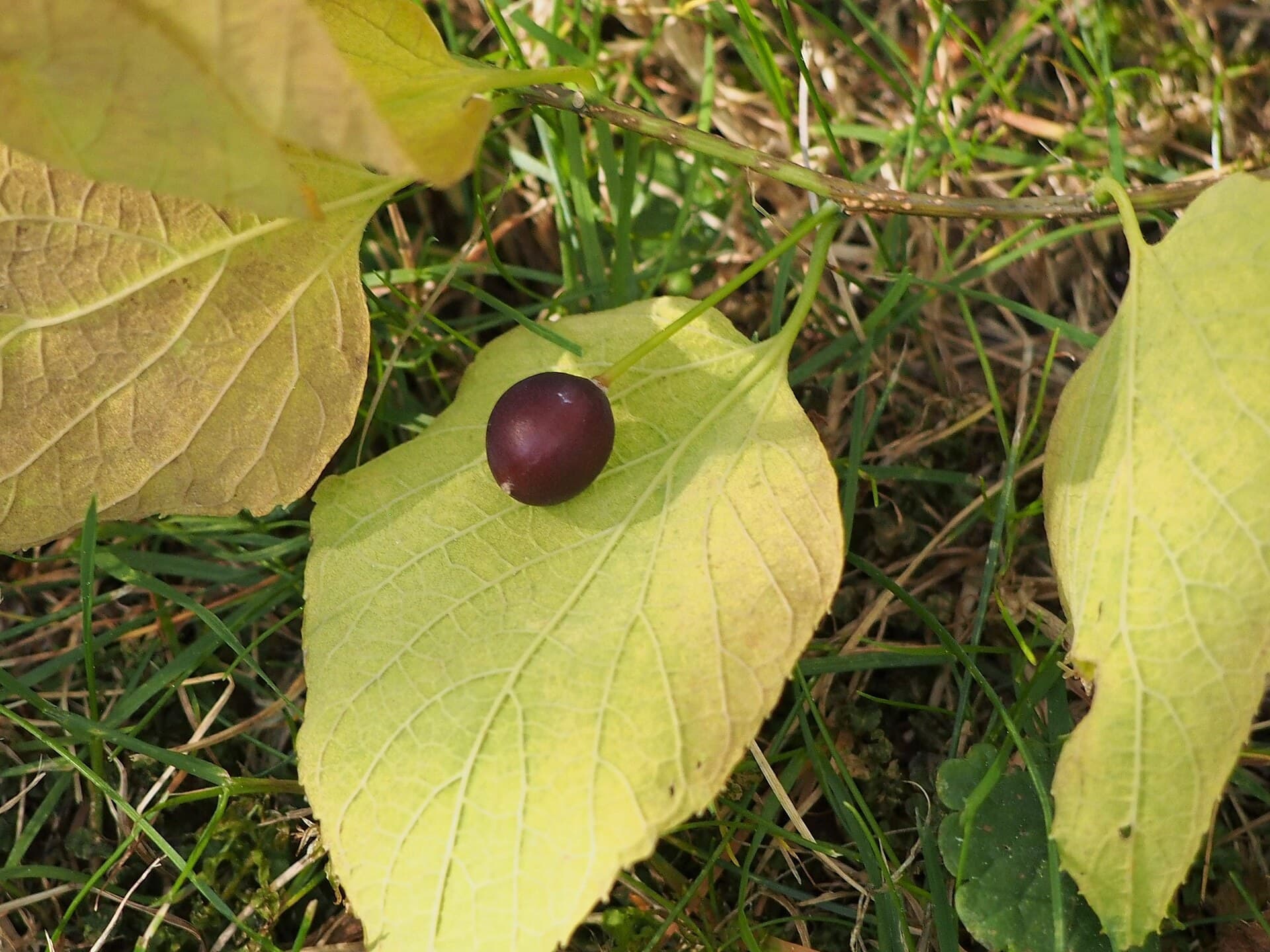
The fruitA dark berry on its long stalk, ripening as the leaves turn gold. Birds strip them by winter.
How to identify it
- Gray bark with distinctive warty, corky ridges
- Lopsided, tapering leaves with toothed edges
- Small purple berries that birds strip by winter
- Broad crown with slightly drooping outer branches
Where it grows
- Native range
- Native throughout Kansas and across much of the eastern and central United States. Quietly one of the most consistently successful native trees in Kansas towns.
- Soil
- Tolerates essentially everything Kansas offers: heavy clay, high pH, drought, compaction, road salt, and periodic flooding.
- Sunlight
- Full sun to part shade
- Drought & heat
- High drought tolerance, high heat tolerance.
One of the best 'plant it and let it work' natives for Kansas yards. The leaf galls alarm new owners every summer; they're harmless.
Root behavior
Deep and well-behaved. Rarely implicated in lifted walks or damaged laterals, which is unusual for a tree this size.
Storm and branch-failure risk
Good. Sound wood and reasonable branch structure put it among the better large natives for Kansas wind and ice, though old trees carry deadwood that is worth clearing before storm season.
Overall storm resistance: Good. Assessing damage after a storm
Kansas pests and diseases
Hackberry nipple gall
CosmeticSmall bumps covering the undersides of leaves, caused by a psyllid. Every summer this alarms new hackberry owners and every summer it means nothing. No treatment is needed.
Witches' broom
CosmeticDense clusters of short, twiggy growth scattered through the crown, caused by a mite and fungus working together. Visible mostly in winter; harmless.
Hackberry woolly aphid
ManageableProduces sticky honeydew that coats cars and patio furniture below, followed by black sooty mold. A nuisance rather than a threat to the tree.
Full profiles in the pest library
Photographs, seasonal timing, treatment options, and the point past which the tree cannot be saved.
Seeing something not listed here? Work from the symptom instead
Pruning
Best windowDormant season — November through February
Light structural pruning in the first decade to establish good scaffolds; very little needed after that. It is genuinely a plant-it-and-let-it-work tree.
Planting near homes
One of the better large trees to site near a Kansas home. Deep roots, sound wood, and real drought tolerance, with a crown that stays within a predictable footprint.
When removal may be necessary
- Advanced trunk decay above a target, which is uncommon in this species
- Major structural cracks after a storm
Removal is a judgment call about risk, not a formula. A tree with one of these conditions over open lawn is a very different situation from the same tree over a driveway — and that judgment needs someone on site.
Kansas Tree Guide is an independent educational resource. Nothing on this site replaces an on-site assessment by a qualified arborist or tree-care professional. Last reviewed August 2026.