
Eastern Red Cedar
Juniperus virginiana
Kansas' only common native evergreen: the backbone of farm windbreaks, winter bird cover, and — where fire no longer runs — an aggressive invader of prairie pasture. In town, a tough screen with two caveats: bagworms and cedar-apple rust.
- Height
- 30–50 ft
- Spread
- 8–20 ft
- Lifespan
- 150–300 yr
- Growth
- Moderate
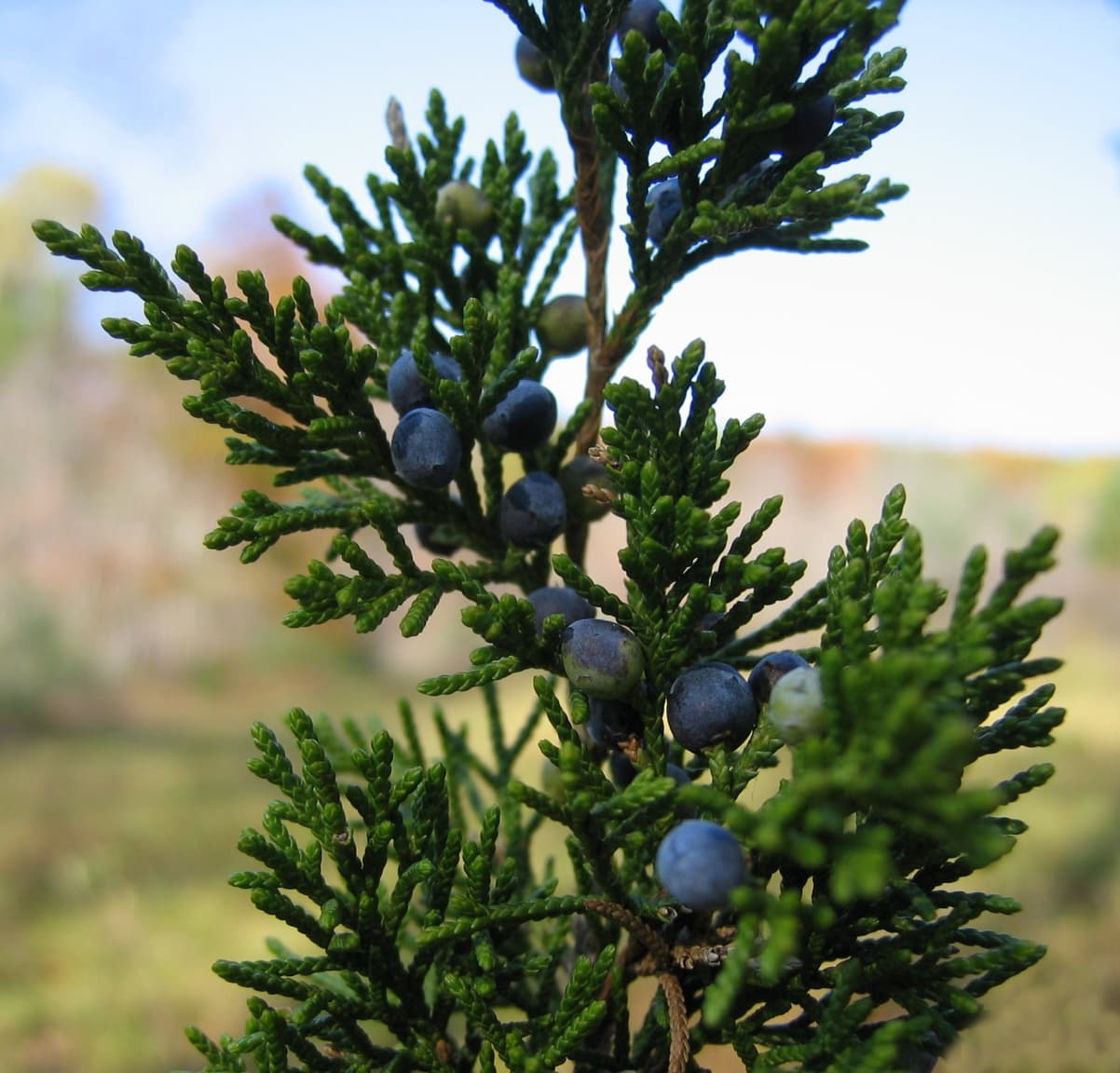
Identification
What to look at
Three features settle most identifications: the bark on the trunk, the leaf in your hand, and whatever the tree is dropping.
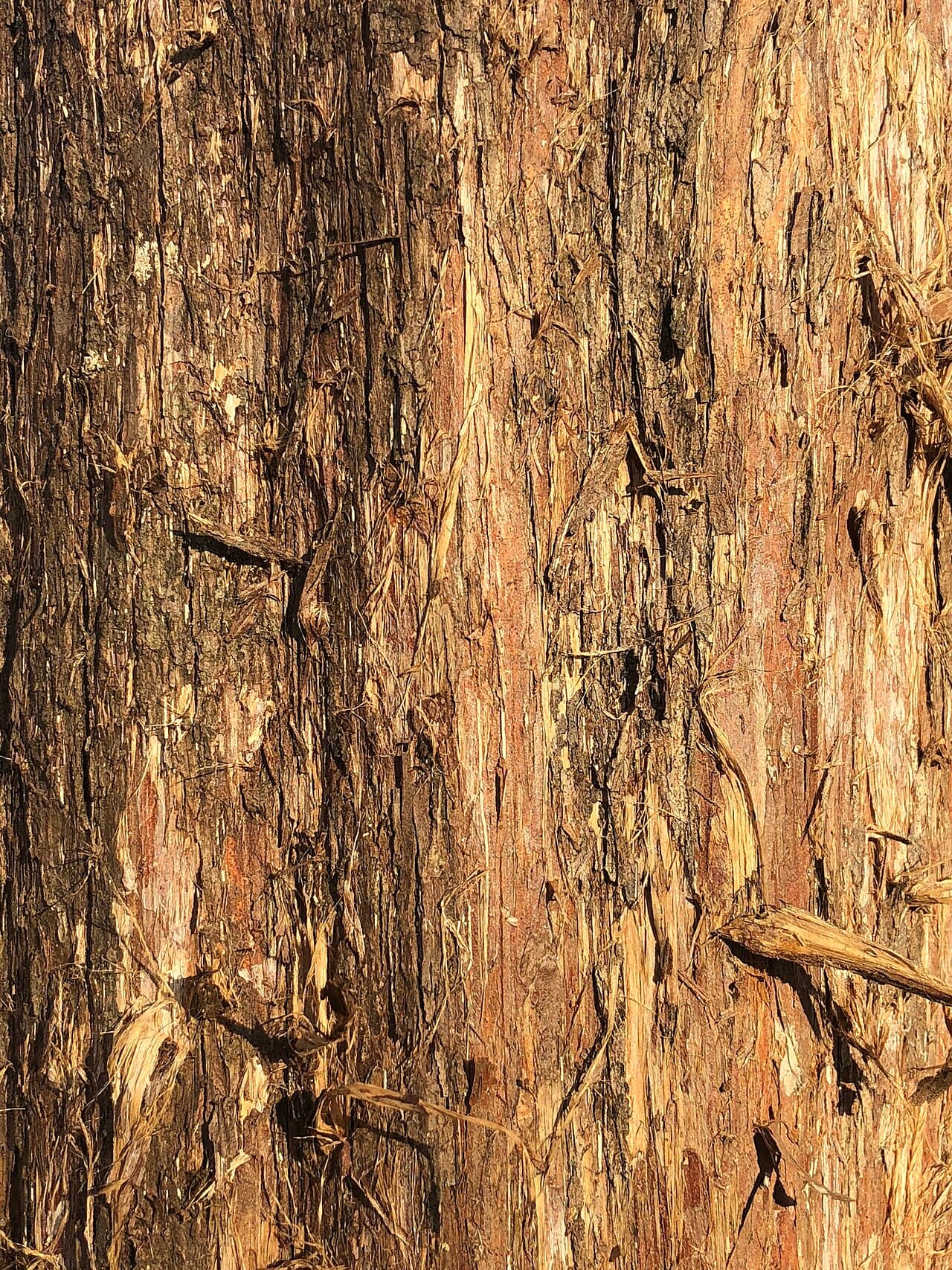
The barkThin red-brown strips that peel away in long fibers. 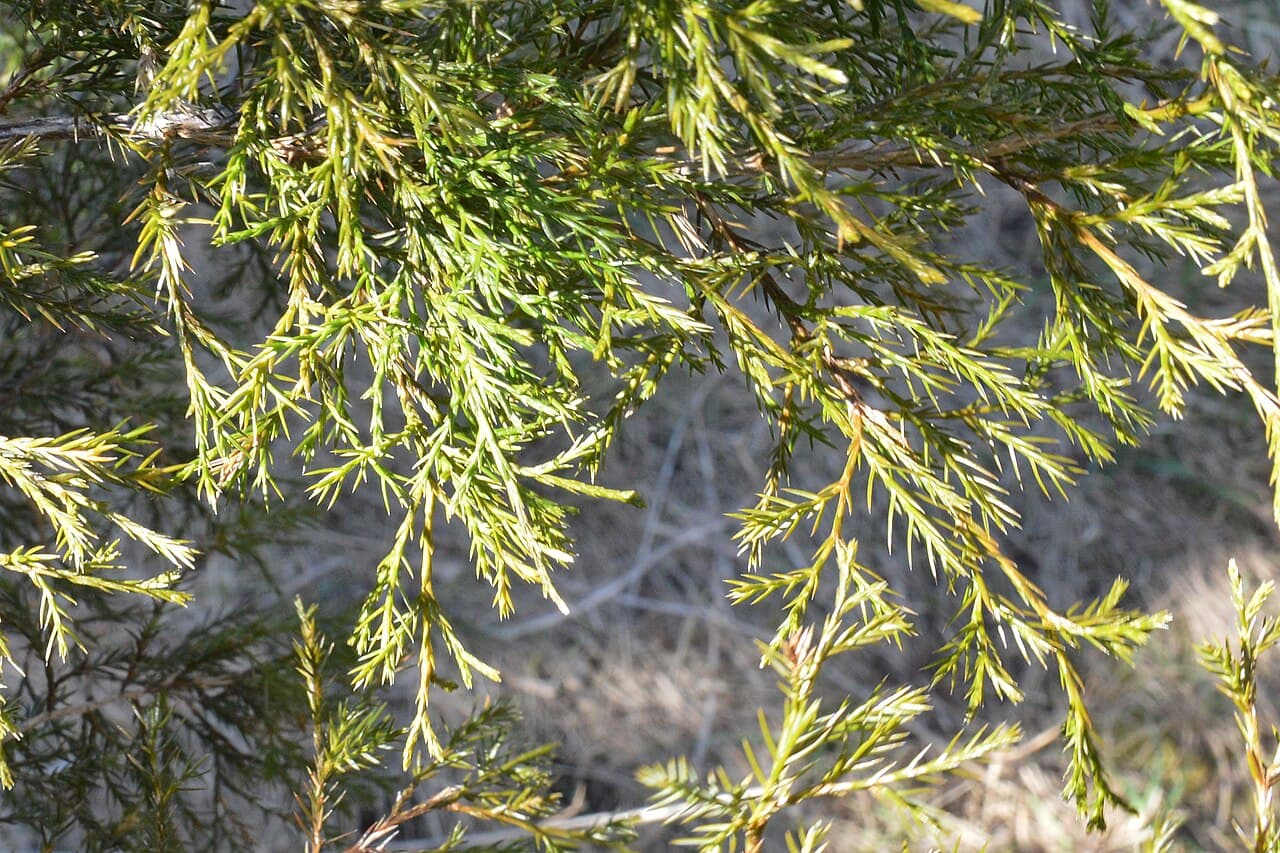
The leafTiny scales pressed flat against the twig, so the sprig feels rope-like rather than prickly. 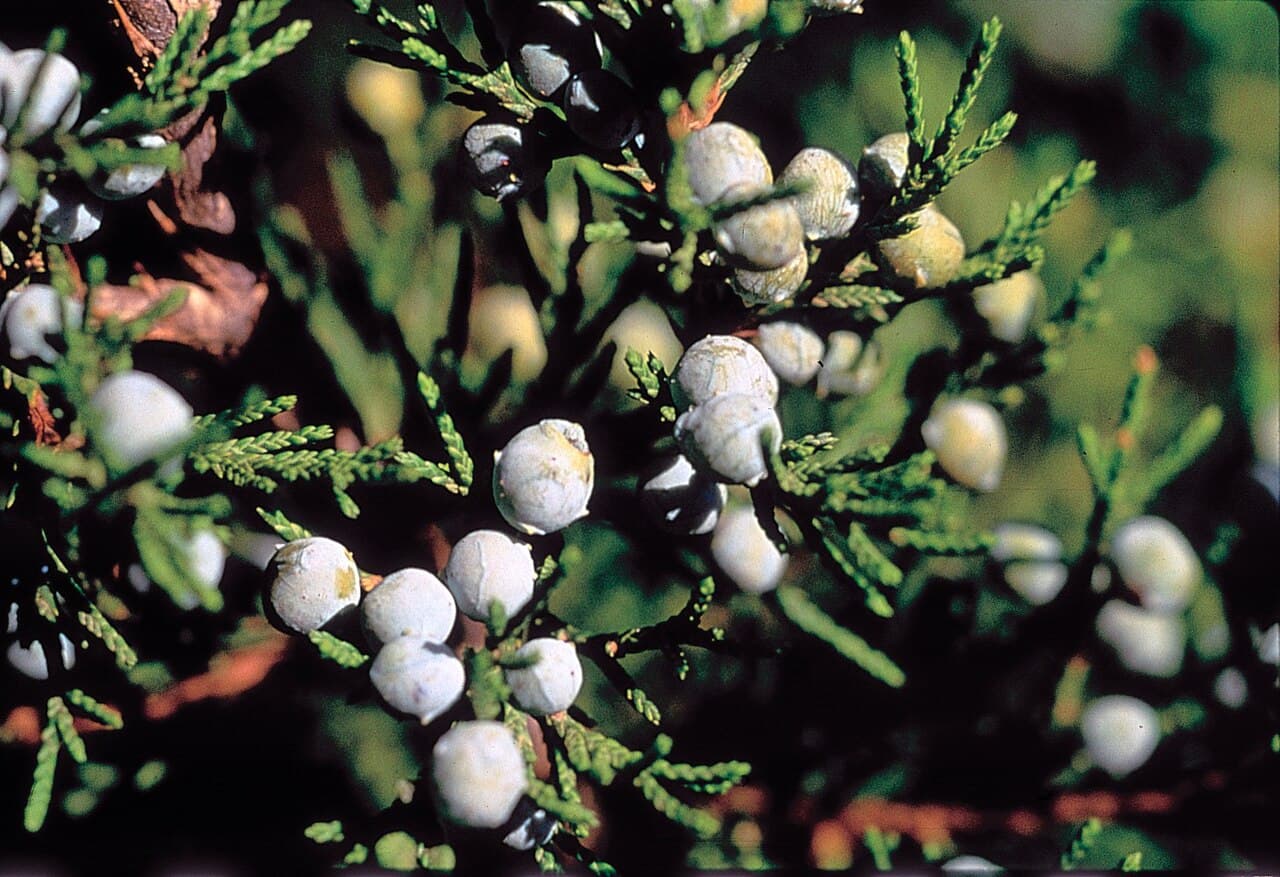
The fruitBerry-like blue cones on female trees — technically cones, not berries.
How to identify it
- Scale-like, layered evergreen foliage
- Blue, berry-like cones on female trees
- Shreddy red-brown bark in thin strips
- Dense pyramid shape, darkening bronze in winter
Where it grows
- Native range
- Native across the eastern and central United States including every Kansas county — the state's only common native evergreen. With prairie fire suppressed, it is now aggressively invading unmanaged pasture and rangeland.
- Soil
- Nearly anything: thin rocky limestone, deep clay, alkaline, dry, or eroded ground.
- Sunlight
- Full sun
- Drought & heat
- High drought tolerance, high heat tolerance.
Superb for windbreaks and screens on dry sites. Check for bagworm bags every June, and don't plant next to a prized apple tree — the rust needs both hosts.
Root behavior
Deep and fibrous, excellent at holding erodible slopes and terraces. Not a threat to structures or paving.
Storm and branch-failure risk
Good. Dense and wind-firm, which is exactly why it forms the backbone of Kansas windbreaks. Heavy wet snow or ice can splay multi-stemmed trees apart at the base.
Overall storm resistance: Good. Assessing damage after a storm
Kansas pests and diseases
Bagworms
SeriousThe number one pest target in Kansas. Spindle-shaped bags covered in bits of foliage hang from the branches, and the caterpillars inside can strip a tree. Check every June — control works only while larvae are small, and handpicking bags in winter removes next year's eggs.
Cedar-apple rust
ManageableBrown galls on cedar twigs erupt into bizarre orange gelatinous horns after spring rain. Nearly harmless to the cedar itself; the damage lands on apples, crabapples, and hawthorns nearby.
Phomopsis and Kabatina tip blight
ManageableBranch tips turn brown and die back, usually on young or shaded trees in wet springs. Prune out affected tips and improve air movement.
Full profiles in the pest library
Photographs, seasonal timing, treatment options, and the point past which the tree cannot be saved.
Seeing something not listed here? Work from the symptom instead
Pruning
Best windowLate winter to early spring
Minimal. The critical rule: cedar will not resprout from bare old wood, so never shear back past living green foliage. A hole cut into the interior stays a hole permanently.
Planting near homes
Good near homes as a screen or windbreak. Keep it clear of a prized apple or crabapple — cedar-apple rust needs both hosts to complete its cycle, and separation is the simplest control.
When removal may be necessary
- Bagworms have defoliated the tree past recovery — unlike deciduous trees, a fully stripped cedar generally does not come back
- Prairie or pasture management, where volunteer cedars are converting grassland to woodland
Removal is a judgment call about risk, not a formula. A tree with one of these conditions over open lawn is a very different situation from the same tree over a driveway — and that judgment needs someone on site.
Kansas Tree Guide is an independent educational resource. Nothing on this site replaces an on-site assessment by a qualified arborist or tree-care professional. Last reviewed August 2026.