
Eastern Cottonwood
Populus deltoides
The Kansas state tree, and the giant of our river bottoms — shimmering leaves, ninety feet of presence, and a June snowstorm of cotton. Magnificent in open ground; a liability crowding a house.
- Height
- 60–100 ft
- Spread
- 50–80 ft
- Lifespan
- 70–100 yr
- Growth
- Fast
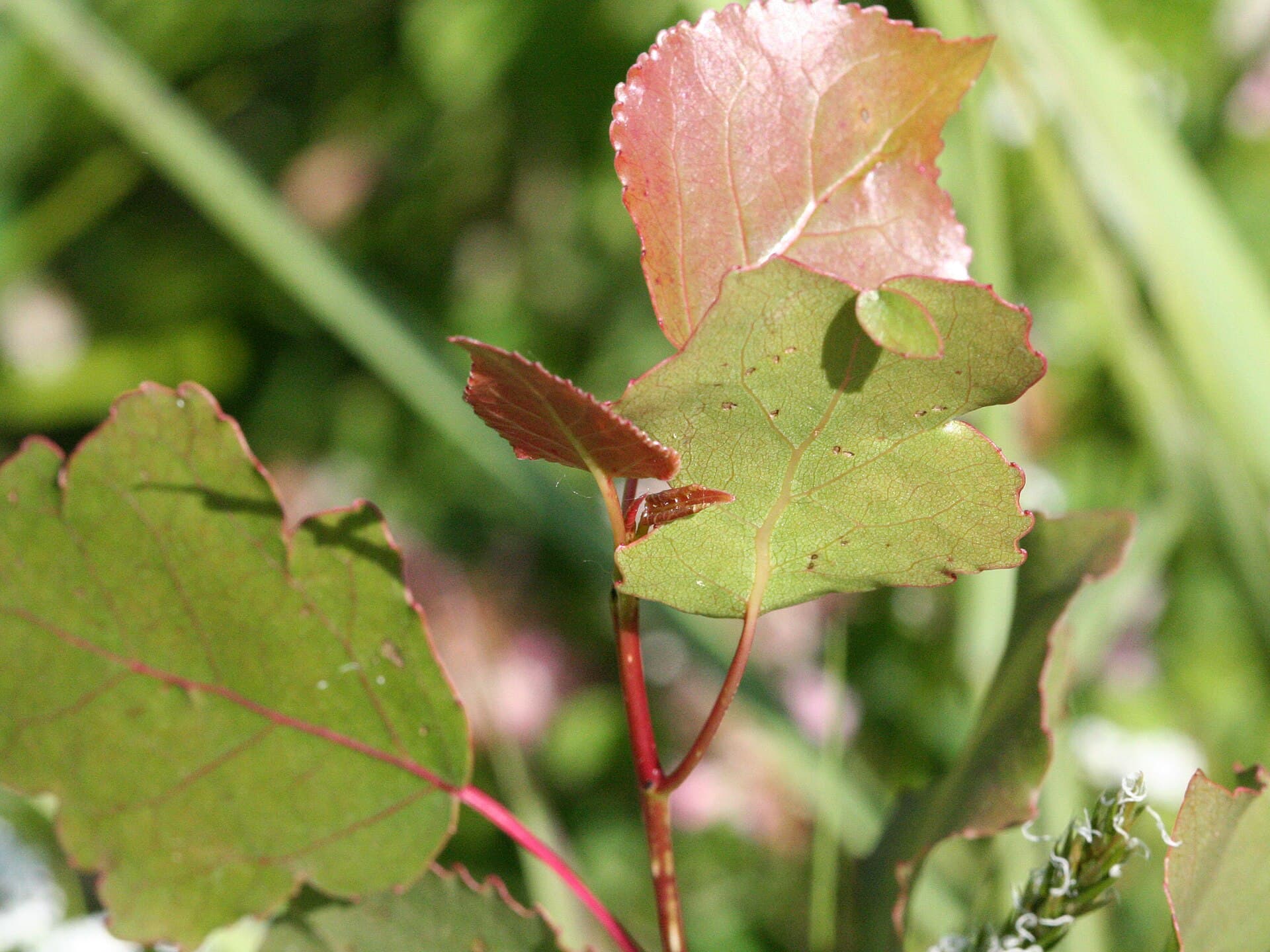
Identification
What to look at
Three features settle most identifications: the bark on the trunk, the leaf in your hand, and whatever the tree is dropping.
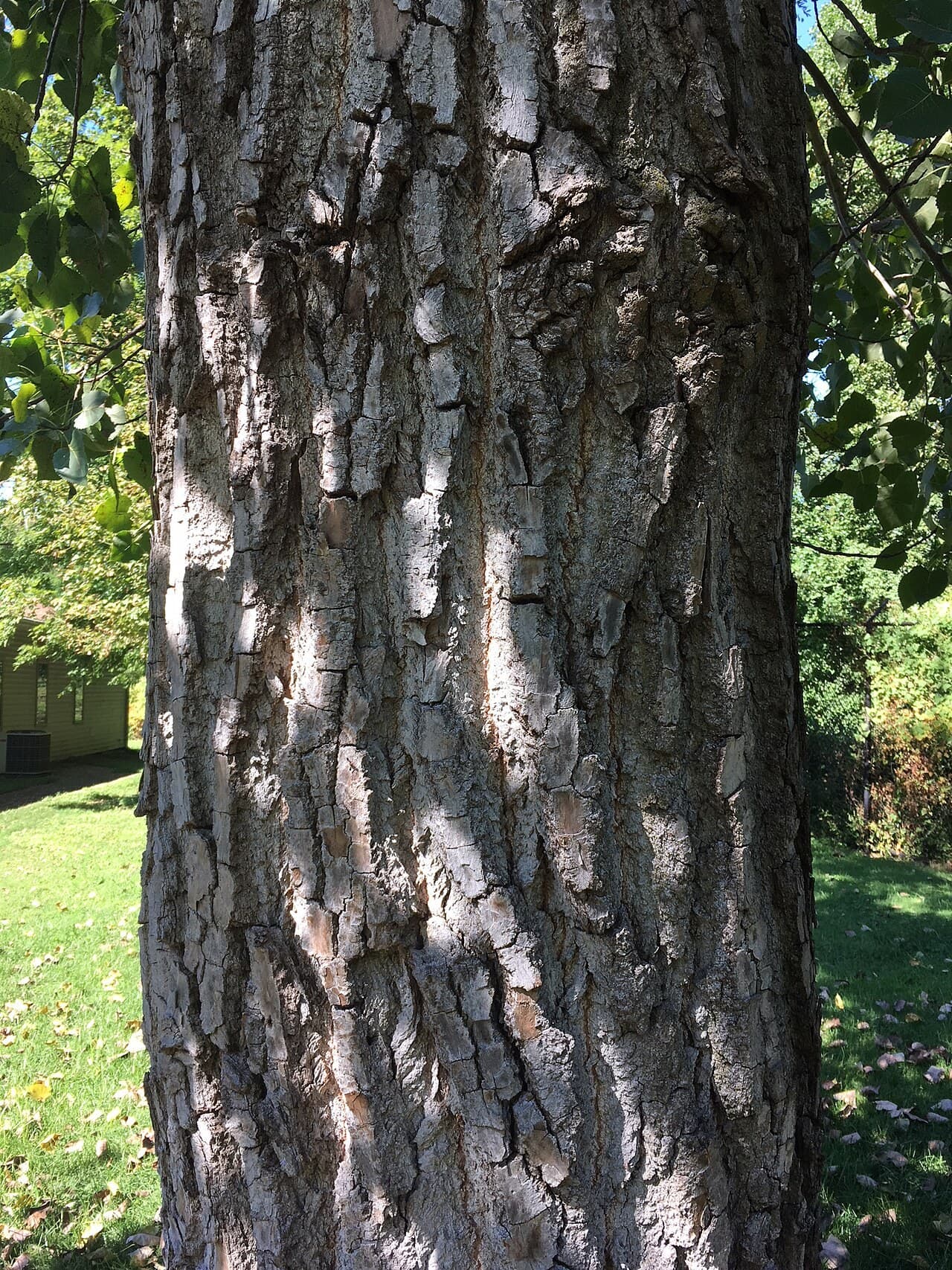
The barkDeep, blocky furrows on a massive trunk — one of the coarsest barks in Kansas. 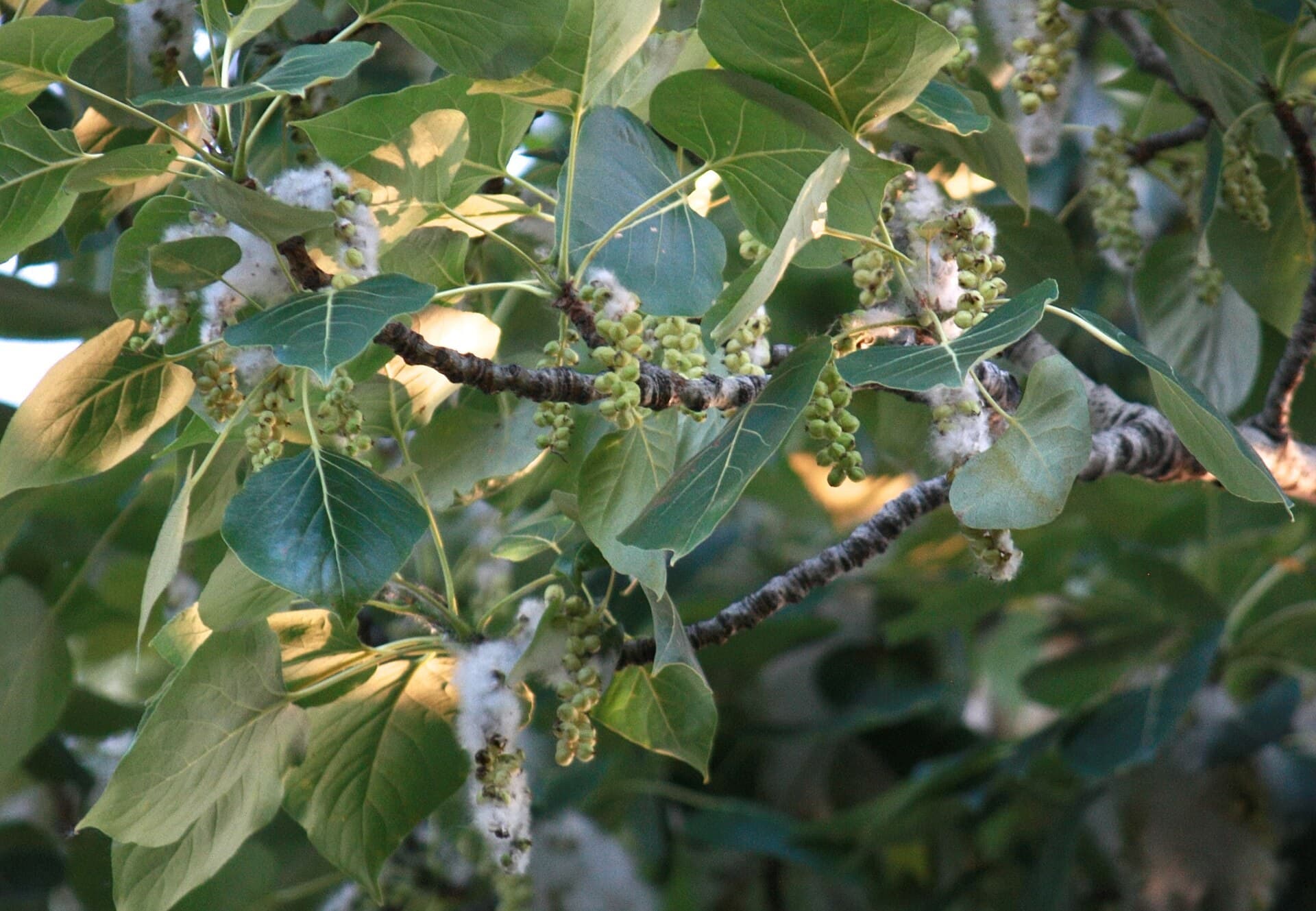
The seedCapsules split along the branch in early summer and release the drifting cottonwood snow.
How to identify it
- Triangular (deltoid) leaves with coarse, rounded teeth
- Flattened leaf stems make leaves flutter in any breeze
- Deeply furrowed gray bark on massive trunks
- Female trees release drifting cotton in early summer
Where it grows
- Native range
- Native along rivers, streams, and floodplains throughout the Great Plains. Named the Kansas state tree in 1937 — for a homesteader crossing open prairie it was often the only large tree in sight, and a reliable sign of water.
- Soil
- Deep, moist bottomland soil is its natural home, though it survives on far drier ground than it prefers. Untroubled by alkaline clay.
- Sunlight
- Full sun
- Drought & heat
- Moderate drought tolerance, high heat tolerance.
The official state tree of Kansas since 1937. Belongs along creeks, ponds, and big open lawns — its roots hunt water and its limbs shed in storms.
Root behavior
Wide, shallow, and strongly water-seeking. Cottonwood roots are a well-documented hazard to sewer laterals, septic fields, and shallow foundations. Give a new one at least 50 feet of clearance from anything buried.
Storm and branch-failure risk
Brittle wood on an enormous frame. Mature cottonwoods routinely shed limbs the size of small trees in Kansas thunderstorm winds, and those failures are dangerous mostly because of sheer scale.
Overall storm resistance: Poor. Assessing damage after a storm
Kansas pests and diseases
Cytospora canker
SeriousSunken, discolored patches on limbs and trunk that girdle and kill branches, typically following drought stress. Prune out cankered limbs in dry weather and keep the tree watered.
Cottonwood borer
ManageableA large black-and-white beetle whose larvae tunnel the lower trunk and root collar, leaving coarse sawdust at the base. Vigorous trees tolerate them; stressed ones do not.
Cotton litter
CosmeticFemale trees release drifting seed cotton for a couple of weeks in early summer. It clogs screens and air conditioner coils but harms nothing. Male cultivars avoid it entirely.
Full profiles in the pest library
Photographs, seasonal timing, treatment options, and the point past which the tree cannot be saved.
Seeing something not listed here? Work from the symptom instead
Pruning
Best windowDormant season — November through February
Inspect large trees annually for deadwood and cracked limbs and clear failures before storm season. Cottonwood compartmentalizes decay poorly, so a series of small cuts made early is far better than one large cut made late.
Planting near homes
Magnificent along a creek, pond, or big open lawn; a genuine liability crowding a house. Keep it well away from structures, drives, and buried lines.
When removal may be necessary
- A hollow or extensive decay column in the trunk above a house, drive, or gathering area
- Repeated large-limb failures over a target
- Significant crown dieback in the top third, which usually signals root or trunk decay below
Removal is a judgment call about risk, not a formula. A tree with one of these conditions over open lawn is a very different situation from the same tree over a driveway — and that judgment needs someone on site.
Kansas Tree Guide is an independent educational resource. Nothing on this site replaces an on-site assessment by a qualified arborist or tree-care professional. Last reviewed August 2026.