
Osage Orange
Maclura pomifera
The 'hedge' tree that fenced Kansas before barbed wire, with wood so dense the fence posts outlast the fences. Nearly indestructible — and armed with thorns and softball-sized hedge apples on wild trees.
- Height
- 30–50 ft
- Spread
- 20–40 ft
- Lifespan
- 75–150 yr
- Growth
- Moderate
Identification
What to look at
Three features settle most identifications: the bark on the trunk, the leaf in your hand, and whatever the tree is dropping.
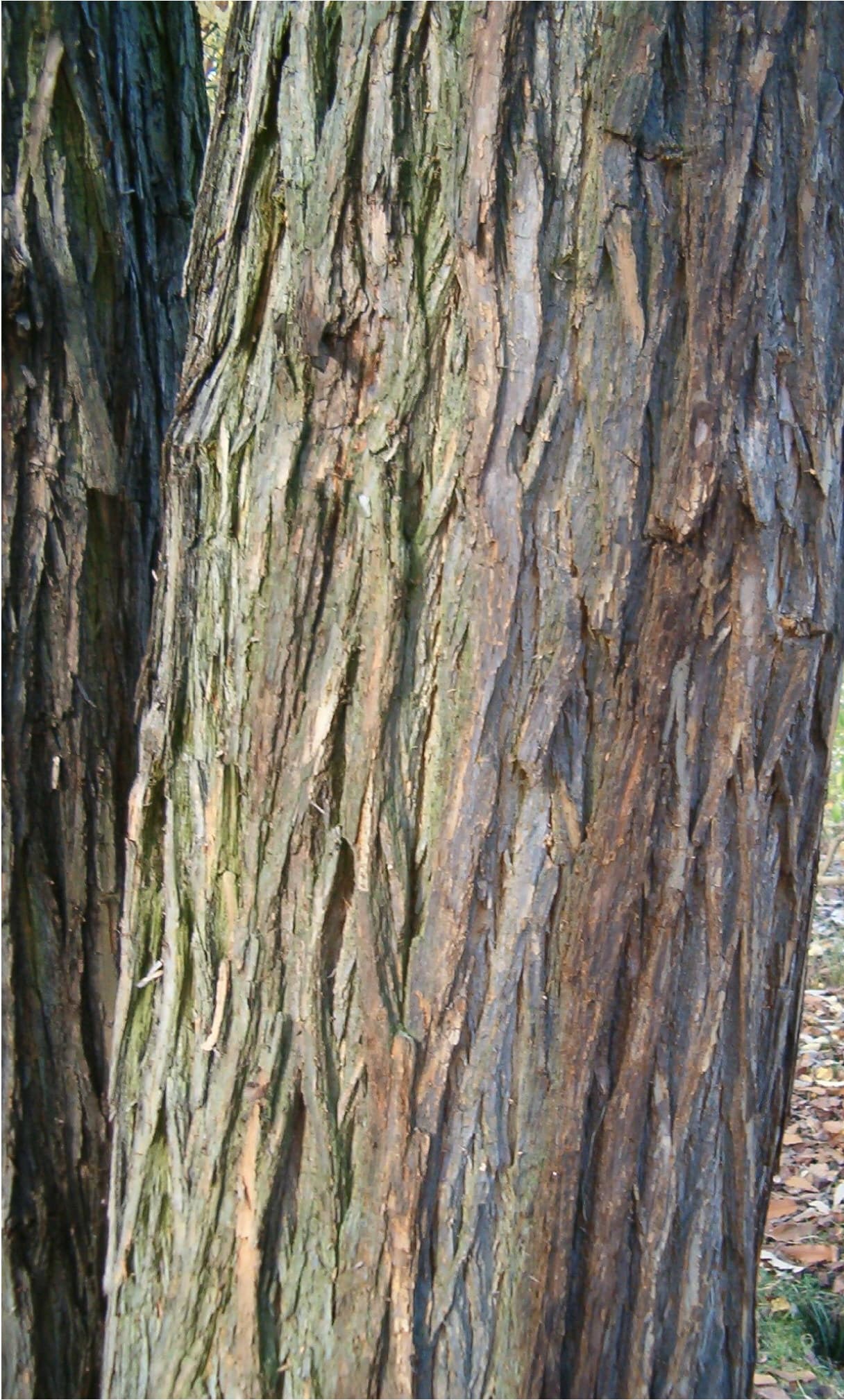
The barkOrange-brown ridges braided together — the color gives it away at a distance. 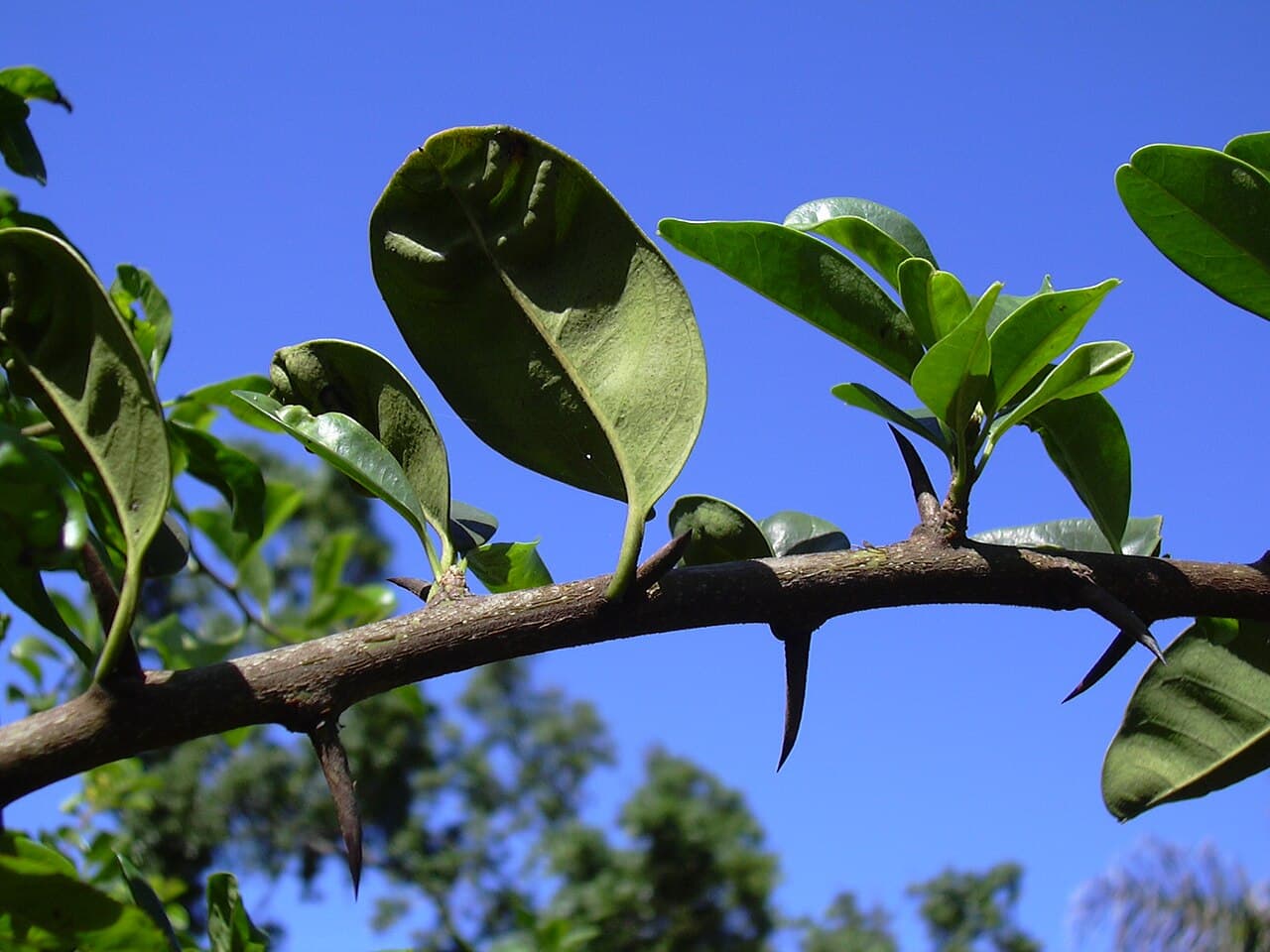
The leafGlossy, smooth-edged leaves with a long drawn-out tip, and a thorn at the node.
How to identify it
- Glossy, smooth-edged leaves tapering to a point
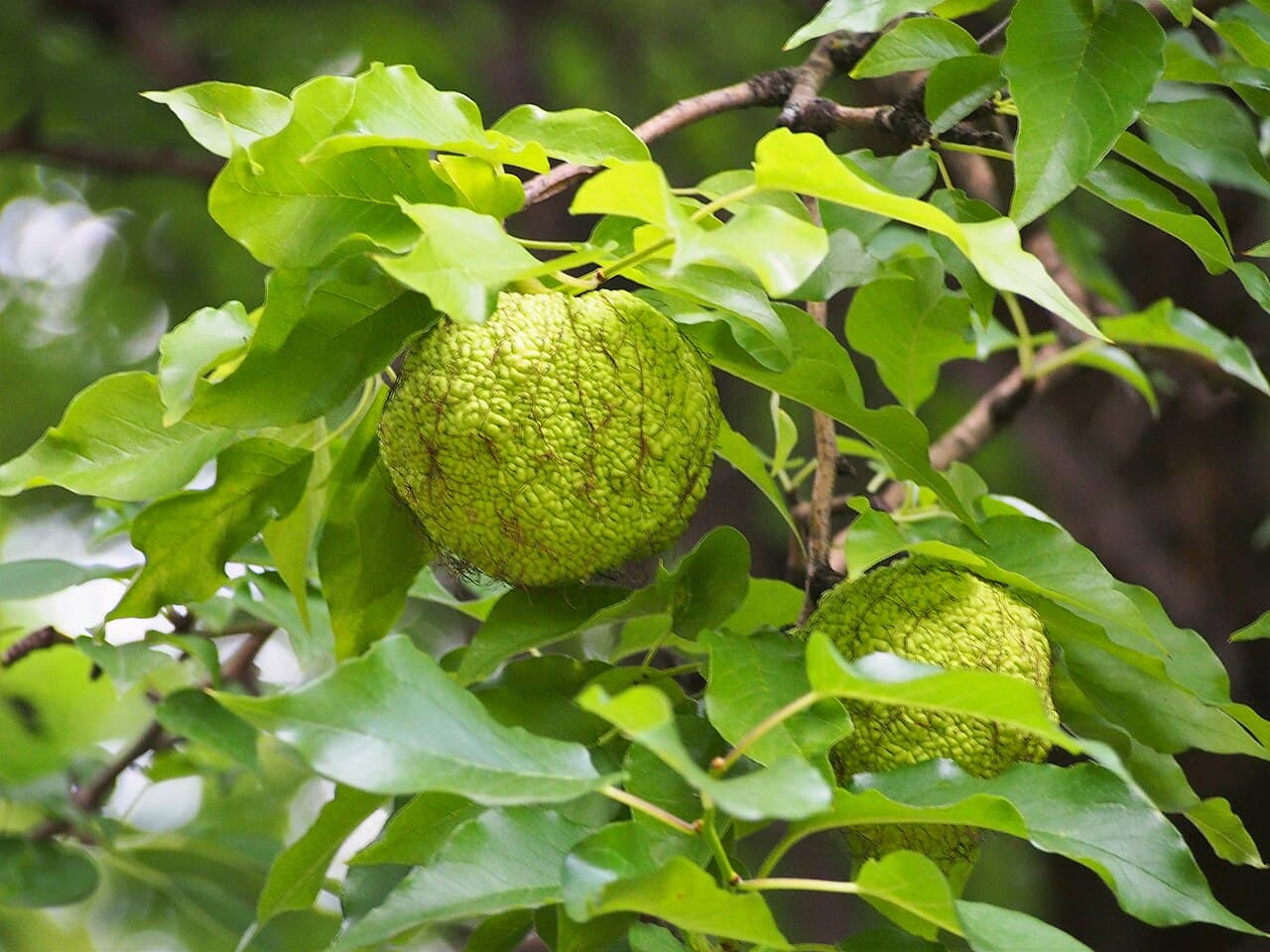
- Softball-sized, brain-textured green fruit in fall
- Orange-brown, tightly interwoven bark
- Milky sap; stout thorns on wild forms
Where it grows
- Native range
- Native to a small region of Texas, Oklahoma, and Arkansas, then planted across Kansas by the tens of thousands as living fence in the decades before barbed wire. Those hedgerows are now naturalized statewide.
- Soil
- Anything, including the worst clay and the driest upland. Exceptional drought tolerance.
- Sunlight
- Full sun
- Drought & heat
- High drought tolerance, high heat tolerance.
A living piece of Kansas farm history in hedgerows statewide. Thornless, fruitless male cultivars make surprisingly good tough-site trees.
Root behavior
Deep and tough. Cut stumps sucker persistently, so removal usually means treating the stump as well.
Storm and branch-failure risk
Excellent. The wood is among the densest and most rot-resistant in North America — the reason hedge posts routinely outlast the fences stapled to them.
Overall storm resistance: Good. Assessing damage after a storm
Kansas pests and diseases
Very few
CosmeticOne of the most pest-free and disease-free trees in Kansas. Its problems are mechanical — thorns and heavy fruit — rather than biological.
Hedge apple litter
ManageableFemale trees drop grapefruit-to-softball-sized fruit through the fall. Harmless but heavy, and a real nuisance over paving or anywhere a mower has to go.
Seeing something not listed here? Work from the symptom instead
Pruning
Best windowDormant season — November through February
Little needed. Wear leather gloves and sleeves on wild forms; the thorns are stout, sharp, and set at exactly the wrong height.
Planting near homes
Use caution with wild trees: softball-sized hedge apples fall hard, and thorns puncture tires and mower tubes. Thornless, fruitless male cultivars make a genuinely good tough-site tree near a home.
When removal may be necessary
- Fruit and thorns are dropping onto a drive, walk, or play area
- Fence-line management, where hedgerows are encroaching on pasture or cropland
Removal is a judgment call about risk, not a formula. A tree with one of these conditions over open lawn is a very different situation from the same tree over a driveway — and that judgment needs someone on site.
Kansas Tree Guide is an independent educational resource. Nothing on this site replaces an on-site assessment by a qualified arborist or tree-care professional. Last reviewed August 2026.