
Northern Catalpa
Catalpa speciosa
Huge heart-shaped leaves, orchid-like June flowers, and long dangling bean pods — a tough, showy tree for big spaces that sheds coarse litter and the occasional brittle limb.
- Height
- 40–60 ft
- Spread
- 40–50 ft
- Lifespan
- 60–100 yr
- Growth
- Fast
Identification
What to look at
Three features settle most identifications: the bark on the trunk, the leaf in your hand, and whatever the tree is dropping.
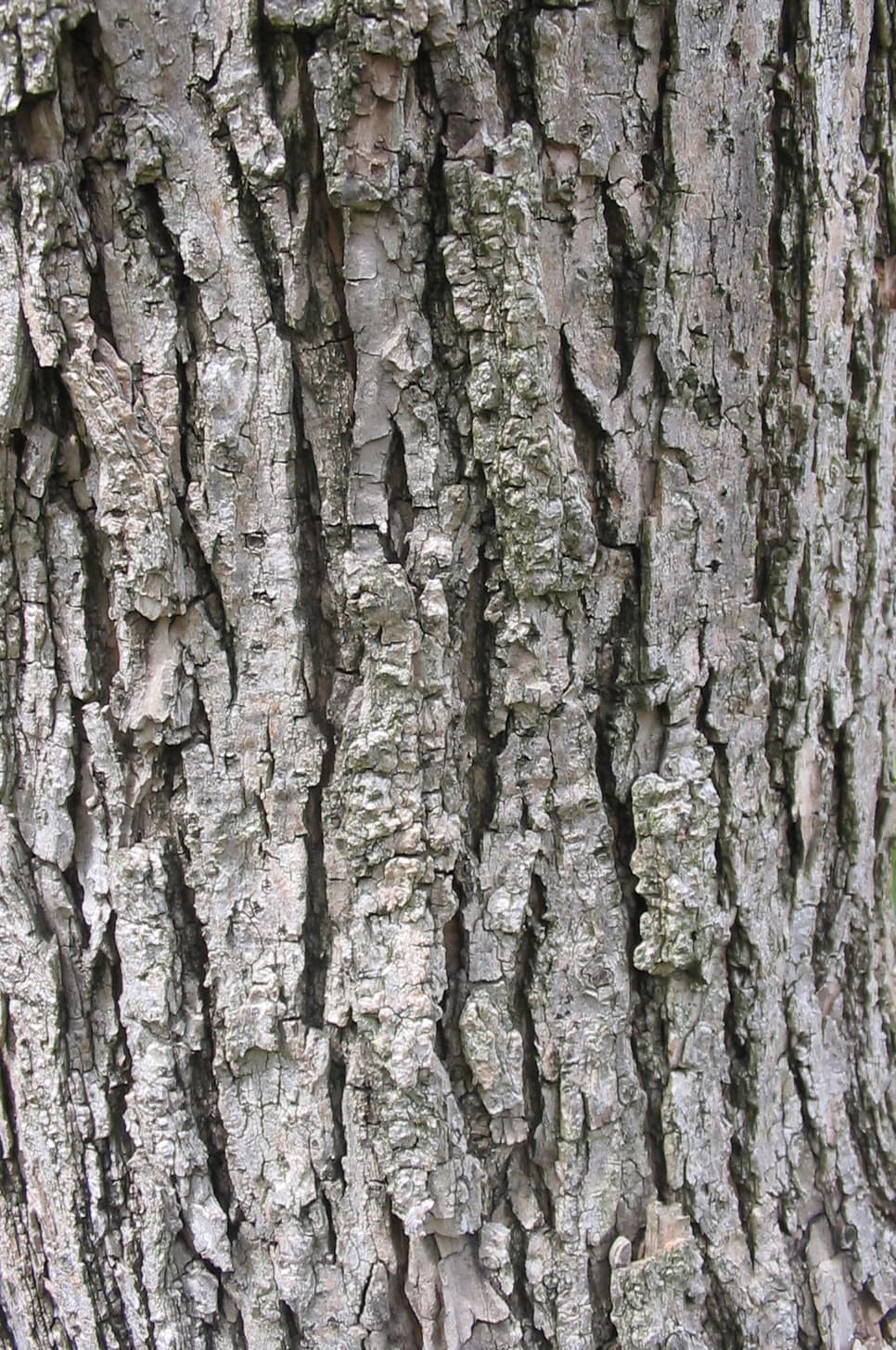
The barkThin gray-brown ridges that flake into loose scales. 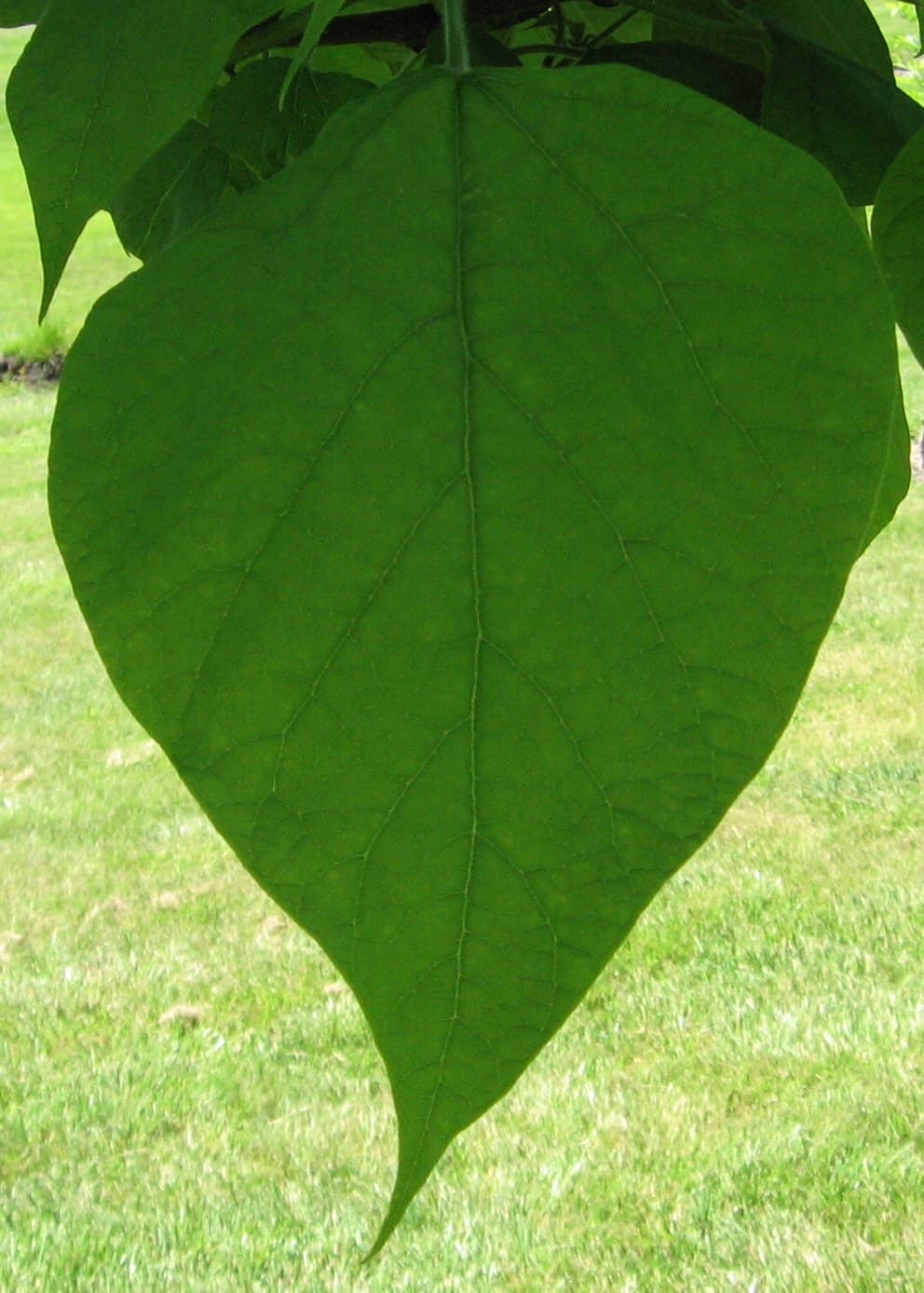
The leafHeart-shaped and up to a foot long — the largest simple leaf on any Kansas tree. 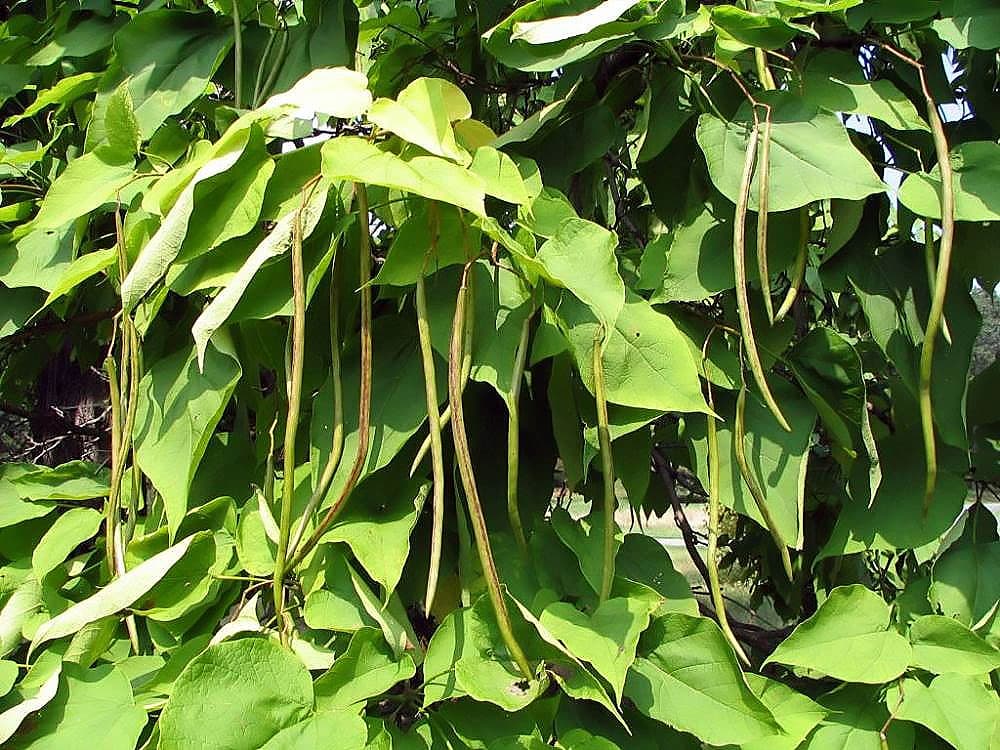
The seedThe 'cigar' pods, hanging on well into winter after the leaves have gone.
How to identify it
- Enormous heart-shaped leaves up to a foot long
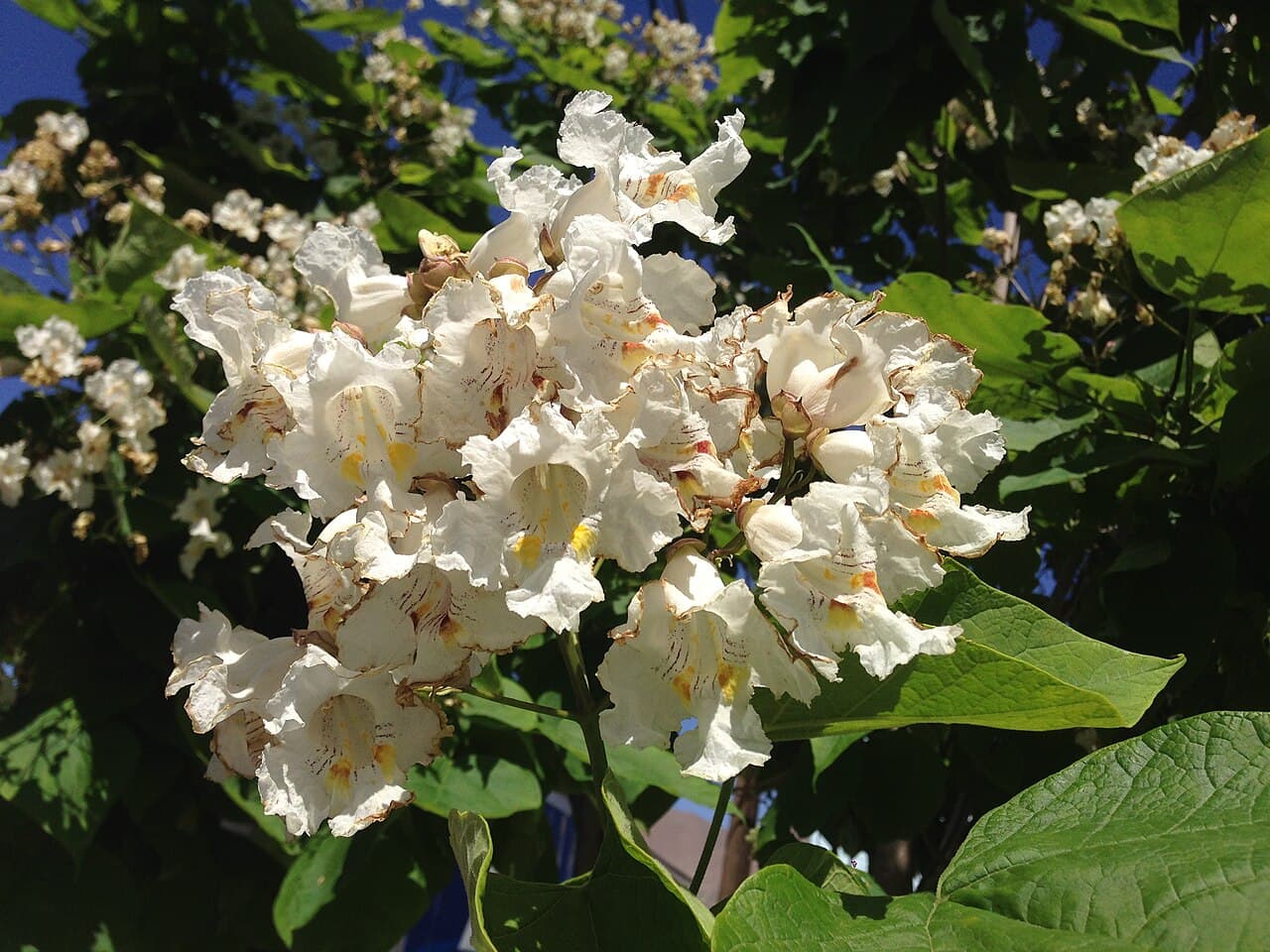
- Showy white June flowers with purple-and-gold throats
- Long, thin 'cigar' seed pods persisting into winter
- Twisting trunk and irregular crown
Where it grows
- Native range
- Native to a surprisingly small area of the central Mississippi valley, then planted widely across Kansas for fence posts and railroad ties. It has been naturalized here long enough that most people assume it is native.
- Soil
- Very adaptable, handling both wet ground and drought on alkaline clay.
- Sunlight
- Full sun
- Drought & heat
- High drought tolerance, high heat tolerance.
Thrives on tough Kansas sites where fussier trees fail. Give it a big lawn or back corner where pods, flowers, and leaves can drop in peace.
Root behavior
Moderately deep and not notably aggressive toward paving or buried lines.
Storm and branch-failure risk
Fair. The wood is brittle and the enormous leaves catch wind like sails; hail shreds them. Expect limb loss in severe storms and a great deal of coarse litter afterward.
Overall storm resistance: Fair. Assessing damage after a storm
Kansas pests and diseases
Catalpa sphinx caterpillar
ManageableBlack-and-yellow caterpillars can defoliate a tree in days. The tree leafs out again, and Kansas anglers actively seek these trees out — catalpa worms are prized live bait.
Verticillium wilt
SeriousSudden wilting and branch dieback from a soil-borne fungus, with no available cure. Prune out affected limbs and keep the tree watered.
Powdery mildew
CosmeticA white dusty film across the leaves in humid late summer. Unsightly, but it arrives late enough in the season to cost the tree very little.
Seeing something not listed here? Work from the symptom instead
Pruning
Best windowDormant season — November through February
Remove deadwood and reduce over-extended limbs before storm season. No amount of pruning will stop the litter — pods, spent flowers, and huge leaves are simply part of owning one.
Planting near homes
Use caution. Give it a big lawn or a back corner where brittle limbs and heavy litter can fall without consequence.
When removal may be necessary
- Repeated limb failure over a house, drive, or gathering area
- Advanced trunk decay, which older catalpas develop readily
Removal is a judgment call about risk, not a formula. A tree with one of these conditions over open lawn is a very different situation from the same tree over a driveway — and that judgment needs someone on site.
Kansas Tree Guide is an independent educational resource. Nothing on this site replaces an on-site assessment by a qualified arborist or tree-care professional. Last reviewed August 2026.