
Black Walnut
Juglans nigra
A valuable native hardwood with two famous quirks: falling nuts that dent cars and stain drives, and juglone — a root chemical that quietly kills tomatoes and many ornamentals planted nearby.
- Height
- 50–75 ft
- Spread
- 50–70 ft
- Lifespan
- 130–200 yr
- Growth
- Moderate
Identification
What to look at
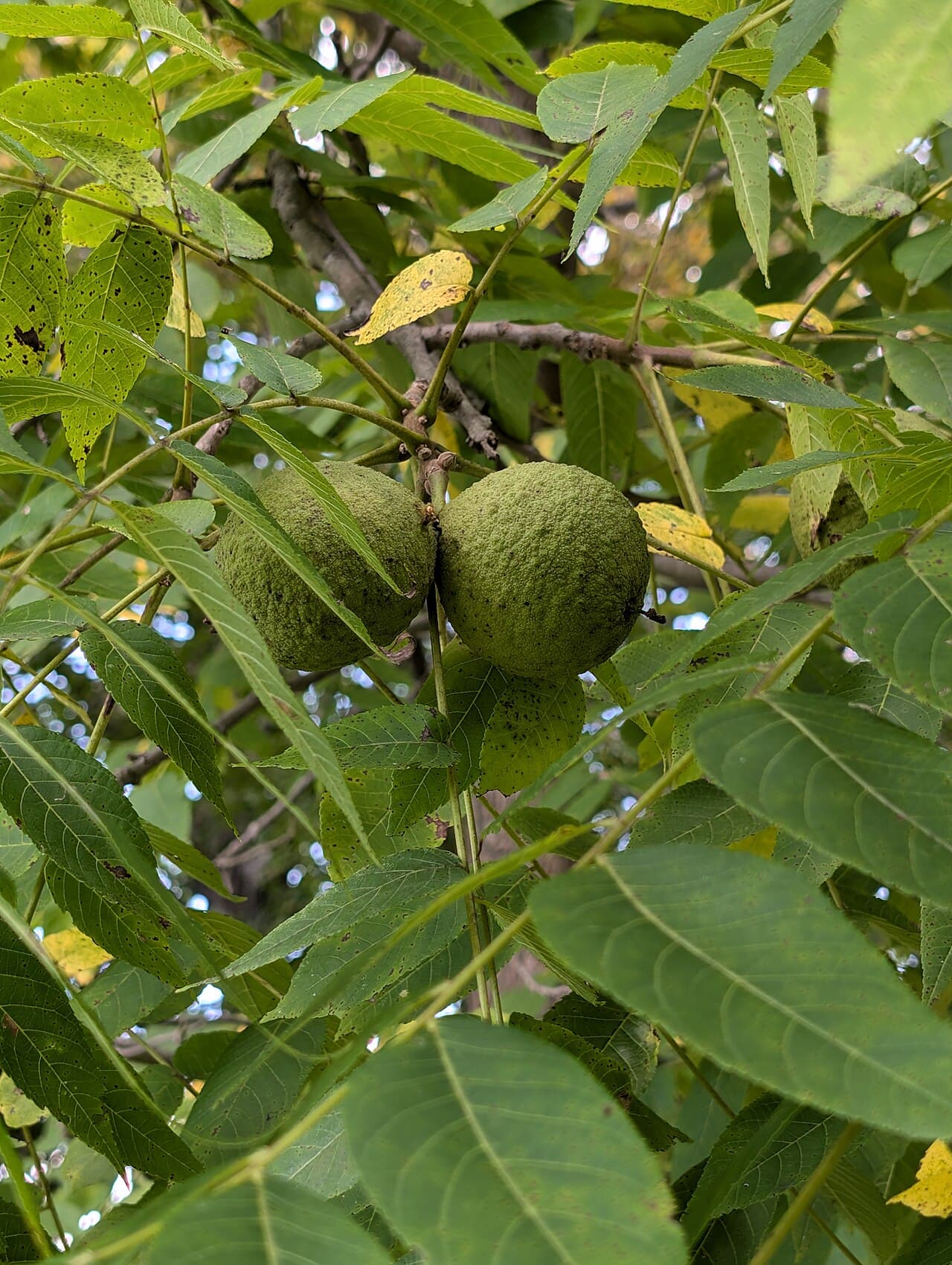
Three features settle most identifications: the bark on the trunk, the leaf in your hand, and whatever the tree is dropping.
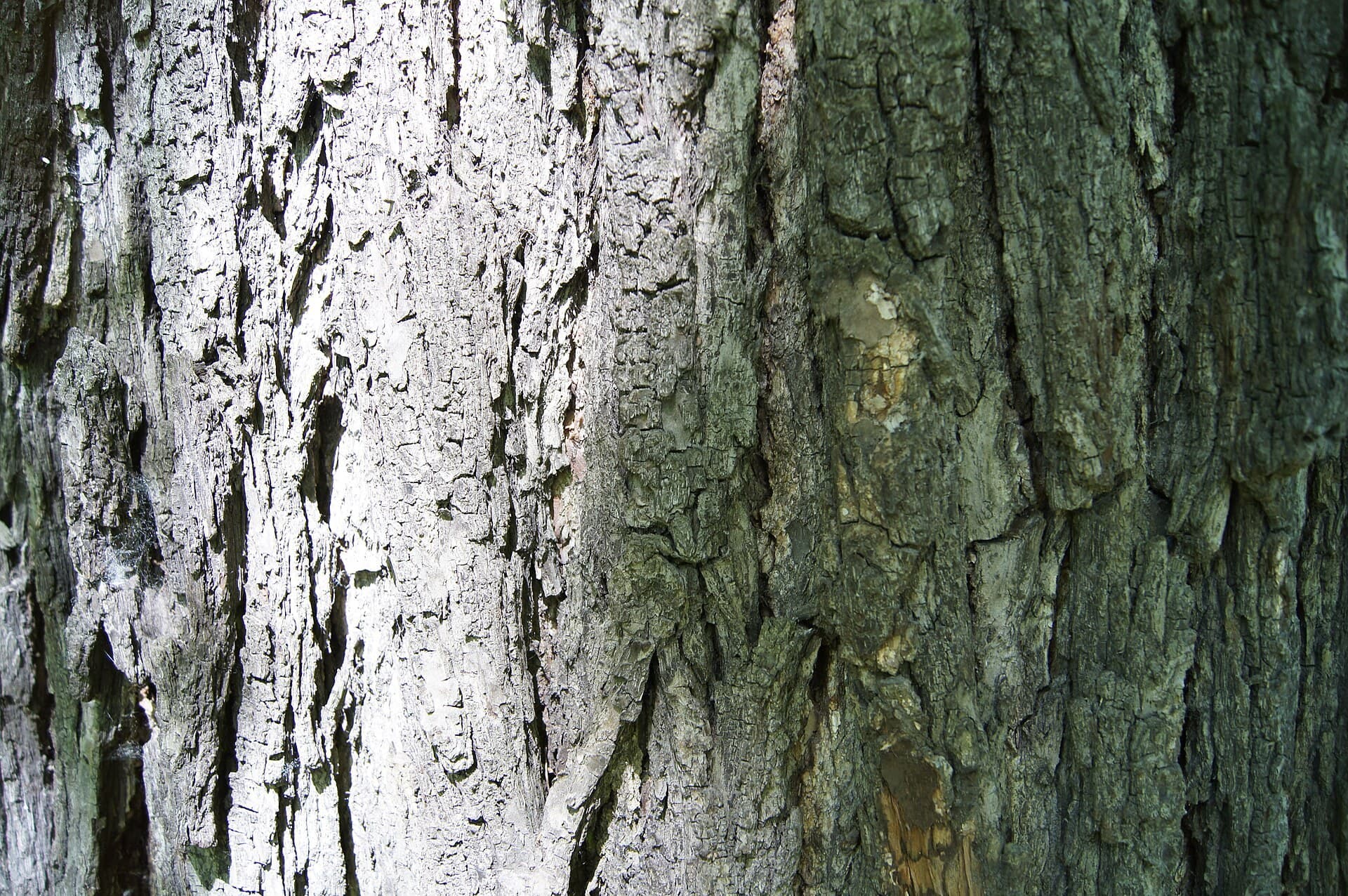
The barkDark and deeply furrowed, the ridges forming narrow diamonds. 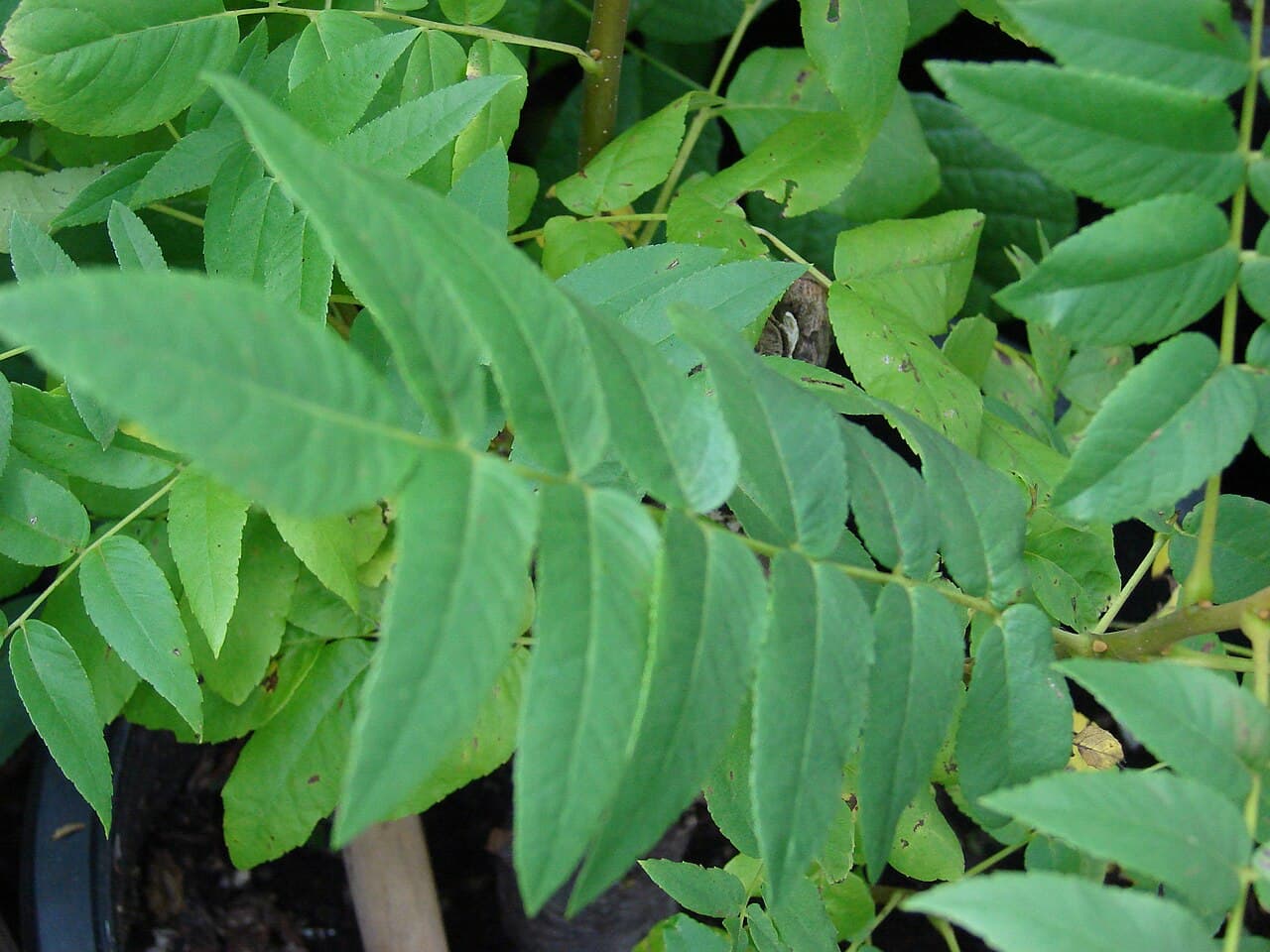
The leafOne leaf, fifteen to twenty-three leaflets. Crush one and the smell confirms the tree.
How to identify it
- Long compound leaves with 15–23 narrow leaflets
- Round green husked nuts in late summer
- Dark, deeply furrowed, diamond-patterned bark
- Stout twigs with chambered tan pith
Where it grows
- Native range
- Native to the eastern and central United States, including the creek bottoms and rich uplands of eastern Kansas. Valued enough as timber that mature trees are occasionally stolen.
- Soil
- Wants deep, well-drained, fertile soil near neutral pH. Struggles noticeably on thin, dry, or compacted ground.
- Sunlight
- Full sun
- Drought & heat
- Moderate drought tolerance, high heat tolerance.
Excellent in a big east-Kansas yard, away from gardens, patios, and parking. Keep vegetable beds well outside the root zone.
Root behavior
Deep taproot, and chemically active: the roots release juglone, which kills tomatoes, peppers, potatoes, eggplant, and many ornamentals growing within the root zone. That zone extends well past the drip line, so keep vegetable beds outside it entirely.
Storm and branch-failure risk
Good. Strong, dense wood and sound branch structure; storm failure is uncommon in a healthy tree.
Overall storm resistance: Good. Assessing damage after a storm
Kansas pests and diseases
Walnut caterpillar
ManageableColonies of dark, hairy caterpillars strip branches bare in mid to late summer, clustering on the trunk to molt. Established trees recover; young ones benefit from intervention.
Thousand cankers disease
SeriousA fungus carried by the walnut twig beetle, producing countless small cankers under the bark and progressive crown dieback. Not yet widespread in Kansas, and worth reporting to the state forest service if suspected.
Anthracnose
CosmeticDark leaf spotting and early defoliation in wet years. Walnut sheds its leaves early regardless; this simply accelerates it.
Seeing something not listed here? Work from the symptom instead
Pruning
Best windowLate summer or midwinter — avoid late winter and early spring, when it bleeds heavily
Prune in August or in the depth of winter. Cut in February or March and the tree will run sap freely from every wound; it is not fatal, but it is messy and stresses the tree.
Planting near homes
Use caution — not for structural reasons but for what falls. Nuts drop hard enough to dent a car and stain concrete and drives black, and juglone rules out a garden nearby.
When removal may be necessary
- Advanced trunk decay above a target
- Thousand cankers disease confirmed — report it, since it is not yet widespread in Kansas
Removal is a judgment call about risk, not a formula. A tree with one of these conditions over open lawn is a very different situation from the same tree over a driveway — and that judgment needs someone on site.
Kansas Tree Guide is an independent educational resource. Nothing on this site replaces an on-site assessment by a qualified arborist or tree-care professional. Last reviewed August 2026.