
Black Locust
Robinia pseudoacacia
Fragrant white flower clusters in May, wood that outlasts the fence it holds up, and a root system that turns one tree into a thicket. Black locust is genuinely useful and genuinely hard to contain.
- Height
- 40–70 ft
- Spread
- 25–40 ft
- Lifespan
- 60–90 yr
- Growth
- Fast
Identification
What to look at
Three features settle most identifications: the bark on the trunk, the leaf in your hand, and whatever the tree is dropping.
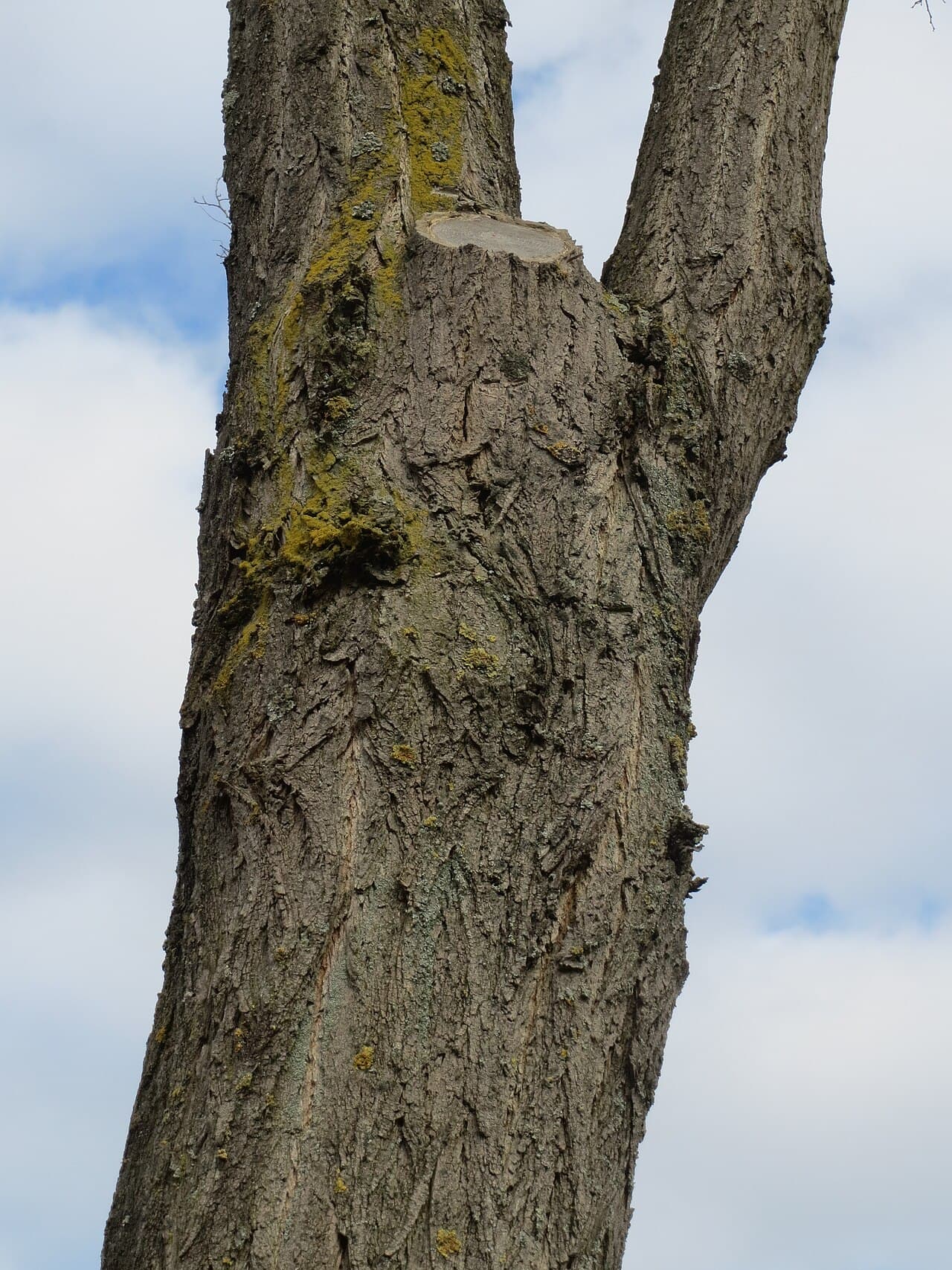
The barkDeep ridges braided into rope-like ropes — far coarser than honey locust. 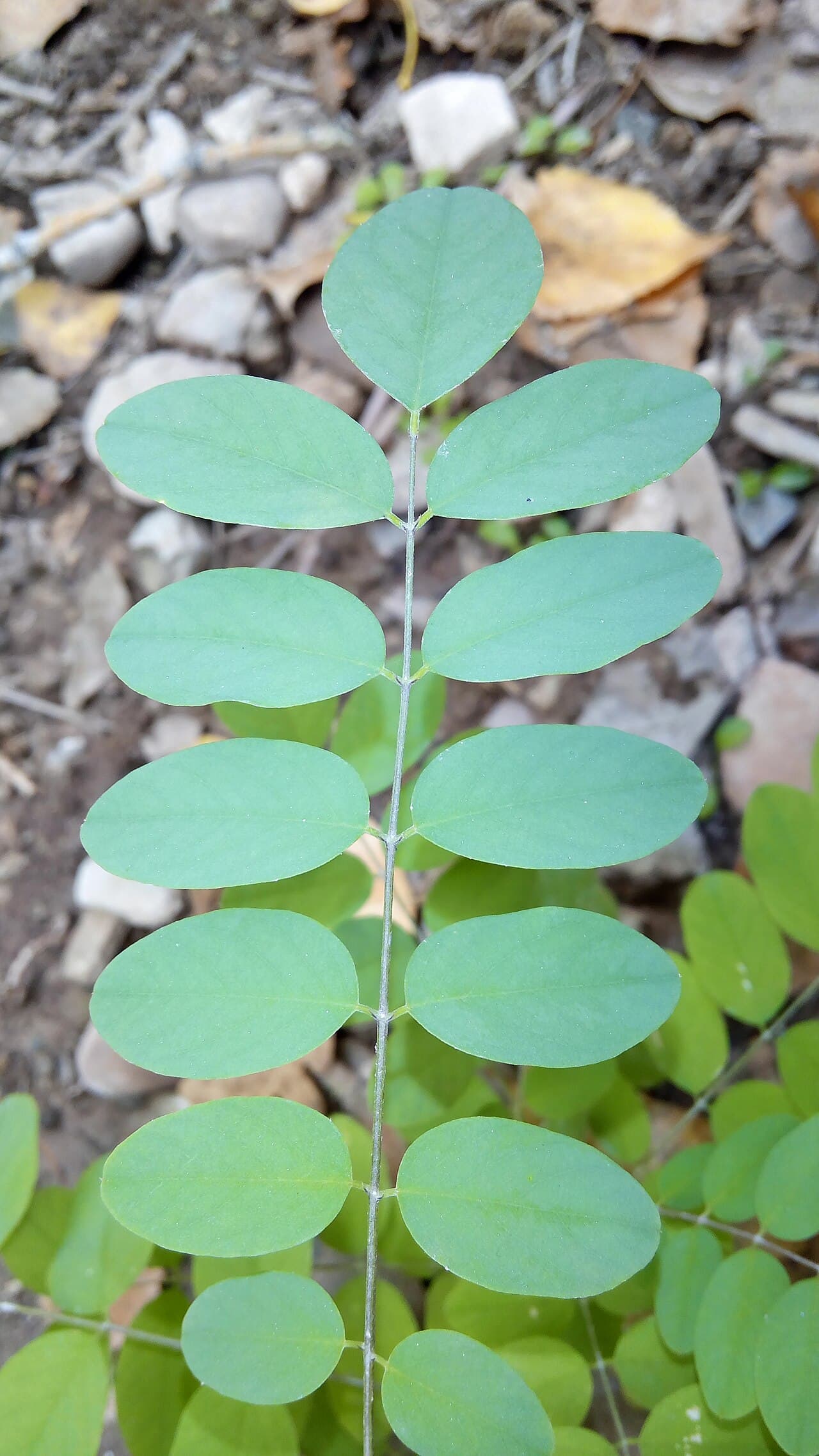
The leafSeven to nineteen oval leaflets with distinctly rounded tips. 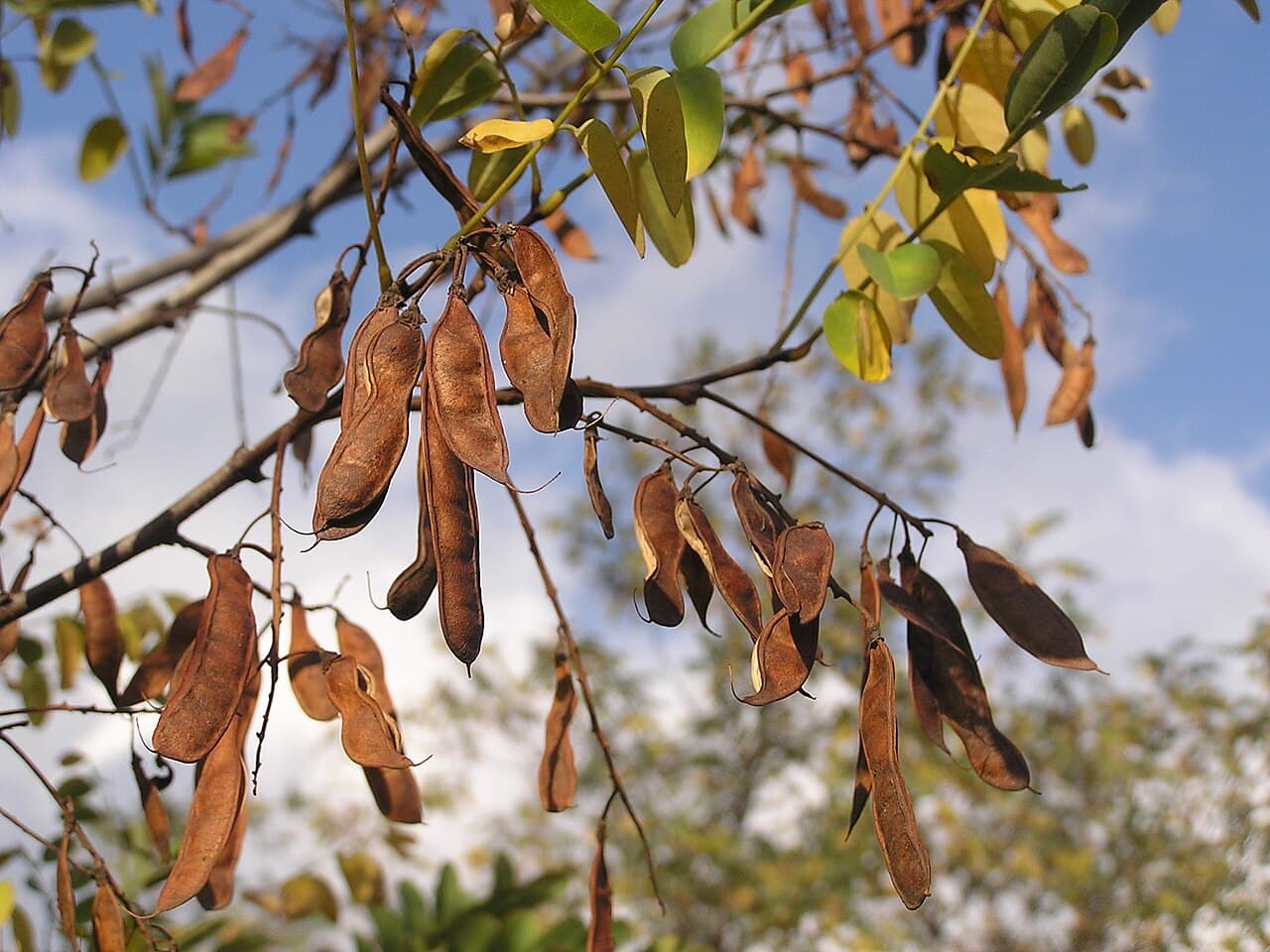
The seedShort flat pods, two to four inches long, hanging into winter.
How to identify it
- Compound leaves with 7–19 oval leaflets with rounded tips
- A pair of short spines flanking each leaf node
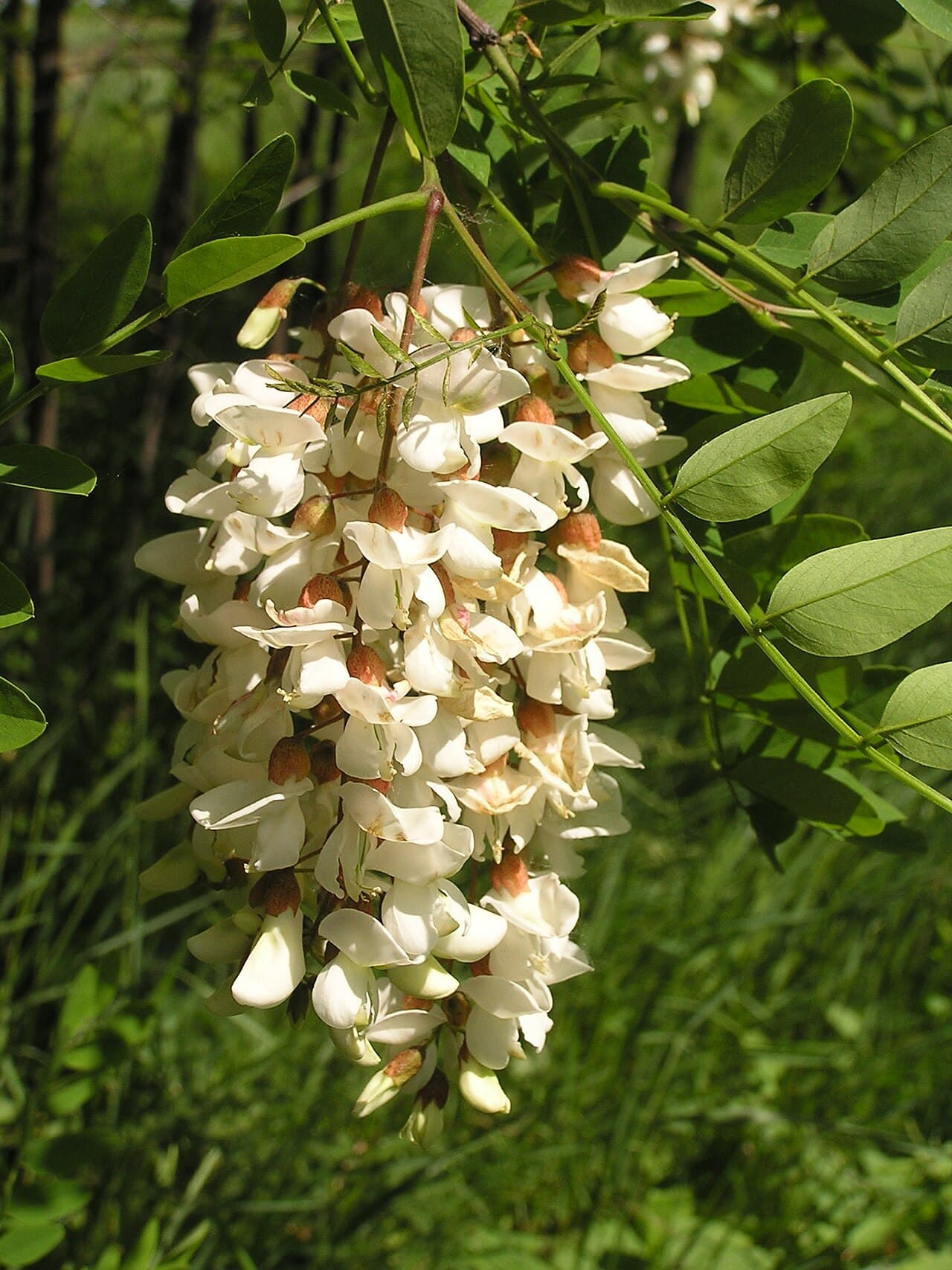
- Fragrant white pea-like flowers hanging in clusters in May
- Deeply furrowed bark in interlacing, rope-like ridges
Where it grows
- Native range
- Native to the Appalachians and the Ozarks, and naturalized — often aggressively — across Kansas. It spreads by root suckers into pastures, fence lines, and roadsides.
- Soil
- Almost any well-drained soil. It fixes its own nitrogen, so it thrives on poor, eroded ground where little else establishes.
- Sunlight
- Full sun
- Drought & heat
- High drought tolerance, high heat tolerance.
Native to the Ozarks and naturalized across Kansas. Excellent as a fence-post crop or cover on eroded ground; a real problem in a pasture, where suckers spread and the foliage and seeds are toxic to livestock.
Root behavior
Suckers aggressively from the roots. Cutting a black locust down without treating the stump typically produces a thicket of suckers over a wide area, which is how single trees become fence-line stands.
Storm and branch-failure risk
Fair. The wood itself is very strong and famously rot-resistant, but form is often poor and borer-riddled limbs break unpredictably.
Overall storm resistance: Fair. Assessing damage after a storm
Kansas pests and diseases
Locust borer
SeriousA wasp-mimicking beetle whose larvae tunnel extensively through trunk and limbs, leaving swollen scars and sawdust. Riddled wood breaks without warning, and heavily infested trees rarely recover.
Locust leafminer
CosmeticTurns whole crowns brown and papery by midsummer across long stretches of Kansas roadside. Dramatic and almost entirely harmless — the tree releafs the following spring.
Toxicity to livestock
SeriousBark, leaves, and seeds contain toxins dangerous to horses and cattle. Worth knowing before allowing one to grow in or beside a paddock.
Seeing something not listed here? Work from the symptom instead
Pruning
Best windowDormant season — November through February
Limited value. Remove deadwood and borer-damaged limbs; the species does not respond well to attempts at reshaping.
Planting near homes
Use caution. Thorns at the leaf nodes, aggressive suckering, and brittle borer-damaged limbs make it a poor choice close to a house — though the fragrant May flowers are genuinely worth having somewhere on a property.
When removal may be necessary
- It is suckering into pasture, cropland, or a fence line — treat the stump or the problem multiplies
- Locust borer damage has hollowed major limbs above a house, drive, or play area
- It is growing in or beside a paddock: bark, leaves, and seeds are toxic to horses and livestock
Removal is a judgment call about risk, not a formula. A tree with one of these conditions over open lawn is a very different situation from the same tree over a driveway — and that judgment needs someone on site.
Kansas Tree Guide is an independent educational resource. Nothing on this site replaces an on-site assessment by a qualified arborist or tree-care professional. Last reviewed August 2026.