
American Elm
Ulmus americana
The tree that once vaulted over every Kansas main street until Dutch elm disease took them by the tens of thousands. Disease-resistant cultivars are finally bringing this great native back.
- Height
- 60–80 ft
- Spread
- 40–70 ft
- Lifespan
- 60–150 yr
- Growth
- Fast
Identification
What to look at
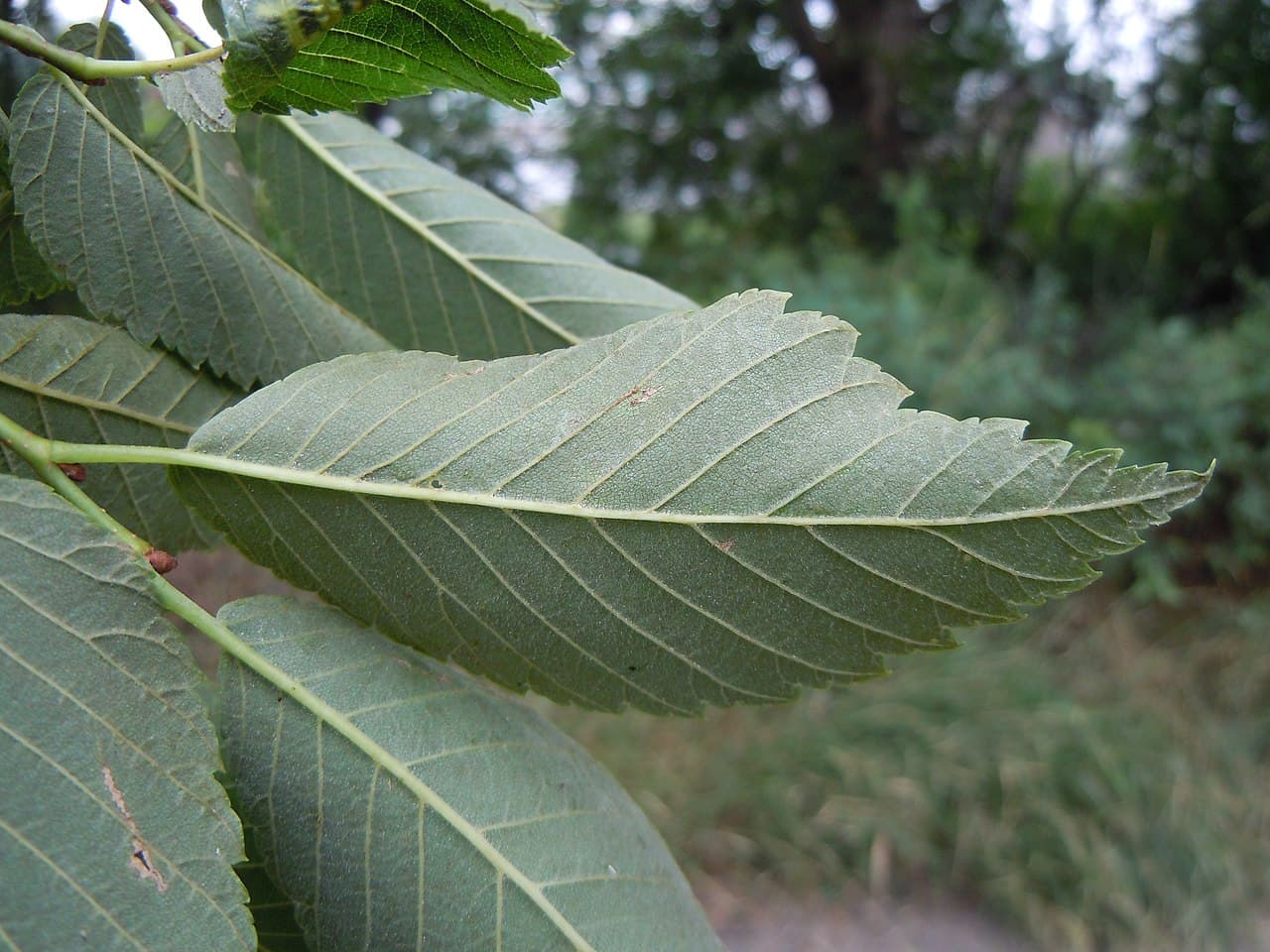
Three features settle most identifications: the bark on the trunk, the leaf in your hand, and whatever the tree is dropping.
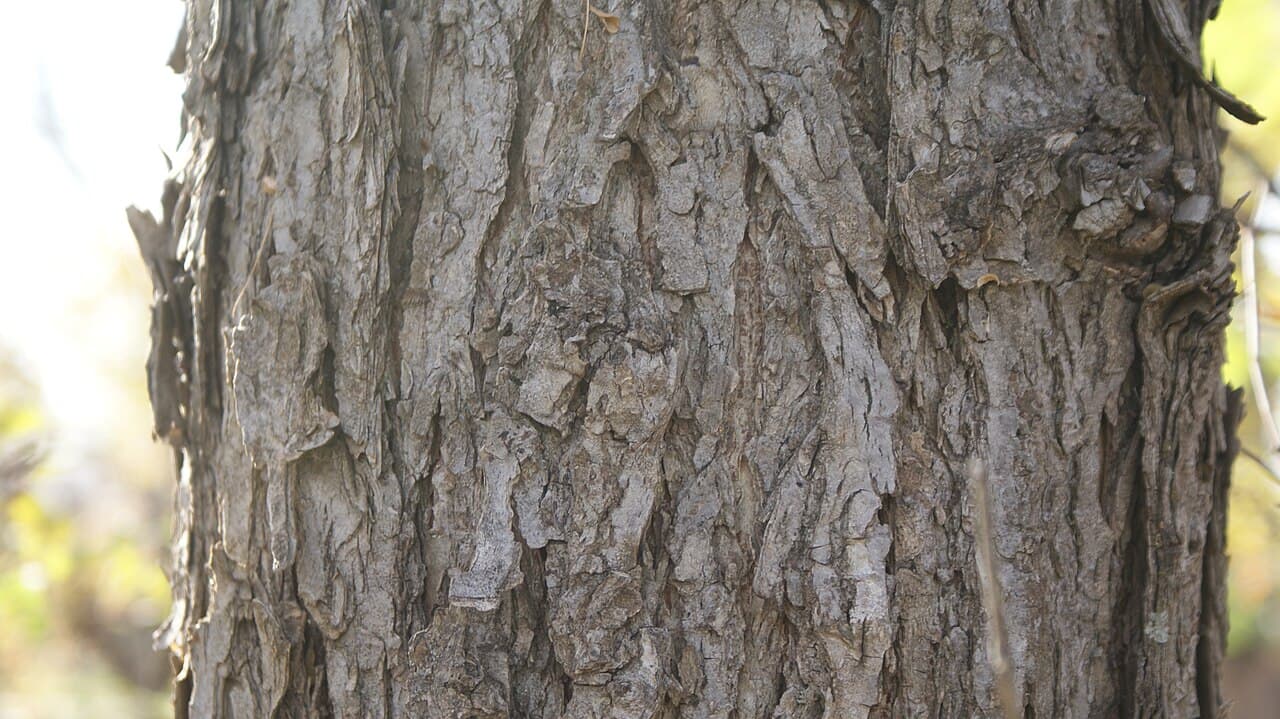
The barkGray ridges crossing in a diamond lattice; a cut edge shows alternating light and dark layers. 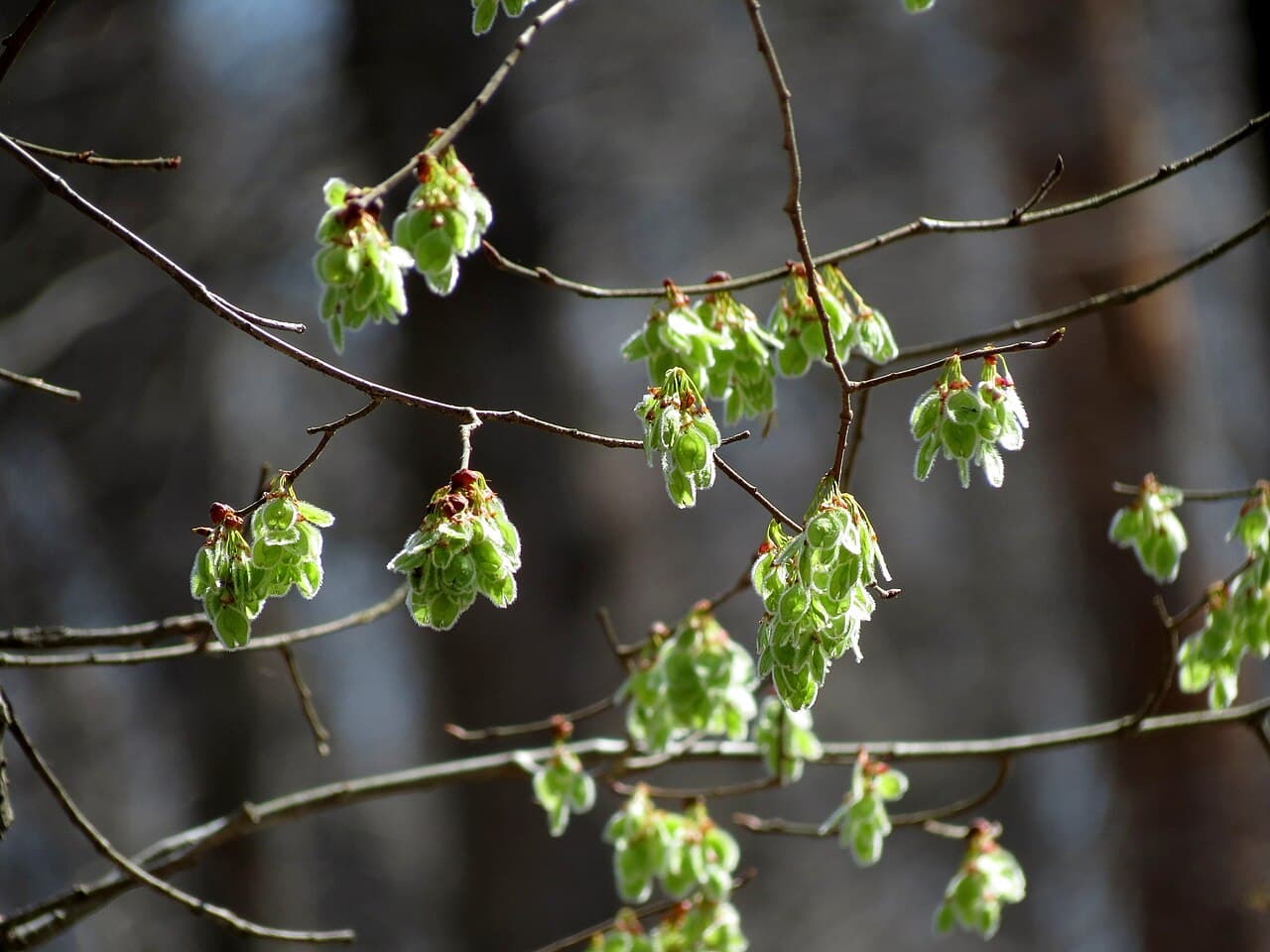
The seedFlat papery discs released in early spring, before the leaves open.
How to identify it
- Classic vase shape: trunks split into arching limbs
- Doubly-toothed, lopsided leaves rough on top
- Gray-brown bark in flattened, crisscrossing ridges
- Papery, round seeds in spring
Where it grows
- Native range
- Native across eastern North America including all of Kansas. Before Dutch elm disease it was the dominant street tree of nearly every Kansas town, arching over main streets in a way nothing has replaced.
- Soil
- Extremely adaptable — wet or dry, acidic or alkaline, clay or loam. Soil is rarely what limits this tree.
- Sunlight
- Full sun
- Drought & heat
- High drought tolerance, high heat tolerance.
Plant only named DED-resistant cultivars. Old survivors in your yard are worth protecting — call a pro at the first flagging, wilting branch in early summer.
Root behavior
Shallow and wide on moist ground, and capable of lifting walks. More importantly, elms growing near each other graft roots underground, and those grafts are the main route Dutch elm disease travels down a street.
Storm and branch-failure risk
The classic vase form spreads long, arching limbs over a wide area, so ice loading is the main hazard. Wood strength is fair; the risk comes from limb length and the size of the area beneath.
Overall storm resistance: Fair. Assessing damage after a storm
Kansas pests and diseases
Dutch elm disease
SeriousA fungus carried by bark beetles and through root grafts. The first sign is one branch of yellow, wilting, flagging leaves in early summer. Caught in a single limb it is occasionally treatable; established in the trunk it is not.
Elm leaf beetle
ManageableLarvae skeletonize leaves from underneath, leaving a lacy brown crown by midsummer. Rarely fatal on its own, but repeated defoliation weakens a tree already facing disease pressure.
Elm yellows
SeriousA phytoplasma disease causing sudden yellowing, leaf drop, and death, often with a wintergreen smell in freshly cut inner bark. There is no treatment.
Full profiles in the pest library
Photographs, seasonal timing, treatment options, and the point past which the tree cannot be saved.
Seeing something not listed here? Work from the symptom instead
Pruning
Best windowDormant season — November through February. Avoid all growing-season cuts.
Prune in winter only. Fresh growing-season wounds release volatiles that attract the bark beetles carrying Dutch elm disease. Remove and destroy dead elm wood promptly rather than stacking it — beetle broods develop in it.
Planting near homes
Use caution: give it room for a wide crown and expect surface roots on moist sites. A healthy mature elm near a home is worth protecting rather than pre-emptively removing.
When removal may be necessary
- Dutch elm disease confirmed and progressing through the crown — remove and destroy the wood, and sever root grafts to protect neighbors
- Extensive trunk decay under a long limb that overhangs a target
- Major limb failure has torn open the trunk
Removal is a judgment call about risk, not a formula. A tree with one of these conditions over open lawn is a very different situation from the same tree over a driveway — and that judgment needs someone on site.
Kansas Tree Guide is an independent educational resource. Nothing on this site replaces an on-site assessment by a qualified arborist or tree-care professional. Last reviewed August 2026.